

AC Not Blowing Cold Air? Fixing Leaks and Clogged Drain Lines in Florida
In the sweltering Florida heat, a clogged drain line isn't just a minor nuisance; it's an environmental inevitability that can instantly turn your home sanctuary into an unbearable sauna. We know the sudden spike of anxiety you feel when you realize your AC not blowing cold air is accompanied by a mysterious puddle creeping across your hallway floor. It's more than a simple mechanical failure. It's a stressful situation that threatens your property with water damage and disrupts your family's safety and comfort.
The good news is that you don't have to suffer in the humidity while worrying about emergency repair costs. You can restore your comfort and protect your home by understanding exactly how these systems fail in our unique coastal climate. Discover how to fix a clogged drain line and restore your home's cooling sanctuary when your system stops performing. This guide provides the precision steps needed to clear blockages, address leaks, and implement a long-term maintenance plan that keeps your air crisp and your floors dry. BulletProof Air is dedicated to helping you regain total control of your indoor environment.
Key Takeaways
- Understand why Florida’s high humidity forces your AC to pull gallons of water from the air daily, making the condensate drain line a critical exhaust system.
- Identify the "float switch mystery" and learn why a blank thermostat is often the first sign of an AC not blowing cold air due to a safety shutdown.
- Discover why HVAC professionals prioritize distilled white vinegar over harsh chemicals or high-pressure air to safely clear biological growth.
- Follow a precise safety protocol to use a common shop vac to clear blockages and immediately restore your home's cooling flow.
- Learn how professional maintenance plans and specialized pan treatments provide a "BulletProof" defense against future water damage and emergency failures.
The Clogged AC Drain Line: Why Florida Humidity is Your AC’s Biggest Enemy
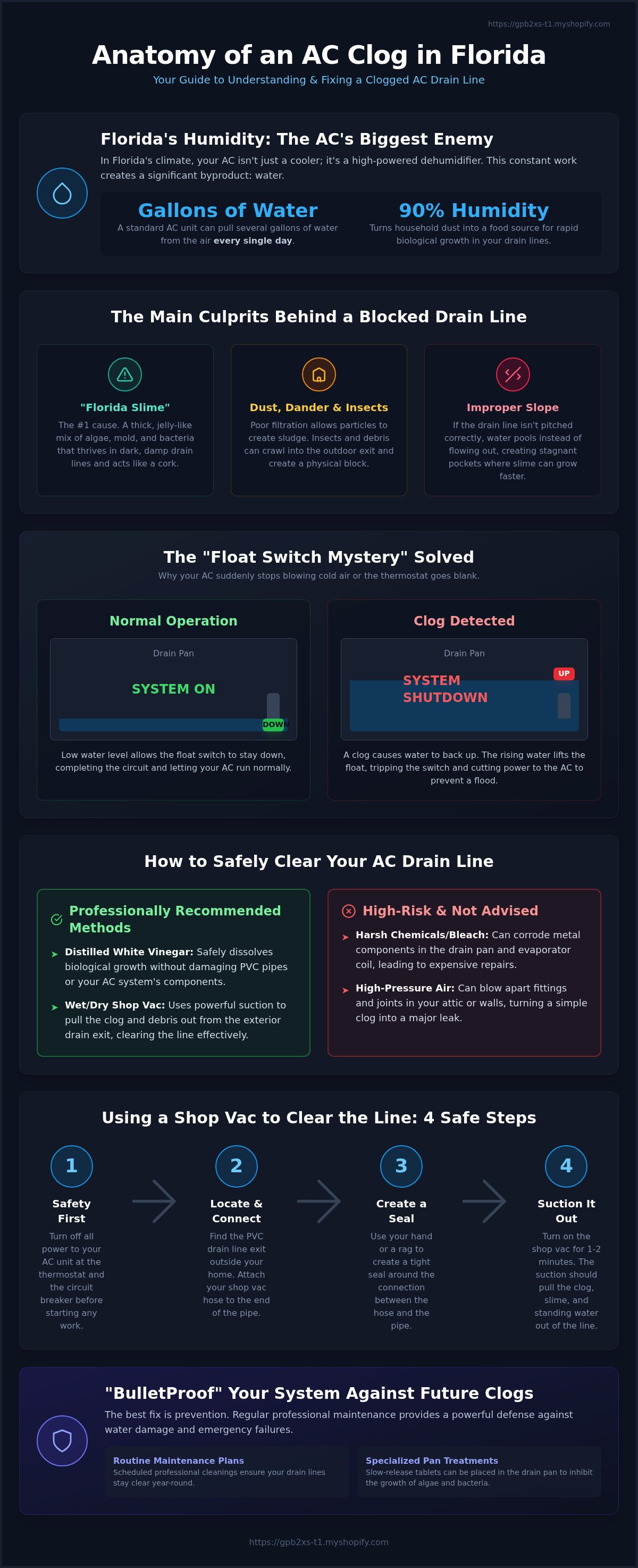
Your air conditioner does more than just lower the temperature; it acts as a high powered dehumidifier for your entire home. The condensate drain line serves as the moisture exhaust system for your home sanctuary, funneling away the liquid byproduct of this cooling process. In the intense climate of Southwest Florida, your unit works relentlessly to pull moisture from the air. A standard residential unit can produce several gallons of water every single day. When this water has nowhere to go, you will quickly find your AC not blowing cold air as the system triggers a safety shutdown.
We often encounter a phenomenon known as "Florida Slime" during our service calls. This thick, jelly like substance is a combination of algae, mold, and bacteria that thrives in the dark, damp environment of your PVC drain lines. Without regular intervention, this bio growth acts like a cork in a bottle. Ignoring a backup is a recipe for disaster. A single clog can lead to a collapsed ceiling, ruined flooring, or hidden mold growth that threatens your family's health. If your lines backup repeatedly, it is a clear sign that you need a professional diagnosis to identify underlying drainage issues.
The Science of Condensation in Southwest Florida
The evaporator coil is the heart of your home's dehumidification process. As warm, humid air passes over the freezing coils, moisture condenses into liquid droplets. This water drips into a primary pan and begins its journey through the drain line to an exterior exit point. Understanding how air conditioning works helps you realize why a clear path is vital for system performance. In Sarasota, 90% humidity turns ordinary household dust into a rich biological food source that fuels rapid algae growth within your system's drainage network.
Common Blockages Beyond Algae Slime
While biological growth is the primary culprit, other factors contribute to a total system failure. BulletProof Air technicians frequently find these common blockages during emergency repairs:
- Dust and Dander: Poor filtration or cheap filters allow particles to bypass the return and settle in the drain pan, creating a thick sludge.
- Insects and Debris: Mud daubers, spiders, and even small frogs often crawl into the outdoor discharge point and create physical obstructions.
- Improper Slope: If the line was installed without a proper downward pitch, water pools in the pipe instead of flowing out, leading to stagnant pockets.
When these elements combine with Florida's heat, your system is at high risk. Protect your home and restore your comfort by addressing these clogs before they cause permanent damage. If your AC not blowing cold air is a recurring nightmare, it's time to ensure your drainage system is functioning with precision.
Signs of a Clog: Why Your AC Is Not Blowing Cold Air and the Float Switch Mystery
Many homeowners first notice a problem when they spot water pooling in the emergency drain pan or around the indoor air handler. It's a stressful sight that triggers immediate concern. You might also notice a damp, musty odor circulating through your ductwork. This smell is often the result of stagnant water and biological growth sitting in your lines for days. At the PVC exit outside your home, you may even see visible "gunk" or thick algae. Ignoring these signs is dangerous. Water doesn't stay in the pan forever. It eventually overflows, leading to permanent damage to your home's flooring, baseboards, and subfloors.
The most confusing symptom is when you experience your AC not blowing cold air, but the system seems completely dead. Perhaps your thermostat has gone totally blank. Or, maybe the indoor fan is running, but there's no cooling at all. This "No AC" mystery usually points back to a single safety component designed to protect your home from a catastrophic flood. It turns a potential disaster into a simple, though urgent, repair.
Understanding the Float Switch: Your System’s Safety Net
Your float switch is a mechanical sensor designed as a safety net for your home. When water levels rise in the drain pan due to a clog, the float rises. Once it reaches a specific height, it trips a switch that instantly cuts power to the condenser to prevent an indoor flood. This is why a blank thermostat screen often points directly to a clogged line. It's a brilliant but frustrating piece of engineering. Before calling for emergency service, we recommend checking the secondary drain pan. If it's full of water, the float switch is simply doing its job. While some homeowners attempt clearing a blocked condensate line themselves, the underlying cause often requires professional precision to prevent a recurrence.
Differentiating Between a Clog and a Frozen Coil
It's vital to know if you're dealing with a simple backup or a frozen evaporator coil. If you see a block of ice on the copper lines, the water you see is likely from a melting ice block, not a drain clog. However, these two problems are often linked. A dirty air filter is a common denominator. It restricts airflow, causing the coil to freeze, while also allowing dust to enter the drain pan and create clogs. For a deeper look at coil troubleshooting and mechanical failures, explore our guide on AC Repair in SW Florida. If your system continues to struggle, the team at BulletProof Air can provide the rapid response you need to restore your sanctuary.
The Great Debate: Vinegar vs. Bleach for Clearing a Blocked Condensate Line
When you discover your AC not blowing cold air, the instinct to fix it quickly is powerful. Many homeowners turn to the internet and find conflicting advice about what to pour down their drain lines. The most common suggestion is a heavy dose of laundry bleach. While bleach is a potent killer of algae, it's often too aggressive for the delicate components of a modern HVAC system. At BulletProof Air, we've seen how "quick fixes" with harsh chemicals can lead to much larger bills down the road. We believe in a precision approach that restores your home sanctuary without risking the equipment you rely on for safety and comfort.
Another dangerous DIY tactic involves using high pressure air from a garage compressor to blow out a clog. This is a massive gamble. The PVC joints hidden inside your home's walls are not designed to withstand extreme bursts of pressure. You could easily cause a pipe to burst behind your drywall, turning a simple drainage issue into a major flood and renovation project. Our BulletProof Air technicians use controlled methods to ensure the line is clear without compromising the structural integrity of your plumbing. We also consider the environmental impact of these choices. Florida’s local water table is sensitive; the chemicals you pour into your drain eventually find their way back into our unique coastal ecosystem. Distilled white vinegar is biodegradable, effective, and much kinder to our local environment.
The Case Against Bleach in Your HVAC System
Bleach is a powerful oxidant that can cause significant collateral damage. The fumes from bleach are highly corrosive to the copper fins and tubes in your evaporator coil. Over time, these fumes can lead to microscopic pits in the metal, resulting in expensive refrigerant leaks. Additionally, bleach can eventually degrade the specialized glue used to secure PVC joints and seals. Distilled white vinegar serves as a safer biological inhibitor that effectively suppresses mold and algae without compromising the structural integrity of your home AC lines.
When to Call a Sarasota HVAC Expert
There are times when a bottle of vinegar and a bit of patience won't solve the problem. If the blockage is located deep within your walls or in a difficult to reach attic space, you need professional intervention. You must call a Sarasota expert immediately if your float switch has failed and water damage is already occurring. This indicates a double system failure that requires a precision repair. If you find your AC not blowing cold air because of a clog more than once a season, it usually indicates a professional installation flaw. This could be an improperly sized P-trap or a lack of proper venting that prevents the line from draining naturally. Our team can identify these root causes and provide a permanent, dependable solution.
Step-by-Step Guide: How to Safely Unclog Your AC Drain Line with a Shop Vac
Before you begin any mechanical work, safety is your absolute priority. Shut off the power at your thermostat and the main breaker. This prevents the system from cycling while you are working and protects the sensitive electronic components. If your AC not blowing cold air is caused by a safety switch trip, the power must be off before you can safely clear the line. Locating the access point is your next step. Look for the T-shaped PVC pipe near your indoor air handler. This is usually where the primary drain line begins its journey toward the exterior of your home. Removing the cap from this T-pipe allows you to inspect the line for standing water or visible blockages.
The Shop Vac method is highly effective for most biological clogs common in Florida. It works by creating a vacuum at the outdoor end of the line to pull the obstruction through. You must create an airtight seal at the outdoor discharge line for this to work correctly. Once the line is clear, a proper flush ensures that any remaining debris is washed away. Use a mixture of warm water and distilled white vinegar to treat the line. This final step helps restore your cooling flow and prevents immediate re-clogging. After the line is clear and the pan is dry, you can restore power and verify the system reset.
Preparation and Tools Needed
Gathering the right tools before you start ensures the process goes smoothly. You will need a Wet/Dry Shop Vac and a rag or duct tape to create a tight seal. Measure out 1/4 cup of distilled white vinegar for the final biological treatment. A high powered flashlight is essential for inspecting the dark corners of the drain pan. We also recommend having a small brush on hand to clean any physical debris from the pan itself. Having these items ready allows you to work quickly and efficiently to restore your home's comfort.
The Vacuum Extraction Process
- Step 1: Locate the exterior drain line exit near your home’s foundation. This is typically a small PVC pipe that drips water when the system is running.
- Step 2: Connect the vacuum hose to the end of the pipe. Use your rag or duct tape to ensure no air escapes around the connection. Run the vacuum for 30, 60 seconds to pull the 'slug' of algae out.
- Step 3: Verify success by checking the vacuum canister. You should see a mixture of water and dark biological material.
- Step 4: Return to the indoor access point. Slowly pour your water and vinegar mixture through the T-pipe to ensure the line is fully clear and flowing freely.
Once you have completed these steps, replace the PVC cap and restore power to your system. If your system still fails to start or you continue to experience your AC not blowing cold air, there may be a deeper mechanical issue or a failed safety switch. For a precision diagnosis and a permanent fix, schedule a professional HVAC repair with the experts at BulletProof Air today.
Restoring Your Sanctuary: Professional Maintenance to Prevent Future Cooling Failures
A home in Florida is only as good as its air conditioning. When you face an AC not blowing cold air, it's a direct threat to your comfort and safety. Precision maintenance is the only way to ensure your sanctuary remains protected. Regular care doesn't just stop clogs; it extends the life of your entire HVAC system by reducing the strain on the compressor and fan motors. By investing in preventative care, you avoid the high stress of 2 AM mechanical failures and the potential for expensive water damage to your property. Our technicians use specialized algae tablets and professional pan treatments to provide a layer of protection that DIY methods simply cannot match.
The peace of mind that comes with a professional inspection is invaluable. We don't just look for current clogs; we analyze the entire drainage system for potential weaknesses. This proactive approach identifies small issues before they escalate into total system shutdowns. BulletProof Air is dedicated to keeping your home a cool, dry, and safe environment regardless of the intense heat outside. Precision work today means fewer emergencies tomorrow.
The Benefits of a BulletProof Maintenance Plan
Our maintenance plans are engineered to eliminate the most common causes of drainage failure. Every scheduled visit includes a routine line flushing and a deep pan cleaning to remove biological buildup. We also perform a critical test on your float switch to ensure this safety net is ready to act if a blockage occurs. For homeowners looking for dependable protection, our HVAC Services Near Me guide offers a complete look at local plan details for the Sarasota and Bradenton areas. We catch the problems that others miss.
Proactive Homeowner Tips for Year-Round Flow
- Monthly Filter Changes: Dirty filters allow dust to enter the system and settle in the drain pan, providing a food source for algae and mold.
- Quarterly Vinegar Treatments: Pouring a cup of distilled white vinegar down your drain line every three months suppresses biological growth naturally.
- Clear Outdoor Exits: Ensure the area around your outdoor drain exit is clear of mulch, dirt, or grass that could cause a physical blockage.
- Monitor the Pan: Check your emergency drain pan occasionally for standing water to catch a slow clog before the float switch trips.
- Remote Alerts: To ensure you are notified immediately of any drainage issues, visit inTouch R&B to discover specialized remote monitoring and alert systems for your HVAC unit.
Don't wait for your system to fail during a heatwave. If you've struggled with your AC not blowing cold air or want to ensure your system is running at peak efficiency, the team at BulletProof Air is ready to help. We provide the expert care needed to keep your home comfortable and your equipment durable. Contact us today to restore your sanctuary and enjoy the confidence of a system that works exactly when you need it most.
Securing Your Home Comfort Against Florida Humidity
You now have the precision steps to identify if a clogged drain line is the reason for your AC not blowing cold air. From understanding the biological reality of "Florida Slime" to safely using a shop vac for extraction, you can take immediate action to protect your home from water damage. Remember that choosing distilled white vinegar over harsh chemicals preserves your system's durability and the health of your copper coils. While DIY maintenance is a powerful tool, some blockages require the specialized equipment and expertise of a professional team to ensure a permanent solution.
If the extraction process feels overwhelming or the blockage persists, our expert technicians are ready to help. We specialize in Southwest Florida's unique climate challenges and provide a fast emergency response across Sarasota and Bradenton. Our precision repairs eliminate the need for follow up visits, ensuring your cooling sanctuary is restored correctly the first time. Restore your home sanctuary, Schedule your BulletProof AC Repair in Sarasota now! Don't let a simple drainage issue disrupt your peace of mind. Take control of your indoor environment today and breathe easy in a cool, dry home.
If you would like maintenance or repair assistance with your Florida Air Conditioner, contact BulletProof Air Or call: 941.599.9999 for more information about how we can help.