

Commercial HVAC Quarterly Maintenance Checklist for 2026
What makes a quarterly HVAC visit useful is not only what gets checked, but what gets documented and followed up. In Southwest Florida, heat and humidity keep commercial cooling equipment under steady demand. A missed warning sign or undocumented finding can make it harder to plan repairs before comfort or business operations are affected. A commercial hvac quarterly maintenance checklist gives your team a repeatable way to capture what happened during each visit.
If you manage a commercial building, you need a process you can use consistently, not a different maintenance experience every visit. This checklist helps you understand what a thorough visit can cover, recognize developing issues, and keep service records clear and useful. It also connects equipment checks with the building’s conditions and operational needs.
Use the checklist as a planning tool, then tailor each visit to your HVAC equipment and facility. The sections below cover areas to review, findings and follow-up to record, and ways to track recurring concerns from quarter to quarter. BulletProof Air provides commercial HVAC services and maintenance plans for businesses in Sarasota and Southwest Florida, with maintenance tailored to each building and its equipment.
Key Takeaways
- Use a commercial hvac quarterly maintenance checklist to organize checks by system area and capture findings consistently.
- Track filters, coils, condensate drainage, electrical components, controls, airflow, and visible equipment condition during each visit.
- Compare scheduled, reactive, and blended maintenance approaches by scope, documentation, follow-up, scheduling, and impact on building operations.
- Prepare for each visit with equipment records, prior service notes, comfort complaints, and access details.
- Use recurring records to identify patterns and guide follow-up, tailoring maintenance to your building and equipment.
Why commercial HVAC quarterly maintenance matters for your building
A commercial HVAC issue can quickly affect occupant comfort, interrupt daily operations, or force an unplanned repair decision. A planned quarterly review gives property teams and service technicians regular opportunities to assess equipment and operating conditions, document findings, and decide what needs attention. Maintenance cannot prevent every breakdown, but a consistent record can make developing concerns easier to track before they become urgent.
A commercial hvac quarterly maintenance checklist also gives building staff and technicians a shared reference. Instead of relying on memory or scattered service notes, teams can review earlier findings, identify outstanding follow-up, and see whether the same concern has returned. That history supports maintenance planning and clearer communication.
What does quarterly commercial HVAC maintenance mean?
Quarterly maintenance is scheduled preventive service. It differs from emergency repair after equipment stops working and from replacing a system or component that needs to be changed. Each visit is an opportunity to inspect relevant equipment, record its condition, and prioritize findings. The appropriate tasks and frequency depend on the system, manufacturer guidance, building use, and site conditions. A quarterly schedule is a planning framework, not a guarantee that one interval or checklist fits every system.
Why Southwest Florida buildings need a building-specific plan
Southwest Florida’s heat and humidity matter when planning maintenance, but they are not the only factors. Occupancy, operating hours, indoor comfort needs, equipment type, and site conditions all affect what deserves attention and when. A building with critical spaces or a demanding schedule may need visits coordinated around operations, while other areas may have different priorities. A plan based on the building’s equipment and use is more relevant than assuming every facility has the same needs.
Use the checklist as a working record, not just a list of completed tasks. For each visit, note the equipment or area reviewed, its observed condition, any concern requiring follow-up, and the next step. Include enough detail to identify where an issue occurred and whether it has appeared before. Clear notes help the next visit pick up where the last one ended. BulletProof Air provides commercial HVAC services and maintenance plans in Sarasota and Southwest Florida, tailoring maintenance to the building and its equipment.
Commercial HVAC quarterly maintenance checklist: what technicians should review
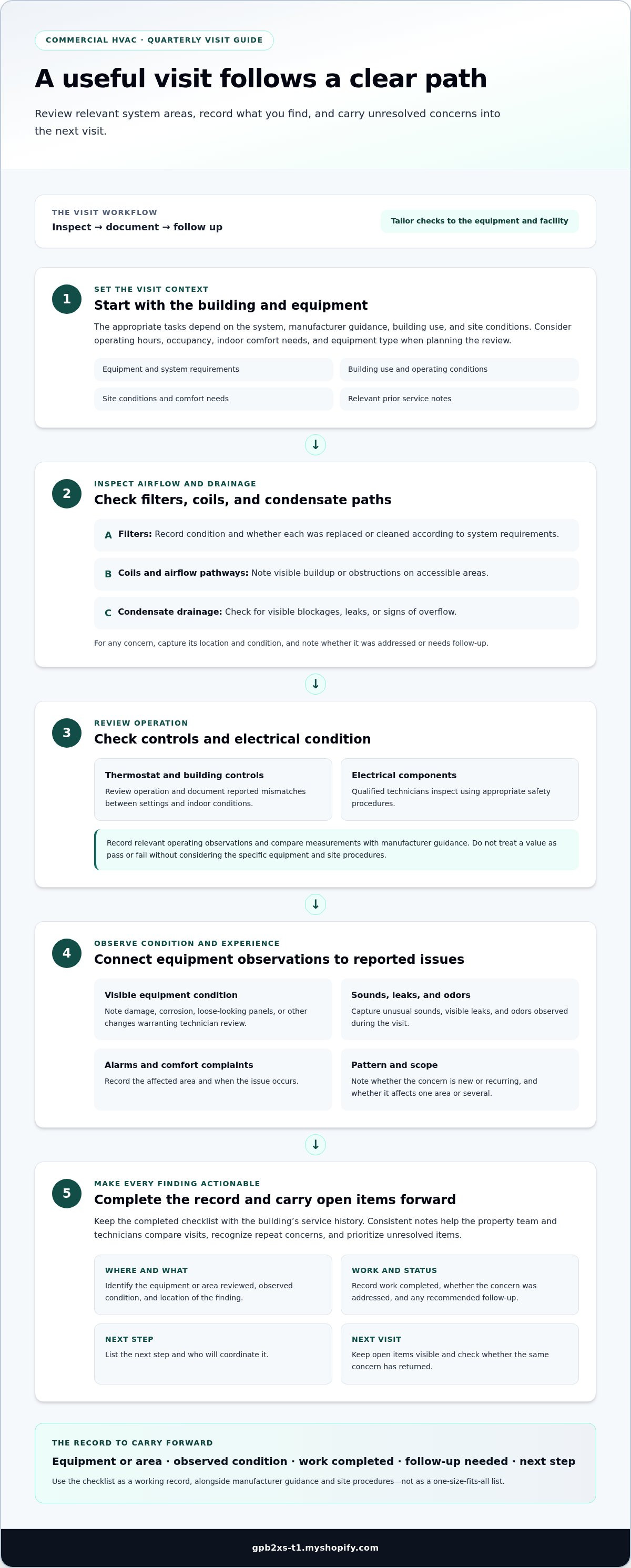
A useful commercial hvac quarterly maintenance checklist organizes the visit by system area and makes it easier to record what was inspected, what work was completed, and what needs follow-up. Use the list below to plan and document the visit, alongside equipment manufacturer guidance and site procedures. Technicians should take measurements and make adjustments according to the requirements for the specific equipment.
Airflow, filters, coils, and condensate drainage
Start with the areas that affect air movement and moisture removal. For each filter, record its condition and whether it was replaced or cleaned according to system requirements. Note visible buildup or obstructions on accessible coils and along airflow pathways. Check condensate drainage for visible blockages, leaks, or signs of overflow. Record the location and condition of any concern, along with whether it was addressed or needs follow-up. These notes make it easier to compare observations at the next visit.
Controls, electrical condition, and operating checks
Review thermostat or building-control operation, and document any reported mismatch between settings and indoor conditions. Qualified technicians should inspect electrical components using appropriate safety procedures. Record relevant operating observations and compare measurements with manufacturer guidance. Don’t treat a value as a pass or fail without considering the specific equipment and site procedures. Include the equipment or area associated with each observation so the finding is actionable.
Visible condition, concerns, and follow-up
Complete the visit record with a visual review and notes from the property team. Capture unusual sounds, visible leaks, odors, recurring alarms, and comfort complaints, including where and when they occur. Note whether a concern is new or recurring and whether it affects one area or several. This context can help connect equipment observations with occupant experience.
- Equipment condition: Note visible damage, corrosion, loose-looking panels, or other changes that warrant technician review.
- Reported issues: Record the affected area, timing, and any recurring pattern in alarms or comfort complaints.
- Next steps: List recommended follow-up, who will coordinate it, and whether the item remains open for the next visit.
Keep the completed checklist with the building’s service history. Consistent notes help property teams and technicians compare findings between visits, recognize repeat concerns, and prioritize unresolved items. For a maintenance routine tailored to your commercial building and equipment, explore commercial HVAC maintenance.
Quarterly HVAC maintenance plan vs. reactive service: how to compare
Choosing a service approach is not simply a choice between preventing every problem and waiting for a breakdown. Scheduled maintenance creates regular opportunities to review equipment and document developing concerns. Reactive service addresses faults as they occur. A blended approach combines planned reviews with repair service when issues arise. None can guarantee equipment will avoid breakdowns, but clear records and follow-up can support better-informed decisions.
Scheduled maintenance: Review the written task scope, what each visit documents, how recommendations are communicated, and how visits fit building operations. This approach creates a recurring record of equipment condition and open concerns.
Reactive-only service: Work is prompted by a fault, complaint, or alert. It may suit some operating needs, but gaps between service calls can make patterns harder to identify and work harder to plan around occupants.
Blended approach: Combine recurring maintenance reviews with repair service as issues arise. This provides ongoing visibility while leaving room to respond to new problems, with the scope and scheduling shaped around the building.
Compare each approach using the same criteria: task scope, visit documentation, follow-up recommendations, scheduling fit, and coordination with building operations. A commercial HVAC quarterly maintenance checklist can standardize what gets recorded during planned visits, but a checklist is not a substitute for technician inspection or service. Property staff can report comfort complaints or recurring alerts; technicians assess the equipment and determine appropriate next steps.
What a commercial maintenance plan should make clear
Look for a written description of the planned work, a record of findings from each visit, and a clear process for communicating recommended follow-up. The approach should reflect the building’s equipment and operating conditions, rather than assume every facility needs an identical scope. Don’t assume a maintenance plan includes the same repairs, parts, or response commitments as another plan. Review the details alongside your building’s service history and operational priorities.
When reactive service may leave operational gaps
Waiting for a fault can make it harder to plan work and keep occupants informed. For example, recurring comfort complaints in one area or an equipment alert that returns after service may deserve review as a pattern, not as separate incidents. Compare the history: note repeat concerns, what was documented, and whether follow-up was completed. That context can help your team decide whether scheduled reviews, reactive service, or a blended approach best fits the building.
For more considerations to guide your evaluation, read this commercial HVAC partner selection guide.
How to prepare for a commercial HVAC quarterly maintenance visit
A useful visit starts with preparation. Gather equipment records and prior service notes, then collect reports from occupants and building staff. The goal is to give the technician practical context, make access straightforward, and help your team understand what was reviewed and what needs attention afterward.
Before and during the technician visit
Prepare a concise site handoff. Identify system locations, access procedures, areas with controlled access, and operational concerns. Share recent alarms, comfort patterns, unusual sounds, visible leaks, and repeat service calls. Include where and when an issue occurs, such as a complaint that appears during particular operating hours. Coordinate visit timing with business schedules and affected spaces, and have a building staff member available to explain operating hours or observed changes.
- Gather: Equipment records, previous service notes, and any open recommendations.
- Summarize: Occupant complaints, recurring alerts, and changes in system behavior.
- Coordinate: Technician access, site procedures, and timing around occupants and business operations.
After the visit: record findings and assign next steps
Before closing out the visit, review the completed tasks, documented observations, recommendations, and items requiring follow-up. Use technician guidance to distinguish urgent safety concerns from routine recommendations. Assign a responsible person to each action and note its status so unresolved items don’t disappear between visits.
A simple log makes the commercial hvac quarterly maintenance checklist more useful over time. Keep the record consistent from one visit to the next. Include:
- Visit date and equipment or area reviewed
- Findings and work completed
- Recommended next steps and assigned responsibility
- Current status and next review point
Bring the log and previous notes to the next visit. This gives property teams and technicians a shared history for clearer follow-up decisions. For related local service context, read the Sarasota and Bradenton HVAC services guide. To put a recurring commercial maintenance routine in place, explore commercial HVAC maintenance with BulletProof Air.
Build a quarterly commercial HVAC routine with BulletProof Air
A checklist is most useful when it guides decisions beyond the visit itself. Consistent notes help your team see what was reviewed, track outstanding recommendations, and recognize issues that appear repeatedly. They also give the next maintenance conversation a useful starting point. A commercial hvac quarterly maintenance checklist should be a working document, tailored to your equipment and updated as building conditions change.
Turn checklist findings into a building-specific maintenance plan
Set priorities based on the equipment in your building, its operating schedule, occupant needs, and service history. For example, recurring concerns in a frequently occupied area may warrant focused discussion during planning. Use the same documentation process at each visit: record findings, completed work, open recommendations, and responsibility for next steps. Review the checklist periodically so it continues to reflect changes in equipment condition or building use.
Recurring maintenance plans give property teams a structure for planned service. The scope should make sense for the building rather than assume every system or site needs identical attention. Maintenance can help identify concerns and inform follow-up decisions, but it can’t guarantee that equipment will avoid a breakdown. Keep repair needs and recommendations visible as separate items in the service record.
Get commercial HVAC maintenance support in Southwest Florida
BulletProof Air provides commercial HVAC services and recurring maintenance plans for businesses in Sarasota and Southwest Florida. A building-specific discussion can connect your equipment, operating priorities, and past service findings to a practical recurring routine. Bring equipment records, open recommendations, and notes about operating needs to make that conversation focused and useful.
Ready to create a maintenance routine around your facility? Discuss your commercial HVAC maintenance needs with BulletProof Air.
Make your next maintenance visit more purposeful
A consistent quarterly routine gives your team a clearer way to review equipment, document findings, and track follow-up work. Use the commercial hvac quarterly maintenance checklist as a practical starting point, then adapt it to your equipment, manufacturer guidance, and building operations. Regular records can help your team recognize recurring concerns and make informed service decisions, though maintenance can’t guarantee a system will avoid breakdowns.
BulletProof Air provides commercial HVAC services in Southwest Florida, including recurring HVAC maintenance plans tailored to building and equipment needs. A conversation about your facility’s systems, schedules, and service history can help shape a maintenance approach that fits your operation.
Discuss your commercial HVAC maintenance needs with BulletProof Air and take a clear next step toward a more organized routine. With a practical checklist and consistent follow-through, your team can approach each quarterly visit with greater confidence.
Frequently Asked Questions
What should a commercial HVAC quarterly maintenance checklist include?
A commercial HVAC quarterly maintenance checklist should group tasks by system area and leave space for findings and follow-up. Include filter condition and service, accessible coils and airflow pathways, condensate drainage, controls, electrical condition, operating observations, and visible equipment condition. Record unusual sounds, leaks, odors, recurring alarms, or comfort complaints, including where and when they occur. Technicians should perform measurements and adjustments according to equipment specifications, manufacturer guidance, and site procedures.
Is quarterly maintenance necessary for every commercial HVAC system?
Not necessarily. A quarterly schedule can provide a recurring review, but the appropriate maintenance frequency and task list depend on the equipment, manufacturer guidance, building use, and site conditions. Operating hours, occupancy, indoor comfort needs, and service history can also shape the plan. Treat quarterly visits as a framework to tailor with a technician, not a universal rule that replaces equipment-specific recommendations.
Can building staff perform commercial HVAC maintenance themselves?
Building staff can help by organizing equipment records, noting comfort complaints, and reporting visible changes such as unusual sounds or leaks. They can also coordinate access and keep service logs. Technical inspections, measurements, adjustments, and electrical work should be handled by technicians using appropriate procedures and manufacturer guidance. Clear boundaries help staff contribute useful information without taking on work that requires specialized assessment.
What happens if a commercial HVAC maintenance visit finds a problem?
The technician should document the observation and explain recommended next steps. Depending on the finding, that may mean monitoring a recurring concern, planning follow-up work, or addressing a repair need. Record recommendations, responsibility, and status so nothing gets lost between visits. Use technician guidance to distinguish urgent safety concerns from routine recommendations, and coordinate any needed work with building operations.
How long does a commercial HVAC quarterly maintenance visit take?
There isn’t one fixed visit duration for every commercial building. Time can vary with the number and type of systems, site access, building layout, maintenance scope, and any concerns that need further assessment. Share equipment records, access details, and known issues ahead of the visit to support planning. The technician can provide a time estimate based on the specific building and work being reviewed.
Does quarterly HVAC maintenance prevent breakdowns?
No maintenance schedule can guarantee that equipment won’t break down. Regular reviews can help identify and document developing concerns, giving property teams a clearer basis for follow-up decisions. A checklist is a planning and recordkeeping tool, not a promise of uninterrupted operation. Track repeated findings and completed actions over time, and use technician recommendations to guide repairs or other next steps.
How should a business compare commercial HVAC maintenance plans?
Compare plans by their written task scope, visit documentation, follow-up recommendations, scheduling fit, and coordination with your building’s operations. Consider whether the approach reflects your equipment, operating hours, occupant needs, and service history. Don’t assume every plan includes identical repairs, parts, or response commitments. Review those details alongside recurring concerns and open recommendations to understand how the plan supports your facility’s maintenance process.
If you would like maintenance or repair assistance with your Florida Air Conditioner, contact BulletProof Air Or call: 941.599.9999 for more information about how we can help.