

Cost to Install Central Air in an Old House: 2026 Retrofit Guide
What if you could transform your historic Florida home into a cool, quiet sanctuary without tearing down a single original plaster wall? You shouldn't have to choose between preserving your property's character and escaping the relentless Gulf Coast humidity. Many homeowners hesitate because they fear the cost to install central air in old house retrofits will involve astronomical fees or the loss of precious closet space. It's a valid concern, especially when you're tired of noisy window units that barely manage to keep the heat at bay and drive up your monthly power bills.
We understand that your home is your refuge, and we're here to provide the professional clarity you need to make a confident decision. This guide outlines the structural factors and investment requirements for bringing modern cooling to your vintage property. You'll discover how 2026 energy standards, federal tax credits for high-efficiency heat pumps, and specialized Florida rebates can help offset your project. We will preview the latest low-impact installation methods that prioritize your home's integrity while finally delivering the dependable, high-performance comfort you deserve.
Key Takeaways
- Learn why retrofitting a historic property requires a custom engineering approach to transform your home into a quiet, climate-controlled sanctuary.
- Break down the specific variables, from structural modifications to labor hours, that determine the final cost to install central air in old house retrofits.
- Evaluate modern alternatives like high-velocity "small duct" systems and ductless mini-splits that provide whole-home cooling without destroying original plaster.
- Maximize your investment by identifying 2026 federal tax credits and local Florida rebates available for high-efficiency heat pump installations.
- Discover how a precision-led installation process protects your property's character while ensuring your new system meets strict modern building codes.
Retrofitting Central Air in an Older Home: The 2026 Reality
Retrofitting a historic property isn't a demolition project. It's a surgical operation. Many homeowners in our coastal communities feel trapped between the sweltering Florida humidity and the fear that modern cooling will ruin their home's soul. In 2026, the technology has finally caught up to your needs. We approach every project with a "first responder" mindset, treating your home as a sanctuary that requires protection. While the cost to install central air in old house structures varies based on complexity, the investment transforms a drafty, uncomfortable building into a high-performance refuge. Before committing to a specific system, it helps to understand what is central air in the context of modern engineering; it’s no longer just about massive ducts and noisy fans.
Window units are failing you. They are loud, they leak moisture into your window sills, and they create easy entry points for intruders. Worst of all, they can't manage the heavy moisture levels we face in Sarasota and Bradenton. A professional retrofit eliminates these risks by using precision-engineered components that work with your home's existing layout. Today's systems are smaller, quieter, and more efficient than anything available even five years ago. We don't just "install" a unit; we engineer a solution that respects your property's history while providing the dependable comfort your family deserves.
Assessing Your Home’s Structural Readiness
Success starts with finding "dead space" that others might miss. We look for vertical chases in the back of closets or unused corners of a pantry to run modern, slim-profile ducting. Unlike modern drywall, your plaster and lath walls require a gentle touch to prevent cracking. Our team evaluates your attic and crawlspace accessibility to determine the best placement for the air handler. This careful planning ensures we don't have to sacrifice your high ceilings or ornate crown molding to achieve total climate control.
The Impact on Historic Home Value
In the competitive Sarasota and Bradenton real estate markets, central air is no longer a luxury; it's a requirement for maximum resale value. Buyers want the charm of the 1920s with the reliability of 2026 technology. By choosing a surgical retrofit, you preserve the architectural integrity that makes your home unique while removing the "obsolescence" factor that scares away modern buyers. An HVAC retrofit is a specialized mechanical upgrade that integrates modern climate control into an existing structure while prioritizing the preservation of its original architectural features. This strategic modernization ensures your home remains a valuable asset for decades to come. When you calculate the cost to install central air in old house retrofits, remember that you're investing in both immediate comfort and long-term equity.
Breaking Down the Cost Factors: Equipment, Labor, and Structure
Don't get distracted by the sticker price of the outdoor unit alone. In a historic Florida property, the physical hardware is often the simplest part of the project. The true cost to install central air in old house retrofits lies in the "invisible" work: engineering, permitting, and structural modifications. Every historic home has its own structural personality. A 1920s bungalow in Bradenton faces different mechanical hurdles than a Mediterranean Revival in Sarasota. You need a custom strategy that respects these differences while ensuring your cooling system operates at peak performance.
Retrofits lean heavily toward skilled labor hours rather than just equipment costs. Unlike new construction where walls are open, we work within the existing constraints of your home. This requires extreme precision. Cheap quotes often ignore the complexity of Florida's slab-on-grade construction. If a contractor cuts through a load-bearing joist or fails to seal a duct properly, you'll face expensive repairs later. We focus on a "BulletProof" approach that eliminates the need for follow-up visits and protects your home's sanctuary.
Ductwork Installation: The Biggest Variable
Your home's foundation dictates the cooling strategy. Because many local homes lack basements, we typically look to the attic for duct placement. Attic-run systems are effective but require superior insulation to combat the intense Florida sun. If attic space is restricted, we design custom "chases" to hide vertical runs. These are small, decorative columns that blend into your existing architecture. We prioritize rigid metal ducting over cheap flexible materials whenever possible. Rigid ducts provide better airflow and resist the moisture buildup that leads to mold. Understanding energy efficiency ratings is critical; even the best unit will underperform if the ductwork is poorly engineered.
Electrical Upgrades and Permitting
Your existing electrical panel likely needs an upgrade. Most older homes weren't designed for the 220V requirements of modern AC equipment. We handle this upgrade as part of our comprehensive service, ensuring your home stays safe and compliant with local codes. We also navigate the permitting process for you, including any necessary historic board approvals. Our surgical installation method minimizes wall damage, and we always include professional repairs in our scope. If you're ready to upgrade your comfort, professional HVAC installation is the only way to get an accurate assessment of the cost to install central air in old house structures.
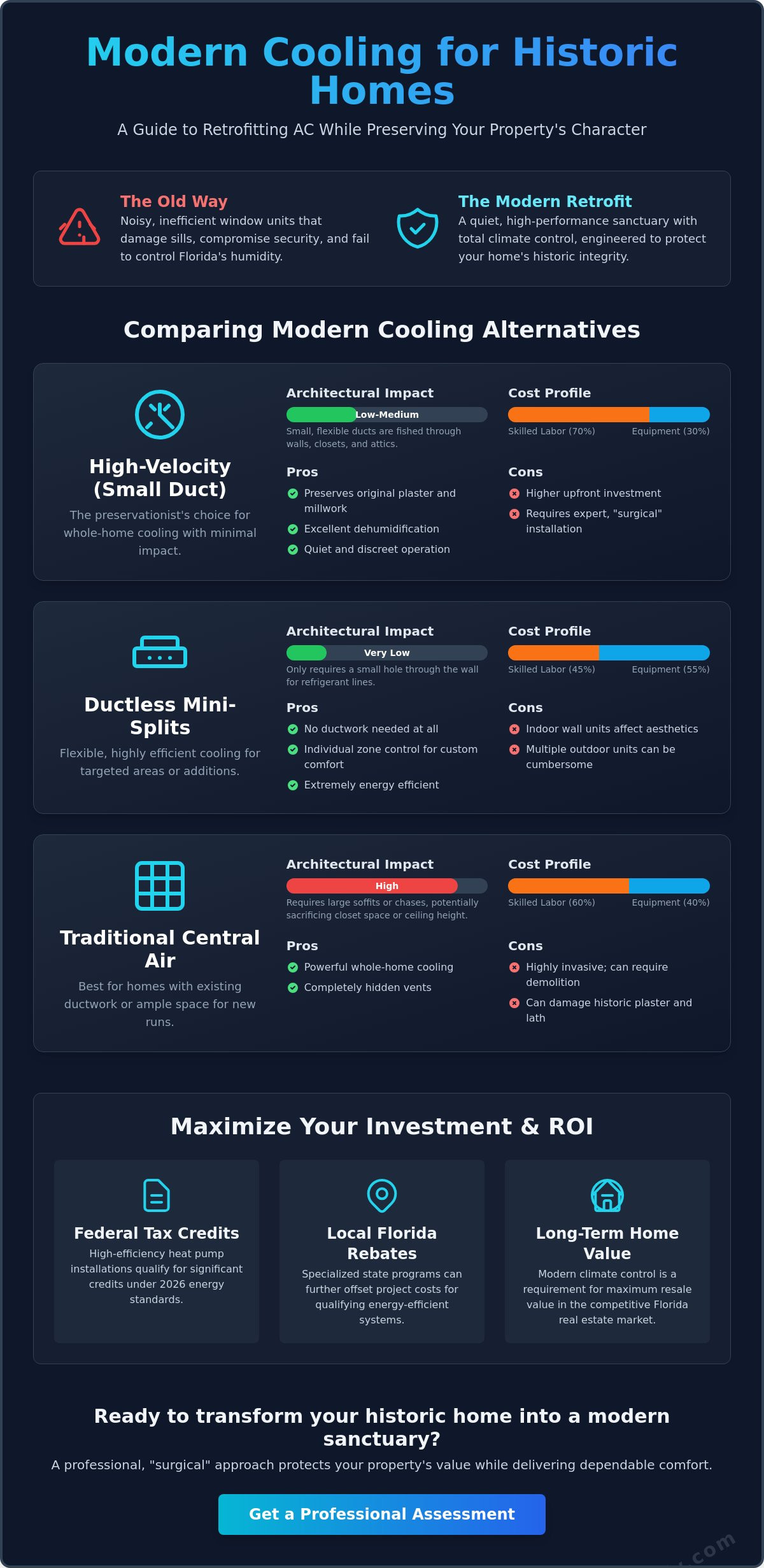
Ductwork Dilemmas: Traditional Central Air vs. Modern Alternatives
Forcing massive metal ducts into a 19th-century attic is often a recipe for disaster. Many contractors try to shoehorn 8-inch standard ductwork into spaces designed for nothing more than a crawlspace. This often leads to crushed insulation and poor airflow. When you're calculating the cost to install central air in old house structures, you must decide between traditional forced air and modern, low-impact alternatives. Traditional systems are reliable. However, they often require sacrificing your home's historic details or lowering your ceilings. Before you commit, it's wise to review current HVAC installation costs for different system architectures to see how they fit your budget. In our unique Florida climate, your choice affects more than just temperature; it dictates how well your home manages the relentless Gulf Coast humidity.
High-velocity systems are the "secret weapon" for historic preservation. Instead of bulky metal boxes, these systems use 2-inch flexible tubing that snakes through existing wall cavities like electrical wiring. This means we don't have to tear down plaster or build awkward bulkheads. The aesthetic benefit is undeniable. Small, circular vents about the size of a coffee mug blend seamlessly into your crown molding or floorboards. These systems also offer superior dehumidification. By pulling more moisture out of the air than standard units, they create a crisp, dry environment that protects your antique furniture and original woodwork from Florida's damp air.
Whole-Home Ductless Mini-Splits
Ductless technology has evolved far beyond the single-room "add-on" units of the past. While some national guides claim mini-splits are only for sunrooms or garages, a whole-home ductless strategy is often the most "BulletProof" long-term choice for a historic residence. You can eliminate ductwork entirely. This preserves your original ceilings and floors while giving you individual room temperature control. This "Sanctuary" concept allows you to cool only the rooms you're using, which dramatically lowers your energy bills. Because there are no ducts to leak or collect dust, the indoor air quality is significantly higher, which is a major relief for families with allergies.
Maintenance is the final piece of the puzzle. In high-salt, high-humidity areas like Sarasota and Bradenton, your equipment faces constant environmental stress. Whether you choose a hybrid approach that mixes central air with mini-splits for new additions or a full high-velocity retrofit, precision maintenance is non-negotiable. We design every system with accessibility in mind. This ensures our team can perform the rapid, dependable service needed to keep your sanctuary cool for years to come. The total cost to install central air in old house properties is an investment in your home's future, and choosing the right delivery method is the first step toward a successful outcome.
Maximizing ROI: Energy Efficiency, Rebates, and Savings
Lowering the cost to install central air in old house projects depends on how well you leverage current financial incentives. In 2026, the barrier to entry is lower than you might think thanks to aggressive federal and local programs. The Inflation Reduction Act provides a federal tax credit of up to $2,000 for qualifying high-efficiency heat pumps. This credit covers 30% of your project costs, including labor. When you stack this with Florida Power & Light (FPL) rebates, which range from $150 to $500, the immediate return on investment becomes clear. FPL even offers an instant $200 rebate when you work with participating contractors. These savings turn a major home upgrade into a manageable financial strategy.
Energy standards have shifted. The Florida Building Code now mandates higher efficiency levels based on the 2021 International Energy Conservation Code. While the initial cost to install central air in old house structures might seem high, the long-term operational savings tell a different story. Multiple window units are energy vampires. They struggle against the humidity and run constantly, leading to skyrocketing utility bills. A single high-efficiency system operates with precision, using significantly less power to maintain your home’s sanctuary. You'll see your monthly energy costs drop compared to the combined draw of several noisy window units.
The Heat Pump Advantage in SW Florida
Heat pumps are the definitive choice for the Sarasota and Bradenton climate. They don't just cool; they act as a comprehensive climate solution. Modern units handle extreme Florida humidity far better than the systems of a decade ago. They pull moisture from the air with surgical precision, preventing that "clammy" feeling often found in older homes. Since our winters are mild, a heat pump provides all the warmth you'll ever need during those few chilly January nights without the expense of a separate furnace.
Operational Savings and Maintenance
Protecting your new system is just as vital as the installation itself. Coastal salt air and high heat put immense stress on mechanical components. Enrolling in a professional HVAC Maintenance Plan ensures your system stays "BulletProof" and keeps your manufacturer warranty intact. We also recommend an "envelope" approach. This includes air sealing your attic and adding insulation, R-30 for South Florida or R-38 for Central Florida, to prevent your expensive cool air from escaping. Combine this with a smart thermostat to ensure you're only cooling your home when you're there to enjoy it. If you're ready to maximize your home's value and comfort, schedule your efficiency consultation today.
The BulletProof Installation: Protecting Your Florida Home
Protecting your home’s character requires more than just mechanical skill. It demands a commitment to precision. When homeowners research the cost to install central air in old house retrofits, they often overlook the impact of the installation process itself. A messy, disorganized crew can cause more damage to historic plaster and woodwork than the system is worth. We reject that approach. Our "BulletProof" installation method is built on speed, accuracy, and absolute respect for your property. We treat your home like a sanctuary because that’s exactly what it should be. While structural complexity affects the final cost to install central air in old house settings, the value of a precision installation pays for itself by avoiding the need for expensive follow-up repairs.
We operate with a first responder mindset. This means we prioritize minimizing downtime and disruption to your daily life. Living in a Florida summer without functional cooling isn't just an inconvenience; it's a distress situation. Our teams are trained to execute custom AC construction that accounts for every unique quirk of your historic structure, from uneven joists to thick masonry walls. We eliminate the need for follow-up visits by ensuring total accuracy during the initial setup. We don't just install equipment. We restore your peace of mind.
Our Process for Historic Retrofits
- Step 1: Surgical Site Assessment and Engineering. We don't rely on guesswork. Our team maps out every inch of the planned duct path or refrigerant lines to ensure we avoid original architectural features.
- Step 2: Dust Mitigation and Protection. We treat your "Sanctuary" with care. This includes using specialized floor protection and dust barriers to keep your home clean while we work.
- Step 3: Precision Installation and Testing. Once the system is in place, we perform rigorous testing. We focus specifically on how the system manages the intense Florida humidity to ensure your home stays crisp and dry.
Ready to Cool Your Old House?
Local expertise in Sarasota and Bradenton is non-negotiable for historic properties. Our team understands how coastal salt air and high-velocity hurricane zones impact system longevity. We provide customized estimates that respect your home’s history while delivering the modern, high-performance comfort you deserve. Don't settle for a contractor who treats your historic treasure like a standard job site. You need a partner who values preservation as much as you do. Schedule your BulletProof Air consultation today to begin your journey toward a cooler, more comfortable home.
Transform Your Historic Home Into a Modern Sanctuary
Bringing modern climate control to a historic property is a delicate balancing act that requires a surgical approach. You now understand how high-velocity tubing and ductless mini-splits can bypass structural limitations without destroying your home's original character. By leveraging 2026 federal tax credits and local utility rebates, you can significantly offset the initial cost to install central air in old house retrofits. This upgrade doesn't just lower your energy bills; it protects your antique interiors from the damaging effects of Gulf Coast humidity and restores your home as a peaceful refuge.
Our expert technicians specialize in the unique challenges of Southwest Florida properties. We provide fast response times and precision engineering to ensure your system is "BulletProof" from day one. We respect your architectural integrity and work with the urgency your comfort requires. Don't let another sweltering summer compromise your well-being. Request Your Free BulletProof Estimate for Historic Home AC Installation and take the first step toward a cooler, more valuable home today. You deserve a sanctuary that stays dependable regardless of the heat outside.
Frequently Asked Questions
Is it worth installing central air in a house with no ductwork?
Yes, installing modern cooling in a home without existing ducts is a highly valuable investment that transforms your environment into a climate-controlled sanctuary. You don't need traditional bulky ducts to achieve whole-home comfort. Options like ductless mini-splits or high-velocity systems provide superior dehumidification without compromising your home's historic character. These systems also eliminate the noise and security vulnerabilities associated with window units while significantly increasing your property's resale value.
How long does it take to install central air in an old house?
A professional historic retrofit typically takes between three to five days to complete from start to finish. Our team uses a "first responder" approach to ensure we minimize disruption and restore your home's comfort as quickly as possible. The exact timeline depends on the structural complexity of your property and the specific system chosen. We prioritize precision during this window to ensure the installation is done correctly the first time, avoiding any need for follow-up visits.
Will central air installation damage my historic plaster walls?
Your historic plaster walls will remain intact when you choose a contractor who specializes in surgical installation techniques. We use specialized tools and dust mitigation barriers to protect your home's original architectural features throughout the process. By mapping out "dead space" and using slim-profile components, we can integrate modern cooling without the need for major demolition. This careful planning ensures your home's aesthetic integrity and structural sanctuary are fully preserved.
What is the best type of AC for an old home with limited space?
High-velocity systems and ductless mini-splits are the best options for older homes with restricted space. High-velocity units use flexible two-inch tubing that snakes through existing wall cavities where standard eight-inch ducts won't fit. Alternatively, ductless systems bypass the need for any internal piping by using localized air handlers. Both choices provide the efficient, quiet performance needed to manage the intense Florida humidity while respecting the unique layout of your historic property.
Can I install central air in an old house myself to save money?
DIY installation is not advisable because it often leads to code violations and the loss of your manufacturer warranty. Retrofitting a historic structure requires specialized engineering knowledge and a deep understanding of the current Florida Building Code. Professional installation ensures your system qualifies for the 2026 federal tax credits and local utility rebates. More importantly, it guarantees the precision needed to keep your home safe and your cooling system "BulletProof" against the coastal climate.
How much does it cost to add ductwork to an existing home?
Adding ductwork to an existing home is a labor-intensive project that requires a custom engineering strategy for every floor. The total cost to install central air in old house structures will depend on whether we utilize attic space, crawlspaces, or create custom vertical chases to hide the runs. While this is a significant investment, it provides a permanent solution for whole-home comfort. We focus on using rigid metal components whenever possible to ensure maximum airflow and long-term durability.
Do I need to upgrade my electrical panel for central air?
Most older homes require an electrical panel upgrade to safely handle the 220V power requirements of modern HVAC equipment. This upgrade is a critical safety measure that protects your home from electrical strain and ensures compliance with the National Electric Code. Since the exception for GFCI protection on listed HVAC equipment is set to expire on September 1, 2026, having a professional update your electrical system now is a smart move for long-term security.
Are there tax credits available for HVAC retrofits in 2026?
Yes, the 2026 Federal Energy Efficient Home Improvement Credit (25C) provides a tax credit of up to $2,000 for qualifying high-efficiency heat pumps. This incentive covers 30% of the total project cost, including both the equipment and the skilled labor required for installation. Homeowners in the Sarasota and Bradenton areas can also stack these federal savings with local utility rebates from providers like FPL. This makes the cost to install central air in old house retrofits more accessible than ever before.
If you would like maintenance or repair assistance with your Florida Air Conditioner, contact BulletProof Air Or call: 941.599.9999 for more information about how we can help.