

How to Clean AC Coils Safely: A Step-by-Step Homeowner Guide
What if the biggest risk in cleaning your AC coils isn’t the dirt, but reaching the wrong part of the system? If you’re wondering how to clean ac coils safely, that’s a sensible concern. The outdoor condenser coil is usually accessible for light debris, while the indoor evaporator coil is tucked inside the air handler and can be difficult to reach without disturbing electrical parts or delicate components.
You can handle some basic upkeep at home, but not every coil is a safe DIY job. This guide explains how to identify both coils, reduce electrical and equipment risks, and choose appropriate tools and cleaners. You’ll also learn when to stop rather than risk bent fins, damaged wiring, or a problem that cleaning won’t fix.
We’ll focus on a cautious approach: shut off power before inspection, clear light debris from the outdoor unit without force, and treat indoor coil access carefully. If a coil is heavily soiled, hard to reach, or linked to poor cooling or unusual system behavior, professional HVAC maintenance can help identify the cause and protect your comfort.
Key Takeaways
- Learn how to clean ac coils safely by checking the equipment manual and following a cautious, limited DIY process.
- Use gentle cleaning methods on an outdoor condenser coil. Avoid forceful water or tools that could bend its fins.
- Keep indoor maintenance to accessible checks and filter replacement unless the evaporator coil is safely reachable without opening equipment cabinets.
- Stop if you find heavy buildup, damage, leaks, or cooling problems that persist after basic upkeep.
- Know when professional HVAC maintenance or repair is the safer next step for your home in Sarasota or Southwest Florida.
How to Clean AC Coils Safely Starts with Knowing Which Coil You Have
Before reaching for a brush or cleaner, identify the coil and decide whether you can access it without opening equipment or getting near electrical parts. The outdoor condenser coil is generally the more practical place for limited homeowner cleaning. The indoor evaporator coil is often enclosed, so leave it alone if reaching it means removing a sealed panel or working around wiring.
An AC coil is a heat-transfer component that helps move heat out of your home so the indoor air can cool. In a standard cooling cycle, the indoor evaporator coil absorbs heat from the air, and the outdoor condenser coil releases it outside. For more background on how heat pumps work, see the explanation of the refrigeration cycle and heat transfer.
Where to find the condenser and evaporator coils
The condenser coil wraps around the exterior of the outdoor unit, often behind a protective grille. Leaves, grass, or dust may collect on its surface. The evaporator coil is usually inside the air handler or furnace cabinet, where warm indoor air passes over it. That location makes it harder to inspect and clean safely.
Don’t force access to the indoor coil. If it’s behind a sealed panel, stop rather than removing the panel or reaching inside. The cabinet may contain electrical components. A technician can access the coil using the appropriate process and tools.
When coil cleaning may help, and what it cannot fix
Visible debris or airflow blocked by grass and leaves can be a reason to inspect the outdoor unit. But a little surface dirt doesn’t automatically call for aggressive cleaning. Coil fins are delicate, and forceful scrubbing or unsuitable cleaners can cause damage. The goal is to address loose buildup safely, not make the coil look new at any cost.
Cleaning has limits. It won’t repair a refrigerant leak, replace a failed component, or correct a system that’s improperly sized for the home. When an aging setup is beyond simple maintenance and calls for a complete replacement, UK homeowners can check out Essex Home Air Conditioning for professional residential installation. If dirt returns quickly, airflow remains weak, or the AC still struggles to cool after basic upkeep, the cause may need professional diagnosis. Knowing how to clean ac coils safely also means knowing when not to proceed. In Southwest Florida, professional HVAC maintenance is a sensible next step when the indoor coil is inaccessible, buildup is heavy, or cooling problems persist.
How to Clean an Outdoor AC Condenser Coil Without Damaging It
A cautious rinse can remove loose debris from an accessible outdoor condenser coil, but safety comes first. Turn off power before cleaning because an outdoor AC unit contains electrical components and moving parts that can cause injury or equipment damage. Follow the unit manufacturer’s instructions. If you can’t identify the correct way to shut off power, stop and contact a qualified HVAC technician.
Prepare the outdoor unit before cleaning
Use this limited process only if the coil is accessible without opening the unit or reaching inside. Wear gloves and eye protection, and keep children and pets away from the work area.
- Turn off the system. Switch the AC off at the thermostat, then isolate power using the unit’s disconnect or the appropriate breaker. If you’re unsure which one controls the unit, don’t guess.
- Inspect the exterior. Look for leaves, grass, visible damage, exposed wiring, or other concerns. Don’t touch wiring, fan blades, or anything inside the unit. If you see damage, stop.
- Clear loose debris nearby. Pick up leaves and trim back vegetation around the unit without reaching through the grille. Keep tools and hands outside the cabinet.
Rinse condenser coils gently and check the result
Continue only if the manufacturer permits rinsing. Keep the unit’s panels in place, and use a gentle stream of water on accessible exterior coil surfaces. Aim to wash away loose dirt without forcing water into electrical components. Never use a pressure washer, hard brush, or forceful spray. The thin metal fins can bend easily, restricting airflow and potentially harming the coil.
- Rinse lightly. Use plain water unless the equipment manufacturer specifically allows a coil cleaner and explains how to apply it. Don’t improvise with household chemicals.
- Let the unit dry. Leave power off while water drains and the exterior dries. Don’t restart the system until you’ve followed the manufacturer’s guidance.
- Check from the outside. Look for remaining debris or bent fins, but don’t remove panels or try to straighten damaged areas with a tool. If buildup remains or the coil looks damaged, stop.
This careful approach to how to clean ac coils safely is intended for light, accessible debris, not heavy buildup or repairs. If you’re unsure about the shutoff, the coil’s condition, or whether cleaning is appropriate, professional HVAC maintenance can help protect your equipment. Explore professional HVAC maintenance when DIY cleaning isn’t enough.
Can You Clean Indoor AC Evaporator Coils Yourself? Know the Limits
An indoor evaporator coil is usually harder to clean safely than an outdoor condenser coil. It’s commonly housed inside the air handler or furnace cabinet, behind a panel. Reaching it may require opening equipment and working near electrical parts, refrigerant lines, or condensate components. Don’t assume a household spray is suitable just because it’s labeled for cleaning. Follow the equipment manual, and leave the coil alone if access isn’t clearly intended for homeowners.
Safe checks around an indoor air handler
You can still do useful checks without dismantling the system. Switch it off before inspecting accessible areas, and follow the manufacturer’s instructions. Check the air filter and replace it as directed. A clogged filter can restrict airflow, but changing it doesn’t require touching the coil.
Look for visible water around the air handler, unusual odors, or airflow that remains weak. These signs don’t confirm that the coil is dirty. They can point to other issues, so avoid reaching inside to investigate.
Know what’s low-risk and what’s for a technician
- Low-risk homeowner checks: Turn off the system before looking at accessible areas, check for visible signs such as water or unusual odors, and replace the filter according to the equipment manual.
- Technician work: Open a sealed or difficult-to-access panel, clean a coil you can’t reach safely, or handle electrical parts, refrigerant lines, and condensate components.
Stop if coil access requires removing a panel that isn’t designed for routine homeowner access. Don’t spray cleaner into a cabinet or reach around internal components. A product’s general cleaning claim doesn’t establish that it’s compatible with your specific coil or safe to use in its location. Follow the equipment manual and product label for any permitted cleaning. If the instructions are unclear, ask an HVAC professional.
When evaporator cleaning belongs to an HVAC technician
A technician can inspect the coil and look for buildup, drainage issues, or related faults without treating cleaning as a cure-all. Persistent airflow problems or poor cooling may have causes beyond dirt, including a system fault that needs diagnosis. In Southwest Florida, professional HVAC maintenance is a sensible next step if the coil is inaccessible or symptoms continue.
Knowing how to clean ac coils safely includes knowing where DIY should stop. Keep your checks simple, and leave internal coil cleaning or troubleshooting to a trained HVAC technician when access, safety, or the cause of the problem is uncertain. For homeowners in the Pacific Northwest managing complex furnace and air handling equipment, trusted professionals like OutToday Electrical, Plumbing, Heating and Air can safely inspect and service the system.
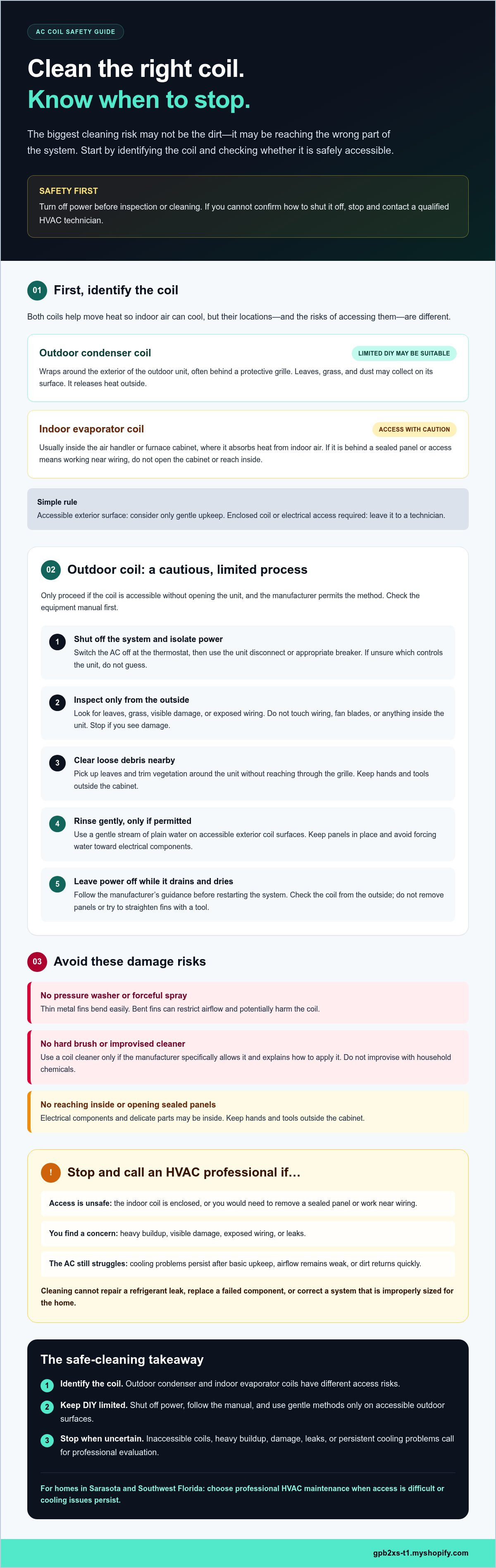
AC Coil Cleaning Safety: Choose Appropriate Tools and Avoid Common Mistakes
Safe coil cleaning depends on the equipment in front of you, not a one-size-fits-all online tip. Check the unit’s manual first, then read the cleaner label to confirm it’s approved for your specific equipment and coil material. If those instructions don’t clearly support the method, don’t proceed. The safest answer to how to clean ac coils safely may be to leave the coil for a technician.
Which coil-cleaning tools and products are appropriate?
Use only tools and cleaners the manufacturer permits. There’s no universal cleaner that’s appropriate for every AC coil. Avoid bleach, acids, homemade mixtures, and other unverified products. Harsh or incompatible chemicals can harm equipment or leave residues, while improvised tools can crush or scrape delicate fins.
A fin comb is designed for coil fins, but it still requires careful use and the right fit. Don’t use one to force bent fins back into place or treat visible damage. If fins are already distorted, or you aren’t sure how to handle the tool, stop. A comb won’t diagnose or repair the underlying problem.
Mistakes that can turn cleaning into an HVAC repair
Keep cleaning controlled. Never spray electrical components, and don’t run the unit while cleaning. Avoid scraping, crushing, or trying to straighten fins with a screwdriver, knife, or other improvised tool. If a product label calls for specific precautions, follow them rather than relying on general advice.
Weak cooling doesn’t prove the coils are dirty. A system can have other problems that cleaning won’t resolve. Stop and arrange a professional assessment if you encounter any of these signs:
- You can’t confidently isolate power or identify which cleaning method the manual allows.
- The fins are bent, the coil is damaged, or buildup appears heavy.
- You notice a leak or persistent cooling symptoms.
- Safe access would require opening a sealed panel or handling internal components.
Stop when safe access or the correct cleaning method is uncertain. That rule helps protect both you and the equipment. Don’t keep troubleshooting by trying stronger chemicals or tools. A trained HVAC technician can inspect the coil and diagnose related system problems instead of assuming cleaning will fix them.
If the coil is difficult to access, heavily soiled, or tied to ongoing cooling trouble, request professional HVAC maintenance to determine the right next step.
When to Call an HVAC Professional for AC Coil Cleaning in Southwest Florida
Stop DIY cleaning if a coil is inaccessible, heavily soiled, or visibly damaged. Leaks and cooling problems that continue after basic upkeep also call for a technician. These signs don’t necessarily mean the coil itself is the only problem. A professional can inspect the system and identify what needs attention before more cleaning or a repair is attempted.
Signs coil problems may need diagnosis, not just cleaning
Pay attention to persistent weak airflow, unusual system behavior, visible leaks, or dirt that keeps returning. Each can have more than one cause, so cleaning alone may not resolve the issue or restore cooling. Avoid repeating a cleaning attempt if symptoms persist. For ongoing cooling concerns, see this guide to AC repair in Southwest Florida.
Leave the unit off if you see damage or a leak, or if investigating would mean opening a sealed panel or handling internal components. A technician can assess the coil alongside related parts rather than treating visible dirt as the whole diagnosis.
Choosing maintenance support in Sarasota and nearby communities
For homeowners in Sarasota and across Southwest Florida, a qualified HVAC technician can inspect accessible coils and related system components, then determine whether cleaning, repair, or further diagnosis is appropriate. If you’re comparing local options, review this HVAC maintenance and service guidance. Ask what an appointment includes and confirm that the provider serves your location.
BulletProof Air serves residential customers in Southwest Florida and offers HVAC maintenance plans. If you’re unsure how to clean ac coils safely, or your system still isn’t cooling properly, professional maintenance can be a sensible next step. It gives a technician the opportunity to assess the coil and investigate related concerns without assuming cleaning will fix every problem.
For help deciding what your system needs, contact BulletProof Air for HVAC help.
Protect Your AC by Knowing When to Stop
Safe coil care isn’t about removing every trace of dirt. It’s about identifying which coil you can reach, following your equipment and cleaner instructions, and avoiding actions that could damage fins or expose you to electrical hazards. If you’re learning how to clean ac coils safely, limit DIY work to accessible tasks. Leave sealed or difficult-to-reach coils, heavy buildup, visible damage, leaks, and ongoing cooling problems to a professional.
Cleaning may help with surface debris, but it can’t diagnose every cause of poor cooling. BulletProof Air serves residential customers in Southwest Florida, and its trained technicians diagnose and repair HVAC problems. The company also offers HVAC maintenance plans for homeowners seeking ongoing support.
If you’re unsure what your system needs, take the safer next step: contact BulletProof Air for professional HVAC help. With the right guidance, you can protect your equipment and get back to enjoying a comfortable home.
Frequently Asked Questions
How often should AC coils be cleaned?
Follow the cleaning and maintenance schedule in your AC manufacturer’s manual rather than relying on a universal interval. How often cleaning is needed depends on your system and its surroundings. Outdoor coils may collect leaves or grass, while indoor coils can accumulate buildup over time. Check for visible debris during routine upkeep. If dirt returns quickly or cooling weakens, ask an HVAC technician whether cleaning or another service is appropriate.
Can I clean AC coils with water?
Water may be suitable for a gentle rinse of an accessible outdoor condenser coil if the equipment manufacturer permits it. Turn off and isolate power first, keep water away from electrical components, and avoid forceful sprays that can bend fins. Don’t assume the same method is safe for an indoor evaporator coil. It’s often enclosed in the air handler, so don’t spray inside a cabinet or open sealed panels to reach it.
Is it safe to clean AC coils myself?
Limited cleaning of an accessible outdoor coil may be manageable if you can safely shut off power and follow the unit’s instructions. If you’re unsure which breaker or disconnect controls the system, stop rather than guess. Don’t open sealed equipment, touch wiring, or reach near moving parts. When learning how to clean ac coils safely, the key is knowing when to stop: leave inaccessible coils, damage, leaks, and persistent system problems to an HVAC technician.
What is the safest cleaner for AC coils?
Use only a cleaner that the equipment manufacturer approves for your specific coil and application. Read both the unit manual and product label, and follow their directions and precautions. There isn’t one cleaner that’s safe for every system. Don’t substitute bleach, acids, household sprays, or homemade mixtures. If the instructions don’t confirm that a cleaner is compatible, skip it and ask an HVAC technician before applying chemicals to the coil.
Can dirty AC coils cause an air conditioner to stop cooling?
Dirty coils can interfere with heat transfer and contribute to poor cooling, but they aren’t the only possible cause. Weak airflow or warm air may also point to a filter issue, a failed component, a refrigerant problem, or another system fault. Don’t assume cleaning will restore cooling. If the AC continues to struggle after simple, safe checks, stop troubleshooting and have an HVAC technician diagnose the system before attempting more cleaning.
Should I clean the evaporator coil or condenser coil?
The condenser coil is outside and is generally easier to inspect for loose leaves, grass, or other visible debris. A gentle rinse may be appropriate if the manufacturer allows it and power is off. The evaporator coil is usually inside the air handler or furnace cabinet, so access is more limited. Keep indoor checks to the filter and visible signs. Don’t open sealed panels or spray into the cabinet to clean the coil.
When should I call an HVAC technician to clean AC coils?
Call a technician if a coil is difficult to access, has heavy buildup or bent fins, or if you notice a leak. Persistent weak airflow, unusual system behavior, or cooling trouble also deserves diagnosis, since cleaning may not address the underlying cause. Stop if you can’t safely isolate power or identify an approved cleaning method. A technician can inspect the coil and related components and determine what service is appropriate.