

How to Get Musty Smell Out of AC Vents: A Florida Homeowner’s Guide
You've finally invited the neighbors over for dinner, but the moment your air conditioner kicks on, a thick, damp odor that smells like a wet locker room fills the living room. It's an embarrassing situation that leaves you wondering if your home's air is actually safe for your family. In the intense Florida humidity, your cooling system is your lifeline. When it starts emitting a foul scent, the stress can be overwhelming. You likely fear a massive repair bill or, even worse, the health risks of breathing in mold spores every day.
We understand that a foul odor is more than just a nuisance; it's a direct threat to your home's status as a sanctuary. You deserve to feel confident in the air you breathe. This guide will show you exactly how to get musty smell out of ac vents by identifying the root causes of biological growth and moisture buildup. We will walk through the definitive steps required to neutralize these odors, lower your indoor humidity, and ensure your system returns to its role as a dependable protector of your comfort.
Key Takeaways
- Understand the impact of Florida’s extreme humidity and learn to distinguish between common "Dirty Sock Syndrome" and serious biological growth.
- Discover the immediate DIY steps for how to get musty smell out of ac vents, starting with high-efficiency filter replacement and vent grille sanitation.
- Identify deep-seated system issues like plenum moisture and leaky ductwork that pull contaminated air into your home from the attic or crawlspace.
- Restore your home as a protected sanctuary by exploring professional solutions like UV germicidal lights and whole-home dehumidification systems.
- Establish a proactive maintenance routine and simple monthly habits to ensure your air remains fresh, healthy, and odor-free for the long term.
Identifying the Odor: Why Your AC Vents Smell Musty
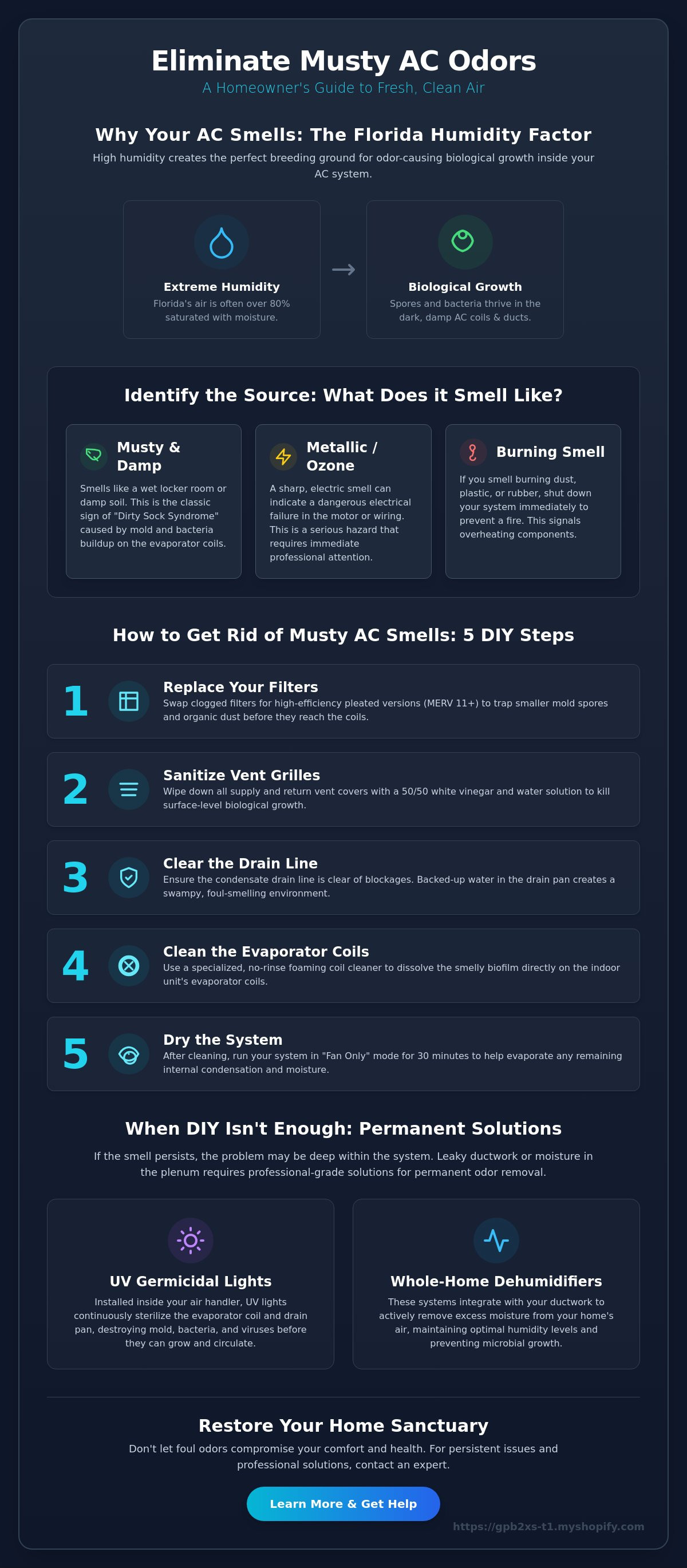
Florida homeowners live in a unique environment where humidity levels frequently exceed 80%. This heavy, moisture-laden air acts as a constant catalyst for microbial growth inside your cooling system. When you're trying to figure out how to get musty smell out of ac vents, you must first identify the specific source of the stench. A damp, earthy odor usually points to biological growth. However, a sharp, metallic, or "ozone" scent could signal a dangerous electrical failure. Don't ignore these warnings. Your home should be a safe sanctuary, not a source of respiratory distress. A burning smell requires an immediate system shutdown and a professional inspection to prevent a house fire.
Poor indoor air quality is a serious concern that can lead to Sick Building Syndrome. This is a condition where occupants experience health issues tied directly to the time spent inside a specific building. In Florida, the battle against mold is constant because your AC system is designed to strip moisture from the air. If that moisture doesn't drain properly, your vents become conduits for spores. This affects your comfort and your long-term well-being.
Is it a Car or a Home Issue?
Before you panic about your home's infrastructure, ensure the smell isn't following you from your vehicle. Car AC systems often suffer from clogged drain tubes or dirty cabin air filters, creating a localized musty scent that lingers on your clothes. If the odor persists in every room of your house, it's a residential HVAC crisis. You can differentiate the two by looking for these home-specific red flags:
- The odor is strongest near the return air vents.
- The smell intensifies when the AC compressor kicks on.
- You notice visible moisture or standing water in the indoor drain pan.
Stagnant water sitting in a residential drain pan is a prime breeding ground for bacteria. When the blower fan activates, it pushes the scent of that standing water through your entire duct network.
The Science of 'Dirty Sock Syndrome'
Many homeowners describe a "locker room" smell, a phenomenon technically known as Dirty Sock Syndrome. This occurs when bacteria and mold spores colonize the dark, damp environment of your evaporator coils. These microbes feast on organic dust that bypasses your filters, creating a thick, smelly biofilm. Dirty Sock Syndrome is the accumulation of biological growth on AC coils. To effectively learn how to get musty smell out of ac vents, you have to address this buildup at the heart of the system. Without professional intervention or precision cleaning, these colonies will continue to thrive in the intense Florida heat.
How to Get Musty Smell Out of AC Vents: 5 DIY Steps
Eliminating that damp odor doesn't always require a technician immediately. You can take several direct actions to reclaim your home's air quality and peace of mind. If you want to know how to get musty smell out of ac vents effectively, start with these five fundamental steps:
- Replace your filters: Swap out old, dust-clogged filters for high-efficiency pleated versions that trap smaller spores.
- Sanitize the grilles: Wipe down every vent cover with a natural disinfectant to remove surface-level biological growth.
- Clear the drain line: Ensure water isn't backing up into your system's drain pan, which creates a swampy stench.
- Clean the coils: Use a specialized, self-rinsing foam cleaner on the indoor evaporator coils to dissolve biofilm.
- Dry the system: Run the blower fan in "Fan Only" mode for 30 minutes to evaporate internal condensation.
Cleaning Your Vents Safely
Avoid using harsh bleach inside your ductwork. Bleach fumes are abrasive and don't penetrate porous surfaces where mold roots itself. Instead, use a 50/50 solution of distilled white vinegar and water. This natural anti-fungal kills spores without introducing toxic chemicals into your breathing space. When removing vent covers, use a steady hand to avoid cracking the surrounding drywall. Once the grille is off, use a flashlight to inspect the boot behind it. If you see thick, fuzzy growth or standing water, your odor issue is likely deeper than a surface-level fix. Maintaining clean pathways is vital because poorly managed air conditioning risks the continuous circulation of pollutants and allergens throughout your home.
Checking the Drain Line
In Florida, your AC system generates gallons of water every day through condensation. If you have a clogged drain line, that water sits in the pan and turns into a smelly "sludge" of algae and bacteria. Locate the white PVC pipe exiting your house near the foundation. Attach a wet/dry vacuum to the end of the pipe and seal the connection with a wet rag. Run the vacuum for about 30 seconds to pull out any blockages. To prevent future clogs, pour a cup of distilled vinegar into the drain line's T-pipe every month. This simple habit keeps the line clear and ensures your system remains a dry, odor-free sanctuary. If these DIY attempts don't resolve how to get musty smell out of ac vents, your system might require a professional residential HVAC service to address deep-seated growth.
Deep Root Causes: When Cleaning Vents Isn't Enough
Sometimes, basic DIY cleaning doesn't stop the stench. If you've wiped your grilles and changed filters but the odor returns, you're likely facing a systemic failure. The "plenum" is the large distribution box connected directly to your indoor unit. In Florida's intense heat, if this box has poor insulation or air leaks, it becomes a cold surface sitting in a sweltering attic. Condensation forms instantly. This creates a permanent puddle at the heart of your HVAC system. Understanding these hidden mechanics is vital for anyone researching how to get musty smell out of ac vents.
A dirty evaporator coil also plays a major role in persistent odors. When dust bypasses your filter, it sticks to the wet coil surfaces, creating a thick "mud" that traps moisture and feeds bacteria. This biofilm doesn't just smell; it also creates an insulating layer that prevents your system from cooling efficiently. This forces your equipment to work harder, driving up your monthly energy bills while failing to provide the fresh air you expect.
Ductwork Integrity and Smells
Your ducts are the lungs of your home. If there are holes, cracks, or disconnected joints, your system pulls in unconditioned air from the attic or crawlspace. This air is often filled with insulation fibers, dust, and extreme humidity. You might notice your ducts "sweating" when this happens, which leads to rapid mold growth inside the tubes. While many homeowners wonder is professional air duct cleaning worth it, the answer is usually yes when structural leaks are present. Cleaning removes the current growth, but you must also seal those leaks to prevent the moisture from returning.
Just as your ducts require attention, ensuring that other ventilation routes like your chimney are clear is vital for home air quality; Absolute Chimney Pros can help maintain these areas to prevent soot and moisture-related odors.
Humidity Control Failures
In the Sarasota climate, your AC must run long enough to strip moisture from the air. If your unit is too large for your home, it will "short cycle." This means it reaches the target temperature quickly and shuts off before the dehumidification process is complete. This leaves your home feeling clammy and smelling like a swamp. To keep your home a true sanctuary, you must manage moisture levels as outlined in this EPA guide to mold and moisture. Avoid running your fan in the "On" position during the summer. This setting blows moisture sitting on the wet coils back into your house after the cooling cycle ends. Always keep your thermostat set to "Auto" for maximum moisture removal.
Professional Solutions for Permanent Odor Removal
DIY cleaning provides temporary relief, but Florida's relentless humidity often requires a more robust defense. If you've struggled with how to get musty smell out of ac vents despite regular maintenance, it's time to consider permanent upgrades. Professional solutions focus on neutralizing biological growth before it reaches your living space. A multi-layered approach to air purification transforms your HVAC system into a high-performance filtration center, ensuring long-term protection for your family.
Whole-home dehumidifiers are a game-changer for maintaining your home as a true sanctuary. These systems work alongside your AC to keep indoor humidity levels consistently below 50%. This creates an environment where mold and bacteria simply cannot survive. Professional coil sanitation involves a deep chemical treatment that reaches into the tight fins of your evaporator coil. This process removes the stubborn biofilm that standard foam cleaners leave behind. Restoring both efficiency and air purity requires this level of precision and expertise.
The Power of UV-C Technology
UV-C germicidal lights are the gold standard for improving your home's indoor air quality. These lights are installed directly inside your air handler, where they shine 24/7 on the evaporator coil. The ultraviolet radiation disrupts the DNA of mold spores and bacteria, preventing them from colonizing the wet metal surfaces. This technology ensures that biological biofilm never has the chance to form. Precision installation is required to ensure the light is positioned correctly for maximum exposure without damaging the system's internal plastic components.
When to Call for Professional AC Repair
Don't wait for a total system failure if the odor persists. If you or your family members experience unexplained headaches, sneezing, or respiratory irritation while the AC is running, the situation is urgent. Visible black or green growth on your vent grilles is another definitive sign that the problem has moved beyond your control. Persistent odors usually indicate a hidden mechanical issue, such as a cracked drain pan or a failing blower motor. You need fast, reliable AC repair in Sarasota to identify and resolve these deep-seated problems before they escalate into expensive replacements.
Your health and comfort are our top priorities. If you need immediate assistance with how to get musty smell out of ac vents, contact our team today for a comprehensive system evaluation. Schedule your residential HVAC service now to restore the fresh, clean air your family deserves.
Prevention: Keeping the Musty Smell Away for Good
Stopping an odor once is a victory, but keeping it away forever requires a proactive defense. In the relentless Florida climate, your HVAC system works harder than almost anywhere else in the country. You can't afford to wait for a failure before taking action. Once you've learned how to get musty smell out of ac vents, your focus must shift toward maintaining that fresh environment. Prevention is significantly more affordable than remediation. By establishing a "BulletProof" routine, you protect your home's air quality and extend the lifespan of your expensive equipment.
Preparing for the peak summer heat starts in the spring. Before the humidity hits its 90% highs, ensure your system is optimized for moisture removal. This includes verifying that your refrigerant levels are precise and your blower motor is operating at the correct speed. A system that isn't tuned for the local climate will inevitably struggle, leading to the damp, stagnant conditions that invite microbial growth back into your ductwork. Spring is also the ideal time to evaluate other ventilation points; for instance, Best Chimney Services provides the expert inspection needed to keep chimneys from contributing to indoor air quality issues.
The Maintenance Checklist
A consistent schedule is your best weapon against recurring odors. During Florida's intense pollen seasons, your filters can become overwhelmed in as little as three weeks. Don't wait for the standard 90 day recommendation; check your filters monthly. Incorporating a professional HVAC maintenance plan provides an incredible return on investment by catching small issues before they turn into smelly disasters. A professional inspection should include:
- Precision cleaning of the primary and secondary drain pans.
- Calibration of the thermostat to ensure proper dehumidification cycles.
- Inspection of the plenum and duct joints for air leaks.
- Testing of the UV-C germicidal system if one is installed.
Restoring Your Home's Sanctuary
Your home should be a place of total relief. Breathing clean, crisp air is a fundamental part of that comfort. While DIY steps are excellent for surface-level maintenance, they can't replace the deep, technical precision of a professional evaluation. If you've followed the steps on how to get musty smell out of ac vents but still feel uneasy about your air quality, it's time to bring in the experts. We act as your home's first responders, dedicated to restoring and protecting your personal space. Don't live with the embarrassment or health concerns of a musty home for another day. Schedule your Indoor Air Quality assessment with BulletProof Air today! We provide the definitive solutions you need for a healthier, fresher home.
Reclaim Your Home's Fresh Air and Peace of Mind
A musty odor is your air conditioner's way of signaling for help. While simple DIY steps like replacing filters or sanitizing grilles provide a temporary fix, persistent smells in Florida's intense humidity often point to deeper issues like biofilm on evaporator coils or structural duct leaks. You've now learned how to get musty smell out of ac vents by addressing both surface-level symptoms and deep-rooted moisture problems. Don't let poor air quality compromise your sanctuary or your family's health any longer.
Our expert technicians serve Sarasota and Bradenton with specialized Indoor Air Quality solutions designed to kill spores at the source. We provide fast response times for emergency repairs to ensure your home returns to a state of comfort without delay. Restore your home's air quality with BulletProof Air’s expert technicians; Book Now! You deserve a home that feels as fresh as it looks, and we're ready to make that a reality today.
Frequently Asked Questions
Is the musty smell from my AC dangerous to my health?
Yes, a persistent musty smell indicates the presence of mold spores or bacteria that can trigger allergies, asthma, and serious respiratory infections. Breathing these microbes daily compromises your home's status as a sanctuary and can lead to chronic fatigue. If you experience unexplained headaches or sneezing only when the air is running, your indoor air quality has reached a critical level that requires urgent professional intervention.
Can I use ozone generators to get rid of AC odors?
You should avoid using ozone generators in occupied homes because ozone is a known lung irritant that can exacerbate respiratory conditions. While these machines neutralize odors, the health risks to your family and pets are significant. Professional solutions focus on source removal, such as deep coil sanitation or installing UV-C germicidal lights that kill microbes safely without introducing harmful gases into your living space.
How often should I change my AC filters in Sarasota?
You should change your AC filters every 30 to 60 days in the Sarasota and Bradenton area due to our extreme humidity and year-round pollen counts. During the peak summer months, checking your filter every 30 days is a vital habit to prevent system strain. Clogged filters restrict airflow and allow organic dust to settle on wet coils, which is the primary catalyst for foul odors.
Will a professional duct cleaning actually remove the musty smell?
Professional duct cleaning removes the physical buildup of mold and debris, but it isn't a permanent fix if the underlying moisture problem remains. We follow EPA guidelines, which recommend cleaning on an as-needed basis when visible growth is present. To ensure the smell stays away, you must also address structural issues like leaky ductwork or high humidity that allowed the mold to thrive in the first place.
Why does my AC smell like vinegar sometimes?
A vinegar-like scent is often caused by specific types of bacteria or acetate-producing microbes thriving in the biofilm on your evaporator coils. This is a common variation of Dirty Sock Syndrome. It usually signals that your system isn't draining properly, allowing organic matter to ferment in the stagnant water of the drain pan. This requires a professional deep cleaning to neutralize the pH imbalance and kill the bacteria.
How much does it cost to fix Dirty Sock Syndrome professionally?
The cost to resolve Dirty Sock Syndrome varies based on the severity of the biological growth and the specific cleaning methods required for your system. A precise evaluation is necessary to determine if a specialized chemical flush will suffice or if you need permanent upgrades like UV-C lights. Investing in professional sanitation now prevents the much higher cost of a premature system replacement due to corrosive buildup.
Can I spray Lysol directly into my home air vents?
You should never spray Lysol or other flammable household disinfectants directly into your air vents. These chemicals can damage sensitive HVAC components and create a fire hazard if the mist reaches the blower motor. Furthermore, these sprays only mask the scent temporarily. They don't provide a long-term solution for how to get musty smell out of ac vents and can actually degrade your indoor air quality further.
Does 'Dry Mode' on my AC help with musty smells?
Yes, "Dry Mode" is an effective tool because it prioritizes dehumidification by running the compressor and fan at speeds optimized to strip moisture from the air. By keeping your home's humidity levels below 50%, you create an environment where mold and bacteria cannot colonize your system. This setting is particularly useful during Florida's rainy season when the air is saturated but the temperature doesn't require full cooling power.
If you would like maintenance or repair assistance with your Florida Air Conditioner, contact BulletProof Air Or call: 941.599.9999 for more information about how we can help.