

How to Keep Your Condo Cool in Florida: The Ultimate 2026 Cooling Guide
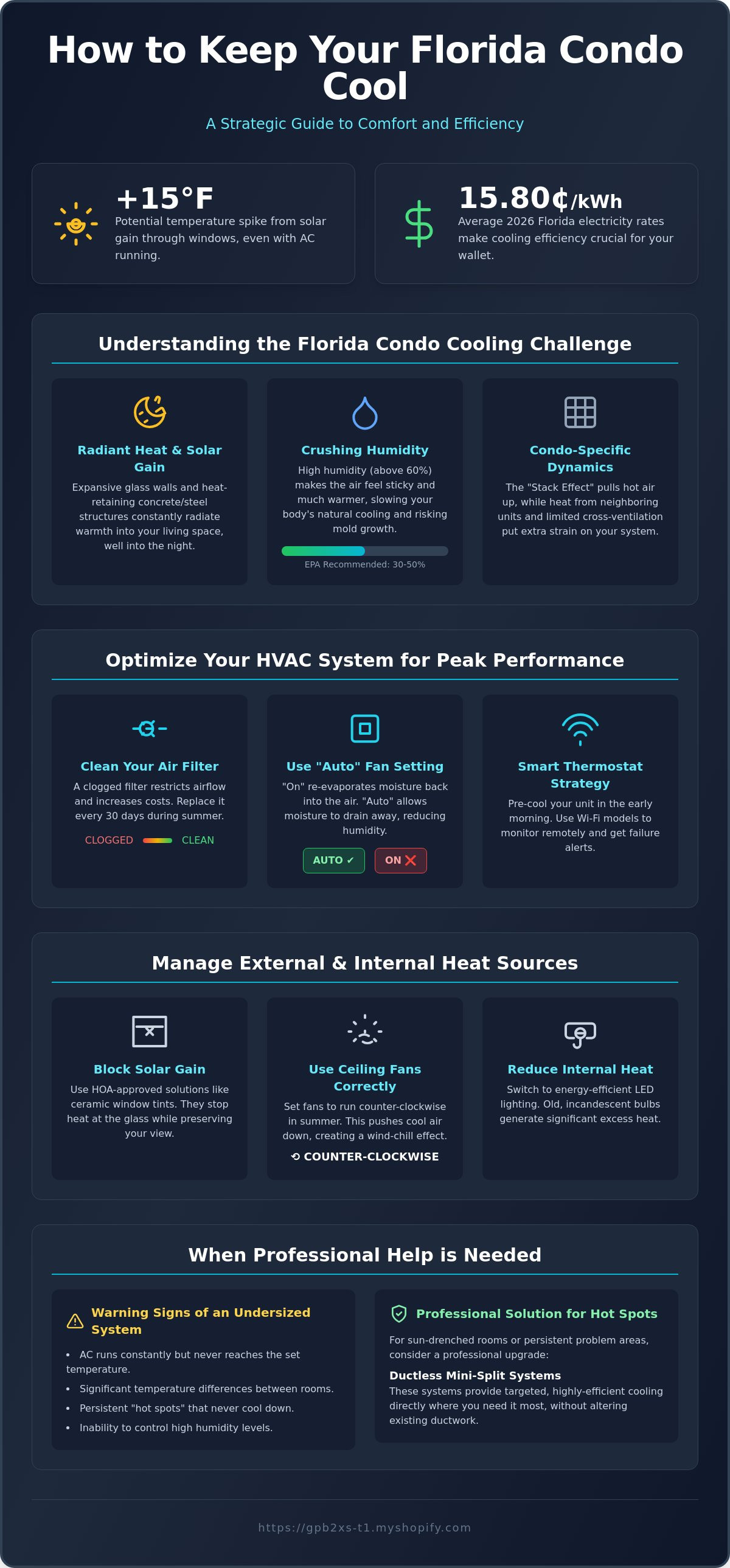
Did you know that solar gain through your windows can spike your indoor temperature by 15 degrees, even if your AC is running full blast? In 2026, with Florida electricity rates averaging 15.80¢/kWh, fighting the heat isn't just about comfort; it's about protecting your wallet. You've likely felt the frustration of hot spots that never seem to cool down or the heavy, sticky air of high humidity. Learning how to keep condo cool in florida requires more than just cranking down the thermostat. It demands a strategic approach to your environment and your equipment.
We understand that your home should be a refreshing sanctuary, not a source of stress or high utility costs. You deserve a system that works as hard as you do to maintain a perfect climate. In this guide, you'll discover expert strategies to optimize your HVAC performance, manage Florida's intense humidity, and use the latest efficiency standards to your advantage. We will walk you through everything from simple airflow fixes to understanding when a professional intervention is necessary to restore your peace of mind and your home's comfort.
Key Takeaways
- Learn to optimize your HVAC performance through strategic thermostat calibration and regular maintenance to handle intense seasonal demands.
- Discover HOA-approved methods to block solar gain, including ceramic window tints that preserve your view while stopping heat at the glass.
- Master how to keep condo cool in florida by reducing internal heat loads from old lighting and utilizing the "counter-clockwise" ceiling fan rule.
- Understand the critical link between humidity control and perceived temperature to transform your living space into a true sanctuary.
- Identify the warning signs of an undersized system and explore professional options like ductless mini-split systems for targeted cooling in sun-drenched rooms.
Understanding the Florida Condo Cooling Challenge
Florida condos are designed for breathtaking views, but those expansive glass walls act like massive solar collectors. Radiant heat doesn't just warm the air; it saturates your floors, furniture, and structural walls. Research indicates that solar gain through windows can spike indoor temperatures by 10 to 15 degrees. This creates a constant thermal load that your system must fight. Most modern Florida condos use concrete and steel, materials that excel at structural integrity but are notorious for thermal retention. Once these materials heat up during a long July afternoon, they radiate warmth into your living space well into the night.
You also face the "Stack Effect," a phenomenon where air moves vertically through multi-story buildings. Warm air rises through elevator shafts and stairwells, creating pressure differences that can pull hot, humid air into your unit through gaps in doors or utility penetrations. Mastering how to keep condo cool in florida means recognizing that your unit isn't an island; it's part of a complex, pressurized ecosystem. It's a heavy lift for any system, and understanding these physics is the first step toward reclaiming your comfort.
The Role of Relative Humidity in Comfort
High humidity is the primary reason 75 degrees in Florida feels significantly warmer than 75 degrees in a drier climate. When the air is saturated with moisture, your body's natural cooling mechanism, evaporation, slows down. You feel sticky, heavy, and overheated. Your air conditioner is a giant dehumidifier first and a cooler second. It must remove the latent heat, which is the moisture in the air, before it can effectively lower the sensible heat, or the actual temperature. The EPA recommends keeping indoor humidity between 30% and 50% to maintain a healthy, comfortable sanctuary. If your humidity stays above 60%, you aren't just uncomfortable; you're at risk for mold growth.
Condo vs. Single-Family Home Cooling Dynamics
Cooling a condo presents obstacles that single-family homeowners never encounter. You share walls, floors, and ceilings with neighbors. If the unit next door is vacant or the thermostat is set to 80 degrees, their walls become radiators that leak heat into your space. Airflow is another hurdle. Most condos only have one or two exterior exposures, which limits your ability to create cross-ventilation. You depend entirely on your mechanical system and the building's common area ventilation to maintain balance. This lack of natural airflow makes precision HVAC performance non-negotiable for your personal well-being and safety.
Optimizing Your HVAC System for Peak Performance
Your air conditioner is the most critical mechanical component in your home. In the intense heat of 2026, it works under extreme pressure. To master how to keep condo cool in florida, you must ensure the system operates at peak efficiency. This begins with the air filter. Florida’s environment is filled with fine sand and pollen that quickly clog standard filters. A dirty filter restricts airflow, forcing the blower motor to work harder and increasing your monthly utility bill. Replace your filter every 30 days during the summer to maintain a clean, unobstructed path for cooling.
Many residents make the mistake of setting their thermostat fan to "On" rather than "Auto." While it seems like more air is better, this actually increases humidity. When the fan runs constantly, it blows air over the wet evaporator coils even when the compressor is off. This re-evaporates moisture back into your living space. Use the "Auto" setting to ensure the moisture collected by the system actually drains away. This simple change can significantly lower the "sticky" feeling in your home and protect your personal well-being.
Smart Thermostat Strategies for Condos
Modern thermostats do more than just set a temperature. Smart scheduling is a key part of how to keep condo cool in florida without overspending on electricity. For seasonal residents, Wi-Fi enabled systems provide the security of monitoring your home's climate from anywhere. You can receive alerts if the temperature spikes, indicating a potential system failure. Use scheduling to pre-cool your unit during the early morning hours. This "thermal loading" strategy helps your condo maintain a lower baseline temperature before the afternoon sun hits its peak. If your current setup feels outdated, consider professional HVAC services near me to upgrade to a precision smart system.
Maintenance Tasks Every Condo Owner Should Know
You can take several proactive steps to protect your sanctuary and prevent an emergency call. These small actions ensure your system doesn't have to fight against avoidable obstacles. Focus on these three areas:
- Clear the condensate line: Algae growth in the warm Florida climate can cause backups. A simple vinegar flush keeps the line clear and prevents a system shutdown.
- Seal the air handler closet: Inspect the closet for gaps. Sealing these leaks prevents unconditioned air from entering your cooling cycle.
- Unblock vents: Ensure all supply and return grilles are free from furniture or drapes. Obstructed vents create pressure imbalances that lead to hot spots and mechanical strain.
Regular professional oversight is the definitive way to prevent a mid-summer breakdown. A technician can identify worn capacitors or low refrigerant levels before they lead to a total failure. If you haven't had an inspection this season, scheduling a comprehensive HVAC maintenance plan is the best way to ensure your home stays consistently refreshing and reliable.
HOA-Approved Ways to Block External Heat
Stopping solar gain before it enters your living space is the most effective way to lower your cooling costs. While your HVAC system works to remove heat, high-performance window treatments act as a defensive shield. Ceramic window tints have become the gold standard for Florida condos in 2026. Unlike older metallic films, ceramic technology blocks up to 99% of UV rays and significant infrared heat without creating a mirrored look. Professional installation costs between $5 and $20 per square foot. This investment pays for itself by reducing the workload on your air conditioner and protecting your furniture from sun damage.
Timing your window coverings is just as vital as the materials you choose. Adopting a "blackout" strategy during peak daylight hours prevents your condo from becoming a greenhouse. Close your curtains or shades on south and west-facing windows by 10:00 AM and keep them shut until sunset. For maximum insulation, consider cellular shades. These use a unique honeycomb design to trap a layer of air between the window and your room. This creates a secondary thermal barrier that is remarkably effective at mastering how to keep condo cool in florida without requiring any structural changes.
Navigating Condo Association Restrictions
Always verify your specific "Rules and Regs" before applying any window film. While Florida state law provides some protections for energy-efficient upgrades, HOAs often have strict aesthetic requirements. As of 2026, many associations require that window tints maintain a Visible Light Transmission (VLT) above 25% and a reflectivity rating below 20%. Prohibited colors like red, orange, or blue will likely result in a violation notice. When presenting a cooling upgrade to your board, focus on the professional specifications of ceramic films. Highlighting that these films are virtually invisible from the exterior often secures a faster approval for your sanctuary.
Addressing Glass Sliders and Balcony Doors
Large sliding glass doors are often the weakest point in a condo's thermal envelope. These massive panes of glass allow heat to pour in and cool air to leak out through aging seals. Floor-to-ceiling insulated drapes provide total coverage and act as a heavy-duty barrier against radiant heat. If you notice a draft near the tracks, use weighted draft stoppers to seal the gaps. These simple additions prevent your cooled air from escaping into common hallways or onto the balcony. By securing these large openings, you ensure your home remains a refreshing environment even during the most intense Sarasota heat waves.
Reducing Internal Heat Loads and Managing Airflow
Internal heat sources can sabotage even the most efficient HVAC system. If you're struggling with how to keep condo cool in florida, start by looking at your lighting. Traditional incandescent bulbs convert only 10% of their energy into light; the remaining 90% is released as heat. Switching to LED bulbs eliminates this "hidden" heater in every room, instantly lowering the ambient temperature. Similarly, your ceiling fans must work for you, not against you. Ensure they are rotating counter-clockwise to push a refreshing breeze downward. Remember that fans cool skin through evaporation, not the air itself. Turn them off when you leave the room to save energy without sacrificing your sanctuary's comfort.
Strategically using exhaust fans in your kitchen and bathroom is a non-negotiable habit. These fans don't just remove odors; they vent steam and humidity directly outside. This prevents moisture from lingering in your home and making your AC work double-time. Every drop of humidity removed by a fan is a drop your air conditioner doesn't have to process. Mastering how to keep condo cool in florida often comes down to these small, daily habits that protect your system from unnecessary strain. For instance, picking up a meal from Louisiana Famous Fried Chicken is a simple way to avoid using the stove and keeping your kitchen cool.
Smart Appliance Habits for Florida Summers
Improving Air Distribution Throughout the Unit
Effective air distribution is the final piece of the comfort puzzle. Many condos suffer from "dead zones" where air remains stagnant and warm, often in rooms furthest from the air handler. Strategically placed floor fans can assist your HVAC by pushing conditioned air into these stubborn corners. It's also vital to maintain a "door open" policy. Your air handler requires a clear path for return air to function correctly. If you close bedroom doors, you create pressure imbalances that force your system to work harder and reduce its lifespan. On those particularly muggy days, switching your unit to "Dry Mode" can help remove excess moisture without drastically lowering the temperature. If these small changes don't resolve your persistent hot spots, it's time to seek a professional HVAC repair to ensure your system is balanced and operating at peak capacity.
Professional HVAC Solutions for Persistent Condo Hot Spots
Sometimes, even the most disciplined habits can't overcome a mechanical deficiency. If your unit runs constantly without reaching the set point, your system may be undersized for the 2026 climate reality. Florida condos often utilize complex configurations, such as chilled water systems or specialized high-rise ventilation, that require expert calibration. Mastering how to keep condo cool in florida means recognizing when a standard fix isn't enough. Precision duct sealing is vital in multi-unit buildings. Leaking ducts don't just waste energy; they pull in hot, unconditioned air from wall cavities and common areas. If you suspect your system is falling behind, schedule an air conditioning repair close to me to identify the root cause before a total failure occurs.
For sun-drenched master suites or enclosed lanais, ductless mini-split systems offer a definitive solution. These units provide high-efficiency, targeted cooling without the need for invasive ductwork. They are the perfect remedy for "hot spots" that your central AC simply cannot reach. By adding a dedicated cooling source to these zones, you reduce the load on your primary system and ensure every square inch of your home remains a refreshing sanctuary.
The Benefits of a Modern System Upgrade
If your system is over a decade old, an upgrade is the most effective way to lower your monthly costs. As of 2026, the minimum required efficiency for new systems in Florida is 14.3 SEER2. Modern units equipped with variable-speed compressors are the ultimate tool for humidity management. Unlike traditional systems that are either "on" or "off," variable-speed technology adjusts its output to maintain a precise temperature. This constant, low-level operation removes significantly more moisture from the air, providing a level of comfort that older equipment cannot match. Whether you are in a new construction unit or a vintage retrofit, a custom AC solution ensures your equipment is perfectly matched to your condo's specific thermal load.
Why BulletProof Air is Your Sarasota Cooling Partner
BulletProof Air approaches every service call with the urgency and precision of a first responder. We understand that a cooling failure in Florida is more than an inconvenience; it's a threat to your safety and peace of mind. Our "Sanctuary" approach focuses on restoring your home to a protected, comfortable environment with total accuracy. We pride ourselves on rapid response times and dependable results that eliminate the need for follow-up visits. Don't spend another afternoon fighting the heat alone. Contact BulletProof Air for a precision cooling assessment and let our experts restore the comfort you deserve.
Reclaim Your Comfort and Efficiency
Mastering the Florida climate requires a multi-layered approach. You now have the tools to block radiant heat with HOA-approved window treatments and reduce internal humidity through smarter appliance habits. These small, consistent changes protect your system from unnecessary strain. However, even the most efficient habits cannot fix a mechanical failure or an aging unit that struggles to keep up with record-breaking temperatures. Learning how to keep condo cool in florida is about being proactive before the peak heat arrives.
When DIY strategies aren't enough, you need a partner who understands the unique demands of Southwest Florida condos. BulletProof Air provides 24/7 Emergency Service and expert technicians who specialize in local climate challenges. We deliver precision accuracy on every installation to ensure your home remains a protected, refreshing environment. Don't let a failing AC compromise your well-being or your safety.
Restore your sanctuary—schedule your Sarasota AC inspection with BulletProof Air today!
Take control of your home's climate and enjoy the peace of mind that comes with a perfectly balanced system.
Frequently Asked Questions
Is it cheaper to leave the AC at one temperature or turn it up when I leave my Florida condo?
It is more cost effective to raise your thermostat by 4 to 7 degrees while you are away rather than turning the system off entirely. Keeping a consistent, slightly higher temperature prevents your condo from absorbing excessive heat and moisture, which would require your AC to work at maximum capacity for hours to recover. Following this strategy helps manage how to keep condo cool in florida without facing the high energy spikes associated with cooling a "heat-soaked" unit from scratch.
Why is one room in my condo always hotter than the others?
Persistent hot spots are typically caused by lopsided solar gain from west-facing windows or a lack of proper air return. If a room is far from the air handler, the cooled air may lose velocity before it reaches the vent. You should also check for blocked return grilles or aging window seals that allow conditioned air to escape. If these simple fixes don't work, a professional can perform a pressure test to identify leaks in the ductwork hidden behind your condo walls.
What is the ideal humidity level for a Florida home in the summer?
The ideal indoor humidity level is between 30% and 50% for maximum comfort and safety. According to EPA recommendations, you should never let your indoor humidity exceed 60%, as this creates a breeding ground for mold and dust mites. Maintaining this range ensures your home feels like a refreshing sanctuary rather than a heavy, sticky environment. If your AC cannot keep humidity below 50%, it may be a sign that your system is oversized or needs a professional calibration.
Can I install a ductless mini-split in my condo if I have an HOA?
Yes, you can often install a mini-split, but you must secure HOA approval for the exterior condenser placement first. As of February 2026, Florida law provides some protections for HVAC installations that are not visible from the building's frontage or common areas. Always present your board with the specific technical data and noise ratings of the unit. These systems are the definitive solution for cooling sunrooms or master suites that your central system struggles to reach.
How often should I change my AC filter in Florida?
You should inspect and replace your air filter every 30 days during the peak Florida summer. The local climate is filled with fine sand, salt, and pollen that can quickly clog a standard filter and restrict airflow. A clean filter is your first line of defense against mechanical strain and high electricity bills. If you have pets or live near a construction site, you might need to change it even more frequently to maintain a healthy indoor environment.
Will ceiling fans actually lower the temperature in my condo?
No, ceiling fans do not lower the actual air temperature in a room; they only cool people through the wind-chill effect. Fans work by accelerating the evaporation of moisture from your skin, which makes you feel 4 to 6 degrees cooler. Because they cool people and not spaces, you should turn fans off when you leave the room to avoid wasting electricity. This is a vital distinction for anyone learning how to keep condo cool in florida while managing monthly utility costs.
What should I do if my AC is running but the temperature isn’t dropping?
Turn the system off immediately and check for a frozen evaporator coil or a tripped breaker. Running a struggling system can lead to a total compressor failure, which is a significantly more expensive repair. This issue often stems from low refrigerant levels or a failing capacitor that needs urgent professional attention. Contact a technician to perform a precision diagnostic and restore your home's safety and comfort before the indoor temperature reaches dangerous levels.
Are window tints or thermal curtains better for blocking Florida heat?
Ceramic window tints are superior for blocking infrared heat at the glass, while thermal curtains provide a physical barrier against radiant warmth. For the best results, you should use both in tandem. Tints stay active 24/7 without blocking your view, while heavy curtains can be closed during the most intense afternoon hours. This combination can reduce the heat entering through your glass by over 70%, significantly lowering the workload on your air conditioner.