

AC Installation for Small Business: A Practical Guide
What if the best AC system for your small business isn’t the biggest one, but the one that fits how your space is used? AC installation for a small business should start with the rooms, occupancy, equipment, and operating hours, not a one-size-fits-all equipment choice. A good plan also accounts for how installation work may affect day-to-day operations.
In Southwest Florida, heat and humidity are central to comfort planning. Salt air and storms also shape what local businesses should consider for long-term HVAC needs. Before moving forward, it helps to understand the property, project scope, and business priorities. This guide covers the factors that shape an installation plan, what to prepare, and how to compare project types. BulletProof Air starts with diagnostics, explains findings, and gives clear next steps tailored to the building and business.
Key Takeaways
- Plan AC installation for a small business around operating hours, occupancy, room use, and building layout, not square footage alone.
- Understand the steps from discussing business needs and assessing the property to reviewing findings and planning the installation.
- Compare a new installation, system replacement, and new-construction HVAC design based on the project context and the questions each raises.
- Prepare by noting affected areas, access needs, comfort priorities, and useful information about the existing system and property.
- BulletProof Air’s diagnostic-first approach and Southwest Florida climate knowledge support clear, needs-based recommendations.
Why small-business AC installation starts with the way your business operates
Keeping staff and customers comfortable is only part of the job. Cooling should also suit the work in each area, whether that means a busy service counter, a back-of-house workspace, or rooms with temperature-sensitive equipment. A system chosen without considering these demands may leave the areas that matter most uncomfortable during the busiest parts of the day.
A business-focused AC assessment connects the building’s layout and operating patterns to practical cooling recommendations. That’s why AC installation for a small business should begin with how the property is used, not a generic equipment choice.
How your business use shapes cooling requirements
Different businesses put different demands on their spaces. An office may have enclosed rooms and meeting areas with changing occupancy. Retail spaces see customer traffic move through open areas, while a restaurant’s kitchen, dining room, and service areas have distinct uses. A warehouse may combine broad work zones with offices or areas where equipment generates heat.
Before discussing the project, note your normal business hours, busiest periods, staff levels, customer flow, and which rooms need attention first. These details help focus planning on when and where comfort matters instead of treating every part of the building as identical.
New installation or replacement?
A new installation starts with a property that needs an AC system planned for its intended use. The building layout and business activities shape the assessment from the beginning. Replacement work starts with an existing system, so its current setup and the problems your business experiences become part of the discussion. The existing arrangement provides useful context, but it should not automatically dictate the new plan. BulletProof Air provides commercial HVAC installation and replacement recommendations tailored to the property and how it operates.
What Southwest Florida conditions mean for planning
Southwest Florida’s heat and humidity make local conditions an important part of comfort planning. Salt air and storms also affect the environment around commercial properties. The property’s location and exposure, layout, and day-to-day use all inform its HVAC needs. No single setup suits every business.
Bring real conditions into the conversation. Note which areas feel uncomfortable, when problems are most noticeable, and how the space changes between quiet and busy periods. BulletProof Air diagnoses first, explains the findings, and provides clear recommendations. The team does not recommend services you don’t need. That gives you a practical starting point for deciding what the property requires and how the project should move forward.
How commercial AC installation is assessed and designed
A clear installation plan should answer two questions: what does the property need, and how will the work support the business operating there? BulletProof Air takes a diagnostic-first approach, connecting recommendations to the building’s condition and intended use. You can understand the findings and project scope before planning moves forward.
A useful assessment moves from business needs to property findings, clear recommendations, and an installation plan suited to the space. For AC installation for a small business, that sequence helps replace guesswork with practical next steps.
From business needs to an installation plan
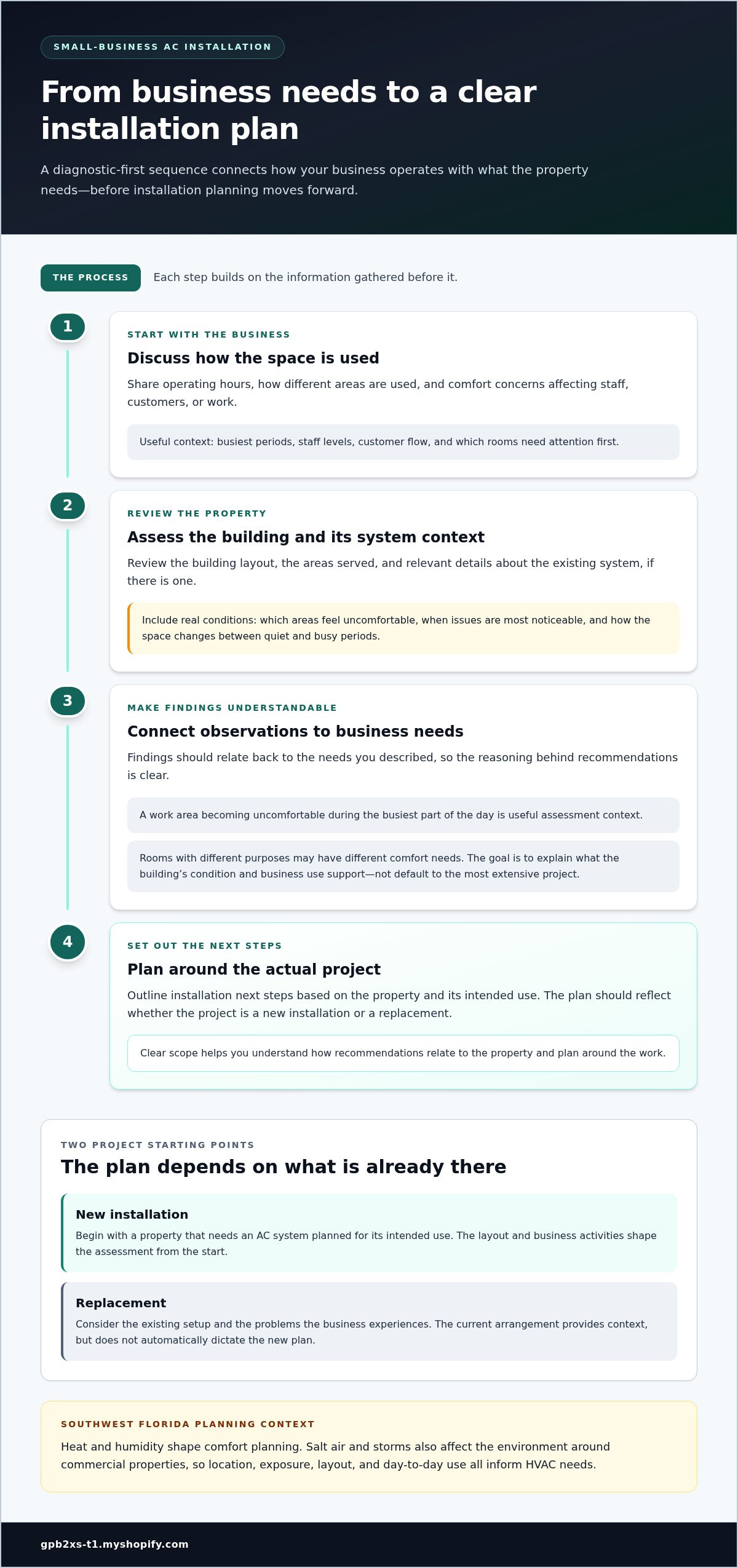
The process follows a straightforward order. Each step builds on the information gathered before it:
- Discuss how the business operates. Share operating hours, how different areas are used, and comfort concerns affecting staff, customers, or work.
- Assess the property. Review the building layout, the areas served, and relevant details about the existing system, if there is one.
- Explain the findings. Connect observations to the needs you described so the reasoning behind recommendations is clear.
- Plan the installation. Set out next steps based on the property and its intended use, including whether the project involves a new installation or replacement.
This order matters. Business needs give the assessment context, and a review of the property helps establish which recommendations fit. A new space and an existing building present different starting points, so the plan should reflect the actual project rather than assume a standard approach.
What a commercial HVAC assessment should consider
An assessment should bring together the building’s layout, daily operations, comfort concerns, and existing system context. For example, you might describe a work area that becomes uncomfortable during the busiest part of the day, or explain that rooms serve different purposes. Those details help focus attention on the property’s actual needs.
Property-specific findings inform the recommendations. A diagnostic-first review helps distinguish issues that call for installation or replacement from those that may have another practical next step. The goal is not to recommend the most extensive project by default. It is to explain what the building’s condition and business use support.
How clear recommendations reduce uncertainty
Installation planning is easier to evaluate when the scope is clear. BulletProof Air explains what the assessment finds and outlines practical next steps, so you can understand how a recommendation relates to your property. The team does not recommend services you don’t need. Clear explanations help you plan around the work and make an informed decision about the project.
For additional guidance on evaluating a commercial HVAC relationship, the article Commercial HVAC Companies: Selecting the Right Partner for Your Business in 2026 explores what a clear, business-focused approach looks like. To discuss your property’s installation needs, start a conversation about commercial HVAC installation with BulletProof Air.
Compare commercial AC installation options by space, use, and project scope
Three projects can all involve commercial HVAC yet start from different conditions. A business fitting out an existing space, replacing an existing system, and planning a new building won’t necessarily need the same assessment or scope. Start by identifying the project type, then consider how the property will be used and what questions need answering.
Project scope depends on the property, its current condition, and the needs of the business using it.
| Project type | Typical context | Questions to resolve |
|---|---|---|
| New installation | An existing commercial property needs an AC system planned for its space and intended use. | Which areas need cooling? How are rooms used? What access and building conditions should shape the plan? |
| Replacement | A business already has a commercial system, and the project involves replacing it. | What concerns are prompting the project? How does the current setup serve the building and its operations? |
| New-construction HVAC design | HVAC is being planned as part of a new building project. | How will the completed property be laid out and used? How should HVAC planning fit the wider construction project? |
Installation, replacement, or new-construction design?
Consider where the project begins. For an existing property without a system suited to its use, a new installation centers on planning for that space. Replacement is different: the building already has a system, and its condition and performance concerns inform the evaluation. New-construction design begins earlier, with HVAC needs considered alongside the building being planned. None of these contexts determines the answer on its own. An assessment connects the project type to the property and business.
BulletProof Air provides commercial HVAC installation and replacement, along with new-construction HVAC design in Southwest Florida. Recommendations should reflect the work needed, not assume that replacement is always better than repair or that a new system is always the right response.
When specialized commercial services may be relevant
Some properties have HVAC needs beyond a standard AC installation. Cooling tower service, chiller maintenance, and building-wide HVAC upgrades are distinct project considerations. Their relevance depends on the property’s systems and the work involved, so they should not be treated as automatic parts of a small-business installation. Keep the discussion focused on the equipment and needs involved.
A clearly defined scope also helps you understand what a project includes. The guide Commercial HVAC Companies: Selecting the Right Partner for Your Business in 2026 discusses provider considerations that can help frame those conversations. For a property assessment tied to commercial installation or replacement, explore commercial HVAC installation with BulletProof Air.
Prepare your business for an AC installation with a practical project checklist
Preparation can make the planning conversation more focused. Before AC installation for a small business, organize what you know about operations, the property, any existing system, and comfort concerns. You don’t need a technical report or a perfect floor plan. Clear notes about how the building works day to day can help BulletProof Air understand your priorities and shape recommendations around them.
Information to organize before discussing the project
Use this list as a starting point, not a required form. Share what’s relevant and note anything you’re unsure about.
- Business type and hours: Describe what happens in the space and when the building is typically open, staffed, or busiest.
- Occupied areas: Identify the rooms or work zones used by staff and customers, including spaces with different purposes.
- Comfort concerns: Note where discomfort occurs, when it’s most noticeable, and whether it affects staff, customers, or work activities.
- Existing system context: If the property already has AC, gather any available system information and describe recurring concerns or changes in how it serves the space.
- Property changes: Mention renovations, layout changes, added work areas, or other updates that may affect how the building is used.
- Access considerations: Identify areas where equipment or work access may need coordination, such as customer-facing zones or controlled workspaces.
These details give the assessment useful context. For example, a changed room layout or longer operating hours may mean the business uses the property differently from when its current system was planned.
Plan around workdays and building access
Installation work takes place in an active business environment, so discuss operational priorities as part of planning. Point out busy periods, customer-facing areas, rooms that need special coordination, and access considerations. Explain what the team should know about normal business activity. This helps align the project plan with how staff and customers use the building.
Not every installation follows the same schedule or creates the same level of disruption. Scope depends on the property and project. Discussing access and priorities early helps clarify what needs coordination without relying on a generic expectation. If areas have different uses or occupancy patterns, flag them for the discussion.
BulletProof Air’s diagnostic-first approach connects property findings with clear, needs-based recommendations. Organized information helps keep the conversation grounded in your building and operations, while giving you a clearer understanding of the proposed next steps. Keep questions about affected areas, access, and business priorities together as plans develop.
Talk with BulletProof Air about commercial HVAC installation and discuss the needs of your property and business.
Choose a Southwest Florida HVAC partner for installation and next steps
A commercial AC project is easier to evaluate when recommendations relate to your property, not assumptions about what every business needs. In Southwest Florida, local experience with heat, humidity, salt air, and storms helps keep regional conditions in view. You should also understand what an assessment found, why a recommendation fits, and what the next steps involve before making a decision.
BulletProof Air provides Commercial HVAC Repair, Preventative Maintenance, Installation & Replacement in Southwest Florida, along with new-construction HVAC design. The diagnostic-first approach starts with the property and the business’s needs, then connects findings to practical recommendations. For AC installation for a small business, that clarity helps you compare the proposed scope with how the building is used.
What a straightforward installation conversation should cover
Bring the details that explain your business and property: what happens in the space, when it’s occupied, where comfort concerns arise, and what you want the project to address. Discuss relevant building features and any existing system context. These points give the assessment a practical foundation and focus the conversation on your priorities.
BulletProof Air diagnoses first, explains the findings, and outlines clear next steps. Honest recommendations distinguish the work the property needs from services it doesn’t. The discussion stays centered on the situation at hand instead of assuming a project scope, equipment brand, price, or outcome before the property is assessed.
How to take the next step with BulletProof Air
When you’re ready to discuss the project, share what you know and what you’re still trying to understand. Call BulletProof Air at 941-599-9999 or schedule online. If you’re contacting the team about an urgent breakdown, BulletProof Air provides 24/7 Emergency Service for commercial customers.
Preventative maintenance is a separate ongoing service, not an assumed inclusion in an installation project. BulletProof Air provides commercial HVAC services including installation and replacement, repair, and preventative maintenance. Discuss the service that fits your needs and keep each part of the project scope clear.
Take the next step with a clear discussion about your building, business operations, and project goals. Contact BulletProof Air to discuss commercial AC installation.
Make your next HVAC decision with confidence
Turn your business priorities into a clear project conversation. Think about what you want the space to support as operations evolve, and bring those goals into planning for AC installation for a small business. A sound decision starts with understanding the property, then choosing work that fits its needs rather than adding scope without a reason.
BulletProof Air’s diagnostic-first approach means findings are explained and next steps are clear. With Southwest Florida’s heat, humidity, salt air, and storms in mind, the team can connect commercial installation or replacement recommendations to your property. Preventative maintenance is also available as a separate ongoing service, not an assumed part of installation.
Give your business a practical path forward. Contact BulletProof Air to discuss commercial AC installation and take the next step toward a plan that fits your operation.
Frequently Asked Questions
How do I know whether my small business needs a new AC installation or a replacement?
The difference depends largely on whether the property already has a system and what an evaluation finds. A business fitting out a space without a suitable AC system may need a new installation. If equipment is already in place, recurring problems or changes in how the space is used can prompt a replacement assessment. Repair may also be appropriate. BulletProof Air diagnoses the issue before recommending a path, so replacement isn’t treated as automatic.
What should I consider before installing AC in a small business?
Start with how each part of the property functions, then consider comfort priorities, operating patterns, and the building’s condition. For AC installation for a small business, practical details such as a kitchen’s heat-producing activity, customer-facing zones, or equipment rooms can shape the discussion. In Southwest Florida, humidity, salt air, and storms also make local conditions relevant. Share changes to the space or its use so recommendations reflect the business you run now.
How long does commercial AC installation take?
There isn’t one installation duration that applies to every commercial property. Project scope, building conditions, access, and the work involved all affect the schedule, so a time estimate should follow an assessment rather than a guess. A project in an existing space may involve different planning from HVAC design for new construction. Ask how the proposed scope relates to the expected work sequence, then use that information to plan staffing and business operations.
Can AC installation be planned around my business hours?
Business hours and operating priorities can be included in project planning. Share your open hours, busy periods, customer appointments, deliveries, or work processes that depend on particular areas. For example, a retailer may want to flag peak shopping times, while an office may identify rooms that host scheduled meetings. BulletProof Air can discuss these constraints as part of planning. The work schedule and any disruption depend on the project and property.
Does BulletProof Air install AC systems for small businesses in Southwest Florida?
Yes. BulletProof Air provides commercial HVAC installation and replacement for businesses in Southwest Florida. The team assesses the property and its use, then explains findings and recommendations to connect the project scope with your business needs. Businesses planning HVAC for a new building can also discuss new-construction HVAC design with the team.
What happens if my business AC stops working during installation planning?
If cooling fails while you’re considering installation or replacement, don’t assume a full system replacement is the only answer. BulletProof Air provides HVAC repair and 24/7 Emergency Service for commercial customers. Call 941-599-9999 to discuss an urgent AC problem. A diagnosis can help determine the appropriate next step for the malfunctioning system, while installation planning can continue separately if the property’s needs point toward a larger project.
Is preventative maintenance included with a commercial AC installation?
No. Preventative maintenance is a separate ongoing service, not an automatic inclusion in a commercial AC installation. BulletProof Air offers commercial preventative maintenance for businesses. If you’re planning an installation, treat maintenance as a distinct consideration for after the project, rather than assuming it forms part of the installation scope. The team can explain the relevant service options based on your system and needs, without recommending services your business doesn’t need.