

AC Making a Rattling Noise When Starting? Causes and Next Steps
What if the first rattle when your AC starts is a useful clue, not a sign that the whole system is failing? If “ac making rattling noise when starting” describes what you’re hearing, it’s understandable to worry about damage, safety, or losing cooling in Southwest Florida’s heat and humidity. A startup rattle can come from something relatively simple, such as loose hardware or debris, but a fan or compressor problem may need prompt attention.
You don’t have to guess what the sound means. The rattle’s timing, location, and pattern can help you describe what’s happening and decide what to do next. A brief sound that disappears may call for a different response than a rattle that persists, grows louder, or comes with poor cooling.
This guide covers safe observations you can make without opening the equipment, plus warning signs that mean you should stop running the system and arrange repair. BulletProof Air’s trained technicians diagnose and repair malfunctioning HVAC systems. The right next step starts with paying attention to the sound, not ignoring it.
Key Takeaways
- A startup rattle is a symptom, not a diagnosis. Its timing and apparent location can help narrow down where to investigate.
- If your ac making rattling noise when starting is accompanied by grinding, repeated knocking, or reduced cooling, treat it as more urgent.
- Notice when the sound begins, where it seems loudest, and whether the AC’s performance changes. These details can help guide diagnosis.
- Keep checks to safe observations. Don’t open equipment or reach near moving parts to investigate the noise.
- A trained HVAC technician can inspect and test the system to identify the source and determine the appropriate repair.
AC Making a Rattling Noise When Starting: What the Sound Can Tell You
A startup rattle is a symptom, not a diagnosis. It means something may be vibrating, shifting, or making contact as the system begins operating, but the sound alone can’t identify the part. Timing is useful because fans and other moving components engage at startup. A noise that occurs only at that moment has a different pattern from rattling that continues throughout the cooling cycle.
Pay attention to what happens next. One brief vibration that stops may be less concerning than noise that repeats, lasts longer, grows louder, or changes into grinding or knocking. Even a short rattle deserves attention if it returns each time the system starts. A recurring sound can indicate a loose or vibrating part, and continued operation may make it harder to tell whether the issue is worsening.
Sound location and timing can narrow down a possible fault, but they can’t confirm one. Air conditioning systems include multiple components that operate together, as outlined in Air Conditioning Systems. Your observations can help describe the symptom, but inspection is needed to determine its source.
Why does the rattle happen right as the AC starts?
At startup, the system moves from idle into operation. Fans begin turning and other components engage. If a panel, fastener, or nearby object is loose, the change can make it vibrate audibly. A single click or short vibration that ends quickly differs from repeated rattling while the system runs. Note whether the sound stops after startup or continues in time with the operating equipment.
Where in the system is the noise coming from?
Listen from a safe distance and note whether the sound seems strongest indoors, outdoors, or near a supply vent. It may come from indoor equipment, the outdoor unit, or ductwork. Ducts can carry vibration away from its source, so a rattle heard at a vent doesn’t prove the duct itself is the cause. Don’t remove covers or reach inside equipment to investigate.
If your ac making rattling noise when starting is difficult to locate, that’s normal. Sound can travel through a home’s structure and airflow pathways, making an outdoor vibration seem as if it’s inside or making equipment noise appear to come from a vent. The apparent location is still useful: tell a technician which room or area seems loudest and whether the sound changes as the AC continues running.
Make a simple note after you hear it. Does the rattle occur on every startup, only occasionally, or at another point in the cycle? Is it a quick vibration, a repeated knock, or a harsher grinding sound? Has cooling changed? These details help distinguish a brief startup event from a persistent operating noise without requiring you to inspect internal parts.
A rattle that returns or becomes more pronounced shouldn’t be dismissed just because the AC still cools. Treat the sound as information, not a verdict. A trained HVAC technician can inspect and test the system to pinpoint the cause and recommend an appropriate repair.
Common Reasons an AC Rattles at Startup, and What a Technician Checks
A rattle can come from a loose panel, debris near the outdoor unit, a moving fan part, a vibrating duct, or another component. These are possibilities, not diagnoses. The same sound can have different causes, so a technician considers when it happens, where it seems loudest, and whether the system has other symptoms before recommending a repair.
Could a loose panel, debris, or duct cause the startup rattle?
Yes. As airflow begins, a loose exterior panel, fastener, or duct section may vibrate against nearby material. Debris visible near outdoor equipment may also be relevant, but don’t touch it or reach into the unit. A technician can inspect accessible panels, fasteners, and duct connections for looseness or contact that might explain the noise.
Duct vibration can be especially misleading: the sound may be loudest near a vent even if the source is elsewhere. A technician can compare the noise with system operation and inspect the airflow path rather than assume the nearest visible part is responsible. An overview of HVAC systems and their operation is available from ASHRAE, the HVAC industry organization.
Could the fan or another moving component be involved?
A rattle that follows fan operation may involve a fan blade, motor, or another moving part. A bent or obstructed blade, for example, could produce repeated contact or vibration, while a worn motor may come with changes in how the system runs. These parts require professional inspection. Don’t open the cabinet, touch components, or try to adjust them.
The sound’s pattern can help a technician decide what to inspect, but it isn’t proof of a particular failure. A technician confirms the source by inspecting the system, not by sound alone. They may examine the fan assembly and nearby components, check for visible damage or obstruction, and test system operation. Share any poor cooling or unusual operation that happens alongside the rattle.
Depending on what the inspection reveals, possible areas to check include:
- Panels and fasteners: A technician can look for signs of looseness or vibration without you removing or tightening anything.
- Outdoor unit: Note visible debris nearby, but keep clear of the equipment.
- Fan components: A technician can check for damage, obstruction, or a motor-related concern.
- Duct connections: Inspection can help distinguish duct vibration from sound traveling through the ductwork.
Compressor trouble is another possibility, particularly if the rattle is harsh or the AC’s operation changes, but only an inspection can establish whether it’s involved. The technician’s findings and the equipment’s condition guide the repair. For a persistent or worsening startup noise, professional HVAC repair can help identify the cause and address the problem.
How to Compare AC Startup Rattles by Sound, Location, and Symptoms
The pattern matters more than the word “rattle” alone. A quick vibration at startup is different from repeated knocking or grinding that continues as the AC runs. Notice where the sound seems loudest and whether cooling, airflow, or system operation has changed. Use the guide below to describe what you hear and choose a sensible next step, not to diagnose a specific part.
| Timing | Apparent location | Accompanying symptom | Sensible next step |
|---|---|---|---|
| One brief vibration as the AC starts | Near an indoor unit, outdoor unit, or vent | Cooling and airflow seem unchanged | Note whether it happens again and monitor for changes. Arrange an inspection if it returns or grows louder. |
| Rattling continues through the cooling cycle | Near equipment or along a duct | Airflow may be weaker, or cooling may be reduced | Arrange professional diagnosis, especially if performance has changed. |
| Repeated knocking during startup or operation | Sound may seem to come from the unit or nearby ductwork | The noise repeats or becomes more pronounced | Stop the system if the sound is severe or worsening, and seek professional help. |
| Grinding, or rattling with unusual cycling | Location can be difficult to pinpoint | Cooling may be inconsistent; the system may start and stop unusually | Turn off the AC if the sound is persistent or operation seems abnormal, then arrange an assessment. |
| Any noise with a burning odor, visible smoke, or repeated breaker trips | Do not approach equipment to investigate | Potential safety warning | Stop operating the AC. Don’t reset a repeatedly tripping breaker; seek professional help. |
What does the timing and repetition of the noise suggest?
A sound heard only at startup gives a different clue from rattling that carries on through the cooling cycle, but timing alone can’t identify a failed component. Repetition matters: a noise that returns on successive starts, lasts longer, or grows louder deserves closer attention. Describe the pattern and duration rather than trying to name the part responsible.
Which accompanying symptoms make the rattle more concerning?
Pay attention to weak airflow, reduced cooling, or unusual starts and stops. These changes, especially alongside persistent noise, make professional assessment more important. A burning odor, visible smoke, or repeated breaker trips calls for stopping operation. Don’t touch the unit or keep restarting it to test the sound. Step away and arrange professional help.
If you’re hearing an ac making rattling noise when starting, a clear description can help a trained technician understand what the system is doing. Note whether the sound is brief or continuous, where it seems loudest, and whether airflow or cooling has changed. These observations help report the symptoms, but they can’t replace an in-person diagnosis. Sound can travel, and different faults can produce similar noises. For persistent, worsening, or concerning symptoms, arrange HVAC repair to identify the cause and address the issue.
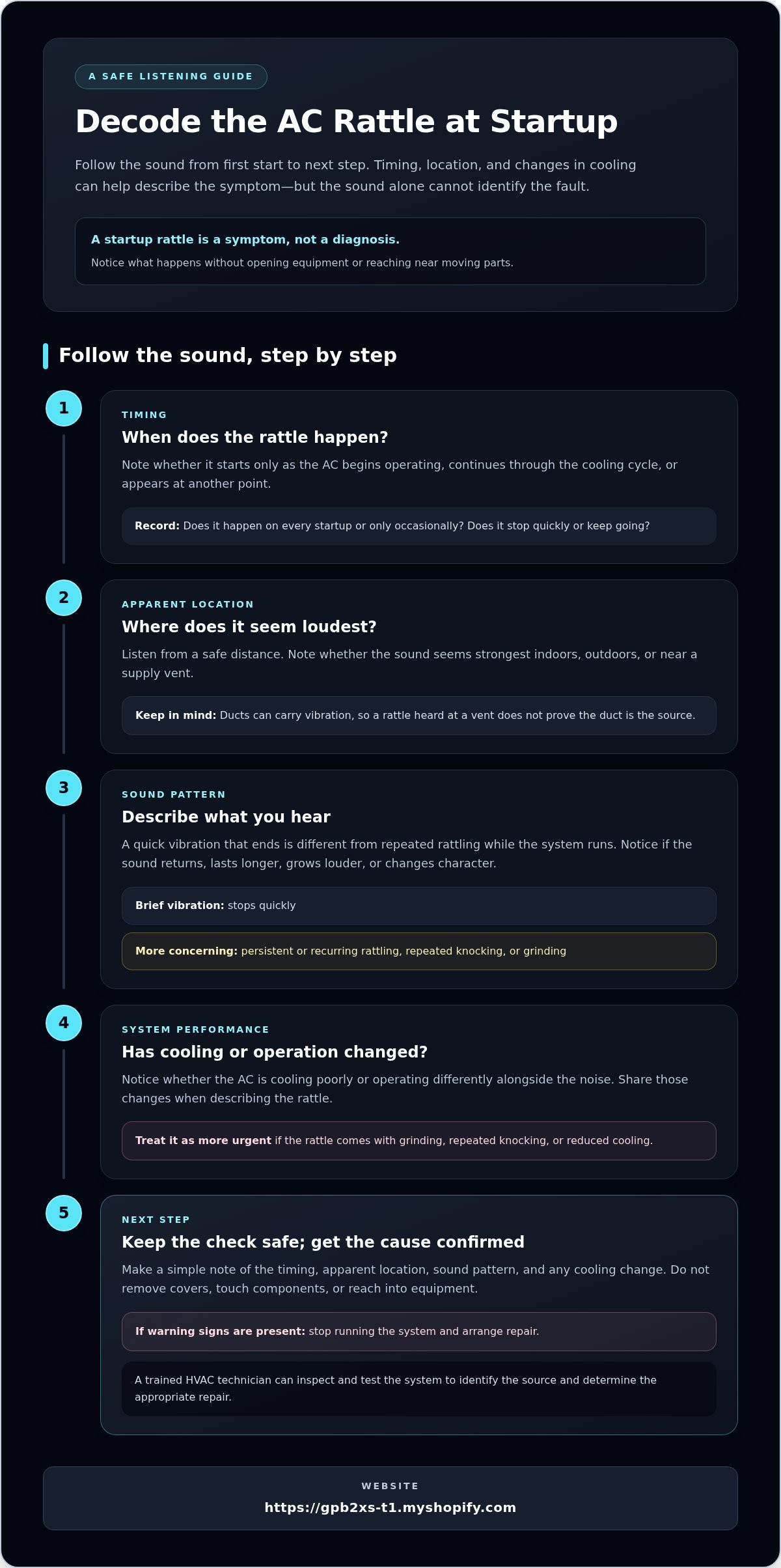
What to Do When Your AC Rattles at Startup
A clear record of the noise can help a technician diagnose the problem without putting you at risk. Keep your checks observational. Don’t remove equipment covers, touch moving parts, or handle wiring. If your ac making rattling noise when starting is accompanied by a warning sign such as smoke or a burning smell, stop the system rather than trying to investigate.
- Observe: Note when the sound begins, how long it lasts, and whether it repeats while the AC runs.
- Record: If it’s safe, capture a short audio or video from a safe distance. Don’t approach equipment or delay turning it off to make a recording.
- Check symptoms: Notice whether cooling has weakened, airflow has changed, or the system is cycling differently. Observe only; don’t touch the unit.
- Stop if unsafe and arrange diagnosis: Turn the AC off for smoke, a burning smell, repeated breaker trips, or severe grinding. Arrange professional repair for persistent or worsening rattling.
What can you safely observe before requesting service?
Listen from a safe distance, indoors or outdoors, without removing panels or reaching near equipment. If there’s no safety concern, a brief recording may help show whether the sound is a single vibration or repeated noise. Note where it seems loudest, whether airflow or cooling has changed, and how the system has behaved since the noise began.
Share the timeline with the technician: when you first noticed the rattle, whether it happens at every startup, and whether other symptoms appeared before or after it. Mention unusual cycling or a change in cooling. These details give the technician useful context, but they can’t confirm the cause. A trained technician needs to inspect and test the system to determine the appropriate repair.
When should you turn the AC off and seek repair?
Stop operating the AC if you see smoke, smell something burning, notice repeated breaker trips, or hear severe grinding. Don’t keep restarting the system to see whether the noise returns, and don’t repeatedly reset a tripping breaker. Step away from the equipment and arrange professional help. If you’re unsure whether it’s safe to remain near the unit, keep your distance.
Persistent or worsening rattling, especially with weak airflow or reduced cooling, also calls for prompt professional attention. Southwest Florida’s heat and humidity can make a loss of cooling disruptive, so don’t wait for the system to stop working completely before arranging diagnosis. A single brief sound without other warning signs may be less urgent, but monitor whether it recurs or changes.
Use the steps in this checklist to describe what you hear. If the rattle keeps returning or comes with other symptoms, arrange professional AC repair to identify the source and address the problem.
Get a Professional Diagnosis for a Rattling AC in Southwest Florida
A startup rattle can come from different parts of an AC system, and similar sounds don’t always have the same cause. If the noise persists, worsens, or comes with reduced cooling or unusual operation, a trained HVAC technician can inspect the system and test how it runs. That’s the reliable way to move from a sound you’ve noticed to a repair recommendation based on the equipment’s condition.
What happens during a professional AC noise diagnosis?
The technician will listen to your description of the noise and inspect relevant system components. They’ll consider when the rattle occurs, where it seems loudest, and whether it continues after startup. They can also evaluate related airflow and cooling symptoms and test system operation. This helps distinguish among possible causes without assuming the sound alone identifies a faulty part.
Share any notes or safe recordings you’ve made, along with when the noise started and whether system performance changed. A single brief vibration and a rattle that repeats throughout operation give the technician different clues, but neither confirms a diagnosis on its own. Inspection findings guide the next step.
The repair depends on the diagnosed source and your equipment’s condition. A loose panel, a moving component, or another issue may call for different work. The technician can explain what the inspection reveals and what repair is appropriate. No sound description can establish the fix in advance, so the system needs to be assessed before a specific repair is recommended.
Request AC repair from BulletProof Air if the rattling is persistent or concerning. BulletProof Air’s trained technicians diagnose and repair malfunctioning HVAC systems, helping address problems that affect indoor comfort.
Why local HVAC experience matters in Southwest Florida
In Southwest Florida, dependable cooling matters through hot, humid weather. A system that rattles and cools poorly can quickly disrupt the comfort of your home. BulletProof Air provides residential HVAC repair in the region, including Sarasota, with trained technicians who can assess the noise and related symptoms. If you’re looking for information about air conditioning repair in Sarasota, keep local conditions and your system’s performance in mind as you decide what to do next.
If your AC is making rattling noise when starting and the sound keeps returning, don’t rely on guesswork or wait for cooling to fail completely. Arrange a professional diagnosis so the cause can be identified and the appropriate repair considered for your system. Accurate troubleshooting can help address the problem when Southwest Florida’s heat and humidity make comfort especially important.
Take the Next Step Toward Quiet, Reliable Cooling
A new noise can be easy to dismiss, especially if the AC still turns on. But if ac making rattling noise when starting becomes a regular part of your system’s operation, don’t let it become something you simply live with. Addressing a persistent or changing sound gives you a chance to understand what’s happening before a more disruptive loss of cooling catches you off guard.
Use what you’ve noticed to explain the problem: when the rattle occurs, whether it has changed, and how your AC is performing. Then let a professional inspection guide the repair decision. You deserve to understand what’s affecting your home’s comfort, rather than guessing each time the system starts.
BulletProof Air provides HVAC repair to diagnose malfunctioning systems and address the cause of concerning noises. Request AC repair from BulletProof Air to get professional help with the rattling and a clear next step toward dependable cooling.
Frequently Asked Questions
Why does my AC rattle only when it first turns on?
A startup-only rattle can happen as airflow begins and moving parts engage, but the timing doesn’t identify the cause. If your ac making rattling noise when starting stops quickly, note whether it happens with every thermostat cycle or only occasionally. Also notice whether it began around the same time as another change, such as reduced cooling. A recurring or worsening sound deserves inspection rather than an assumption that it’s harmless.
Is a rattling air conditioner dangerous to run?
A rattle alone can’t establish whether an AC is unsafe, so consider the other signs. Turn it off if you notice smoke, a burning smell, repeated breaker trips, or severe grinding. Don’t open the equipment or touch wiring to investigate. If the system still runs but the noise persists or its cooling changes, have a trained HVAC technician assess it before relying on it through Southwest Florida’s heat.
Can I fix an AC rattling noise myself?
Limit your own checks to observing the sound and system performance. From a safe distance, note whether it occurs during each startup, whether airflow feels different at the vents, and whether cooling seems weaker in particular rooms. You can make a brief recording if it’s safe to do so. Don’t remove panels, reach near a fan, handle wiring, or attempt an internal repair. Arrange diagnosis if the noise returns or worsens.
What does it mean if my AC rattles and stops cooling?
A rattle combined with lost cooling needs professional attention because the system may have more than a noise issue. The sound doesn’t reveal which component is involved. Note whether airflow has weakened throughout the home or only in certain rooms, and whether the AC starts and stops more often than usual. If there’s also smoke, a burning odor, or severe grinding, turn the system off and seek help before running it again.
Should I turn off my AC if it makes a loud rattling noise?
Yes, turn it off if the rattle is severe or comes with grinding, smoke, a burning odor, or repeated breaker trips. Don’t restart the unit to see whether the symptom happens again. If the noise is brief and there are no warning signs, note the pattern and arrange an inspection if it recurs or grows louder. Keep clear of the equipment while observing it.
Can a rattling AC sound come from the vents instead of the unit?
Yes. A loose vent part or duct vibration can make the sound seem to come from a room rather than the equipment, and sound may travel through ductwork. Note which vent or room seems loudest and whether the noise begins as air starts flowing. A vent’s location is a helpful clue, not proof of the source. Don’t remove ductwork or force a vent into position; have the system inspected.
Will AC maintenance prevent a rattling noise from returning?
Maintenance may help identify wear or looseness, but it can’t guarantee a particular noise won’t return. If the AC already rattles, describe that specific symptom when arranging service so it can be investigated rather than treated as a routine check alone. Note whether the sound occurs after the system has been idle or during every cycle. A targeted diagnosis addresses a current noise; maintenance supports broader system care.
If you would like maintenance or repair assistance with your Florida Air Conditioner, contact BulletProof Air Or call: 941.599.9999 for more information about how we can help.