

AC Smells Like Mildew? Causes, Risks, and Florida-Specific Solutions
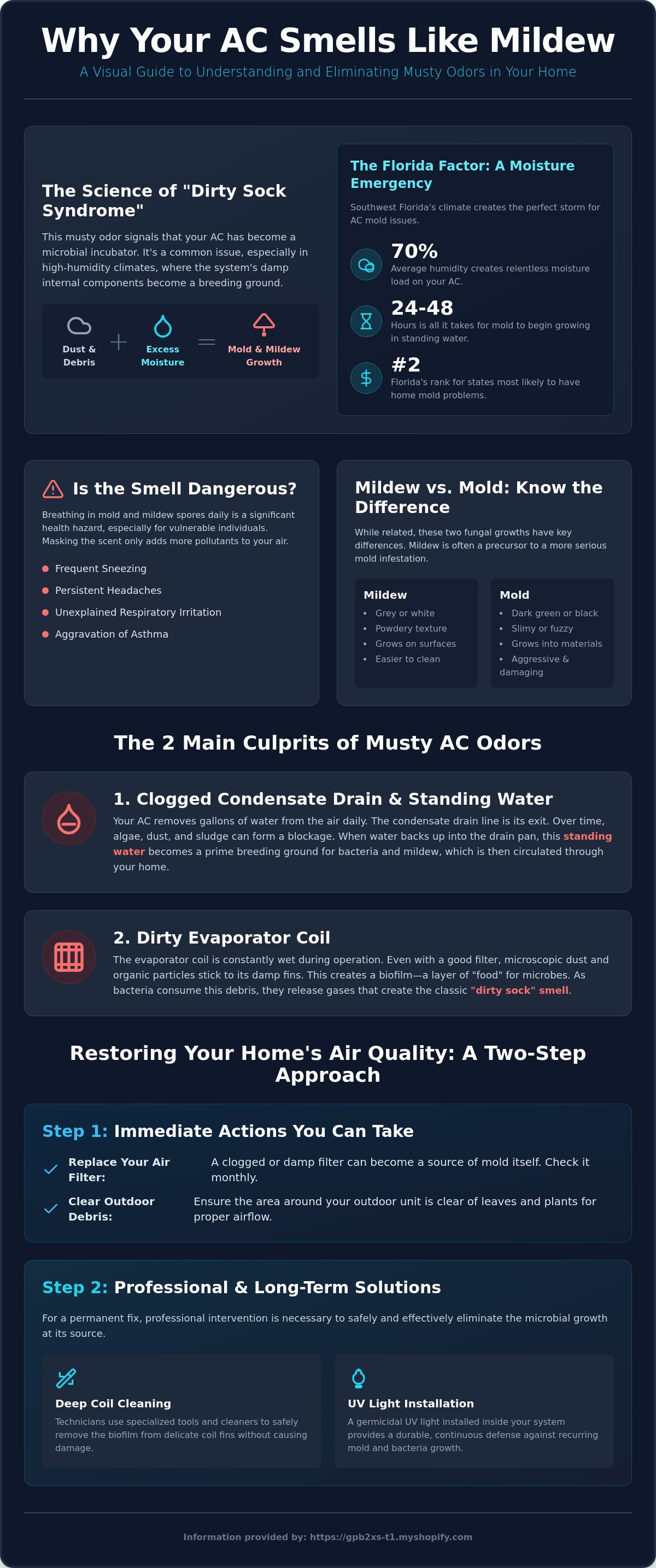
Did you know that Florida ranks as the second most likely state in the country for homes to develop serious mold problems? When your ac smells like mildew, it's more than just a nuisance. It's a moisture emergency that can turn your cooling system into a mold distribution network in as little as 24 hours. We understand the anxiety that comes with a musty home. Your house should be a sanctuary, not a source of respiratory stress or worry over hidden repair costs.
It's completely normal to feel skeptical of quick fixes that don't last, especially when dealing with Southwest Florida's relentless 70% humidity. You deserve a solution that provides permanent relief and total accuracy. In this article, you'll discover the exact causes of those unpleasant odors and how to restore your home's air quality. We'll walk through the risks of mold growth in ductwork and the professional strategies used to ensure your family breathes easy again.
Key Takeaways
- Understand the science behind "Dirty Sock Syndrome" and how a mix of dust and moisture creates a microbial breeding ground inside your system.
- Identify why your ac smells like mildew specifically due to the intense Sarasota humidity and how standard settings often fail to manage the moisture load.
- Learn to spot the two most common mechanical failures—clogged condensate drains and dirty evaporator coils—that trap standing water in your home.
- Get a checklist of immediate actions you can take, from filter replacement to clearing outdoor debris, to start restoring your indoor sanctuary.
- Explore advanced IAQ solutions like UV light installation and deep coil cleaning that provide a durable defense against recurring odors.
What Does It Mean When Your AC Smells Like Mildew?
If you walk into your living room and get hit by a scent reminiscent of a gym locker, you're experiencing a phenomenon known in the HVAC industry as "Dirty Sock Syndrome." When your ac smells like mildew, it isn't just a minor annoyance; it's a signal that your system's internal environment has shifted from a cooling machine to a microbial incubator. This happens because your air conditioner is designed to remove both heat and moisture. In the high-humidity climate of Sarasota and Bradenton, that moisture often clings to the evaporator coils. When dust and organic debris bypass your filter, they settle on these damp coils, providing a feast for bacteria and fungal spores.
You might notice the odor is most aggressive right after the cooling cycle ends. When the compressor shuts off but the fan continues to circulate air, it blows across the damp, warm coils. This process carries the concentrated scent of microbial growth directly into your living spaces. While some manufacturers claim a slight odor during the first start-up of the season is normal, a persistent smell in a Florida home is a red flag. It indicates that the moisture isn't draining properly, which compromises your Indoor Air Quality (IAQ) and threatens the sanctuary of your home.
Mildew vs. Mold: Why the Difference Matters
Understanding the distinction between these two invaders is vital for your home's health. Mildew typically appears as a grey or white powdery coating on the surface of your vents or coils. It's easier to clean but should never be ignored. Mold is far more aggressive, often appearing as dark, slimy, or fuzzy patches that grow deep into porous materials like insulation or drywall. Mildew acts as a biological precursor to more serious fungal growth that can eventually cause structural damage to your HVAC system.
Is the Smell Dangerous to Your Family?
Breathing in these spores daily can lead to a variety of health issues. Many homeowners report frequent sneezing, persistent headaches, or unexplained respiratory irritation. For residents with asthma or weakened immune systems, this contaminated air is a significant hazard. Don't try to mask the scent with heavy candles or aerosol sprays. These products only add volatile organic compounds to your air without fixing the root cause. Protecting your family requires a precision solution that eliminates the growth at the source, ensuring your air stays clean and safe.
The 4 Most Common Culprits for Musty AC Odors
Identifying exactly why your ac smells like mildew involves investigating the components that handle moisture. Your air conditioner doesn't just cool; it acts as a massive dehumidifier. In our Gulf Coast climate, a single unit can extract several gallons of water from the air every day. If any part of that moisture removal process fails, you're left with standing water. This liquid quickly becomes a breeding ground for the microbes discussed earlier, turning your cooling system into a source of distress rather than comfort.
Clogged Drain Lines and Standing Water
The condensate drain line is the primary exit route for all the water your system collects. In the Sarasota heat, these lines are under constant pressure. Over time, a mixture of dust, algae, and bacteria forms a thick "sludge" that blocks the pipe. When the line is blocked, water backs up into the drain pan. This standing water is the most frequent cause of musty odors in Florida homes. You can learn more about identifying these issues in our clogged drain lines guide. If the water sits for more than 48 hours, the bacterial growth becomes aggressive; it sends that sharp, sour scent through your vents and into your living space.
The Evaporator Coil: The Heart of the Odor
Your evaporator coil is constantly wet during operation. Even with a high-quality filter, microscopic dust particles eventually bypass the barrier and stick to the damp metal fins. This creates a layer of organic "food" for mildew. As bacteria consume this debris, they release gases that create the classic "dirty sock" smell. According to the EPA's guide to mold and moisture, controlling indoor dampness is the most effective way to prevent fungal growth. Professional coil cleaning is essential here. DIY scrubbing often flattens the delicate aluminum fins, which restricts airflow and forces your system to run longer, worsening the moisture problem.
Your air filter can also be a hidden source of the problem. If a filter isn't changed regularly, or if it becomes damp due to high static pressure, it becomes a moisture trap. Instead of stopping pollutants, the filter starts contributing spores to the air stream. We recommend checking your filters every 30 days during the peak of the Florida summer to ensure they stay bone-dry and effective.
Finally, consider your ductwork. If your ducts have leaks or poor insulation, they can "sweat" when cold air meets the hot, humid air in your attic or crawlspace. This condensation builds up inside the ducts where you can't see it. This hidden moisture is dangerous because it allows mold to colonize the very paths your air travels. If you suspect your system is struggling with these hidden leaks, our team can provide a precision inspection to restore your residential HVAC services and ensure your air is safe.
The Florida Factor: Why Sarasota and Bradenton Homes Are at Risk
Sarasota and Bradenton aren't just hot; they're saturated. Our Gulf Coast climate creates a moisture load that many national HVAC manuals don't fully prepare for. When your ac smells like mildew, it's often because the system is overwhelmed by a dew point that stays in the mid-70s for months at a time. This "Sarasota Swamp" effect means your evaporator coils are almost never dry. Without the right settings, these components provide a permanent habitat for microbes. Standard systems designed for drier states simply cannot handle the relentless humidity we face every summer.
These environmental pressures are similar to those found in other intense coastal regions; for instance, Andrew’s AC Technical Services manages these exact humidity and microbial issues for properties in the UAE, highlighting the global need for specialized technical care in such climates.
We often encounter a specific problem in newer Sarasota area developments where air conditioning units are technically "oversized" for the square footage. While a larger unit might seem like a benefit, it actually cools your home too quickly. It reaches the target temperature and shuts off in minutes, a process called short-cycling. This prevents the system from running long enough to pull water out of the air. You're left with a home that is cold but damp, creating the perfect environment for odors to develop. This is why specialized AC repair in Sarasota is critical. You need a technician who understands how to recalibrate airflow to prioritize dehumidification over simple cooling.
Humidity and the Indoor Air Quality Sanctuary
Your home should be a sanctuary, a protected space where your family can breathe easily away from the sweltering outdoor heat. Maintaining this peace requires more than just a working fan; it requires precision IAQ management. According to the ASHRAE Indoor Air Quality Guide, managing moisture is the single most important factor in preventing biological growth in residential buildings. Our Indoor Air Quality guide explains how specialized filtration and UV systems can build a durable defense against spores, ensuring your sanctuary stays fresh and safe year-round.
New Construction Challenges in Lakewood Ranch
In newer developments across Lakewood Ranch, "tight" building envelopes are the modern standard. These homes are highly energy-efficient, but they don't "breathe" as well as older structures. Without proper ventilation, moisture from cooking, showering, and even breathing stays trapped inside. If your thermostat features a "Dry Mode," we strongly recommend using it during the rainy season. This setting slows down the fan to maximize the amount of water removed from the air, helping to prevent that initial musty scent from taking hold in your ductwork.
Immediate Steps to Eliminate the Mildew Smell
When your ac smells like mildew, you must act quickly to stop the spread of spores. Waiting too long allows microbial growth to move from your coils into your porous ductwork, which turns a simple cleaning into a major remediation project. You can take several immediate steps to protect your home sanctuary and identify the source of the odor. Follow this checklist to regain control over your air quality.
- Replace your air filters: Check your filter immediately. If it's grey, damp, or covered in a visible layer of dust, replace it with a high-quality pleated version.
- Clear the area: Ensure there are no grass clippings, leaves, or debris blocking the outdoor condenser. Inside, keep the area around your air handler clear to ensure maximum airflow.
- Check the secondary drain pan: Look for standing water in the emergency pan under your indoor unit. If you see water, your primary drain is likely blocked by bacterial sludge.
- Audit your thermostat: Look at your fan settings. If it's set to "On," switch it to "Auto" immediately.
- The 24-hour rule: If the smell persists for more than a full day after these steps, you have a deep-seated issue that requires professional intervention.
The "Fan On" vs. "Auto" Debate
Many homeowners believe running the fan constantly improves air circulation. In the Southwest Florida humidity, this actually worsens the problem. When the cooling cycle ends, your evaporator coil is dripping with moisture. If the fan stays on, it blows air over those wet coils and re-evaporates that water back into your home, spiking your humidity levels and feeding the mildew. Setting your thermostat to "Auto" allows the system to properly drain condensed moisture by stopping airflow once the cooling cycle finishes. This simple change is often the first step in restoring a dry, healthy environment.
When DIY is Not Enough
Don't fall for online "hacks" that suggest spraying household disinfectants or bleach into your return air. These chemicals can corrode the delicate aluminum fins on your coils and create toxic fumes that circulate through your home. If the odor is coming from your vents, the growth has likely reached your ductwork. In these cases, a standard cleaning won't suffice. You need a precision solution that addresses the root cause without damaging your equipment. For a permanent fix, professional ac repair is the most cost-effective way to ensure your system is safe and efficient. Schedule your precision inspection today to eliminate odors and protect your family's health.
BulletProof Solutions: Professional IAQ and Maintenance
When your ac smells like mildew, generic solutions aren't enough. You need a durable, precision-engineered response to the Southwest Florida climate. At BulletProof Air, we specialize in restoring the sanctuary of your home through advanced cleaning and protective technology. We don't just mask the scent; we eliminate the biological source. Our technicians approach every service call with the urgency of a first responder, knowing that your family's comfort and safety are on the line.
Our professional deep coil cleaning goes far beyond surface-level sprays found in hardware stores. We use specialized solutions to dissolve the thick sludge and biofilm that accumulate on evaporator fins in high-humidity environments. This process restores your system's efficiency and removes the organic "food" that microbes need to survive. By enrolling in professional maintenance plans, you ensure this buildup never has the chance to return. Consistency is the key to preventing a persistent air quality crisis.
UV Lights and Whole-Home Air Purifiers
UV-C light technology is a cornerstone of modern Indoor Air Quality solutions. These systems are installed directly inside your air handler to shine on the evaporator coil 24/7. The high-intensity light disrupts the DNA of mold, bacteria, and viruses, preventing biofilm from ever forming on the damp metal surfaces. When you combine this technology with HEPA-grade filtration, you strip contaminants from the air before they ever enter your ductwork. This setup is the most effective way to maintain a truly protected environment in Sarasota and Bradenton homes, regardless of the outdoor humidity levels.
Restoring Your Comfort Today
A musty smell is a warning sign that requires immediate action. Our team provides rapid response services for residents across Sarasota and Bradenton who are facing these air quality emergencies. We prioritize precision and "one-and-done" service; we get the job right the first time so you don't have to deal with recurring odors or follow-up visits. We treat your home as a sanctuary that deserves the highest level of technical expertise.
To maintain your home as a complete sanctuary, you may also need assistance with plumbing or heating; click here to learn how Anton Plumbing Heating & Cooling provides these essential services.
Professional maintenance is an investment in your family's health and your system's longevity, not just an added expense. Don't let a small odor turn into an expensive remediation project or a health hazard for your loved ones. Our experts are ready to provide the definitive resolution you need. Restore your home’s air quality with BulletProof Air today and experience the peace of a fresh, clean, and safe living space.
Protect Your Home Sanctuary and Breathe Freely
Living in the Sarasota and Bradenton area means battling relentless humidity every day. When your ac smells like mildew, it's a signal that your system's moisture defenses have been breached. You've learned how clogged drains and dirty coils turn your air conditioner into a microbial incubator; however, you don't have to live with the stress of poor air quality. By choosing precision maintenance and specialized IAQ solutions like UV light installation, you can stop the cycle of mold growth and restore your home's peaceful environment for good.
BulletProof Air is committed to providing durable, "one and done" solutions that protect your family's health and your system's efficiency. Our expert Indoor Air Quality specialists understand the unique challenges of the Gulf Coast climate and provide the rapid response times you need during a cooling crisis. Don't let a musty odor compromise your comfort or safety any longer.
Breathe easy again; schedule your professional AC inspection with BulletProof Air today! We are dedicated to providing the precision repairs and expert care required to ensure your indoor air remains clean, fresh, and safe for years to come.
Frequently Asked Questions
Is it safe to breathe air that smells like mildew?
Breathing air when your ac smells like mildew is not safe for long periods. These odors indicate the presence of fungal spores that can trigger allergies, persistent headaches, and serious respiratory irritation. For residents with asthma or compromised immune systems, this contaminated air is a significant health risk that requires urgent professional attention to restore a safe indoor sanctuary.
Can a dirty air filter cause a mildew smell?
A dirty air filter is a very common cause of musty odors in Florida homes. When a filter becomes saturated with dust and organic debris, it traps moisture from our high-humidity environment. This damp layer becomes a breeding ground for fungi. Once the fan turns on, it pulls air through this contaminated material and distributes the scent throughout your entire living space.
How much does it cost to fix a musty-smelling AC?
The cost to resolve a musty odor depends entirely on the root cause and the extent of the microbial growth. A simple drain line clearance is a different level of service than a deep chemical coil cleaning or professional ductwork remediation. Addressing the issue early is always the most cost-effective way to prevent a full-system failure or expensive restoration projects involving your home's insulation.
What is Dirty Sock Syndrome in air conditioners?
Dirty Sock Syndrome refers to the specific locker room smell caused by bacterial and fungal buildup on your evaporator coils. It typically happens when your system's cooling cycle ends and the fan continues to blow across damp, dirty fins. This process releases concentrated gases into your home, signaling that your system needs a precision cleaning to remove the biological source at the root.
Will the mildew smell go away on its own?
No, the odor will not disappear without active intervention because it is caused by living organisms. If your ac smells like mildew, the fungi will continue to thrive as long as they have moisture and organic dust to consume. Ignoring the problem allows the microbes to colonize your ductwork and porous insulation, which can eventually lead to permanent system damage and much higher repair costs.
How do I stop my AC from smelling like mildew in the summer?
The best way to prevent odors during the summer is through consistent maintenance and strict humidity management. Change your filters every 30 days and ensure your thermostat is set to "Auto" rather than "On" to allow the coils to drain properly between cycles. Installing specialized Indoor Air Quality solutions, such as UV lights, provides a durable defense by killing spores before they can take root.
Can I use bleach to clean my AC drain line?
You should avoid using bleach in your AC drain line because it is a corrosive chemical that can damage plastic pipes and metal components over time. Bleach can also react with other materials in the drain pan to create harmful fumes. It is much safer to use distilled white vinegar or a specialized HVAC drain cleaner to keep your lines clear of bacterial sludge.
Does running the AC on "Fan" mode cause mold?
Running your fan in the "On" position increases the risk of mold growth in high-humidity climates like Sarasota. When the fan runs constantly, it blows air over the wet evaporator coil immediately after the cooling cycle stops. This re-evaporates the collected moisture back into your home, keeping the internal components damp and providing the perfect environment for fungi to thrive.
If you would like maintenance or repair assistance with your Florida Air Conditioner, contact BulletProof Air Or call: 941.599.9999 for more information about how we can help.