

AC Smells Like Vinegar When Turned On? Causes and Safe Next Steps
Could a vinegar smell be coming from something other than your air conditioner? If your AC smells like vinegar when turned on, the odor is a clue, not a diagnosis. Possible sources include moisture-related buildup inside the system, a dirty filter, or an odor elsewhere in your home. The smell alone doesn’t identify the cause, but it’s understandable to want to know what’s behind it, especially in humid Southwest Florida.
You don’t need to take the system apart or try a strong cleaner to investigate. A few simple checks can help you narrow down where the smell may be coming from. Warning signs can also tell you when to turn the system off and seek professional help.
This guide covers common causes of vinegar-like AC odors, safe steps you can take, and when a technician should inspect the system. If the odor persists or comes with other concerning symptoms, BulletProof Air’s trained technicians can diagnose the source and recommend an appropriate repair instead of simply masking the smell.
Key Takeaways
- If your ac smells like vinegar when turned on, treat the odor as a clue, not a diagnosis.
- Southwest Florida humidity makes moisture management relevant, but it doesn’t prove the AC is at fault.
- Note the symptoms, inspect an accessible filter, and consider nearby odor sources without opening the equipment.
- A brief smell without other symptoms differs from an odor that persists or worsens, but keep monitoring either pattern.
- A technician can trace the odor and assess system operation, airflow, and possible moisture issues.
Why does your AC smell like vinegar when it turns on?
A sour or acidic odor that appears as conditioned air starts moving can be unsettling, but it doesn’t point to one cause by itself. If your ac smells like vinegar when turned on, moisture-related buildup inside the system is one possibility. A dirty filter or an odor elsewhere in the home may also be involved. The smell is a useful clue, not a diagnosis.
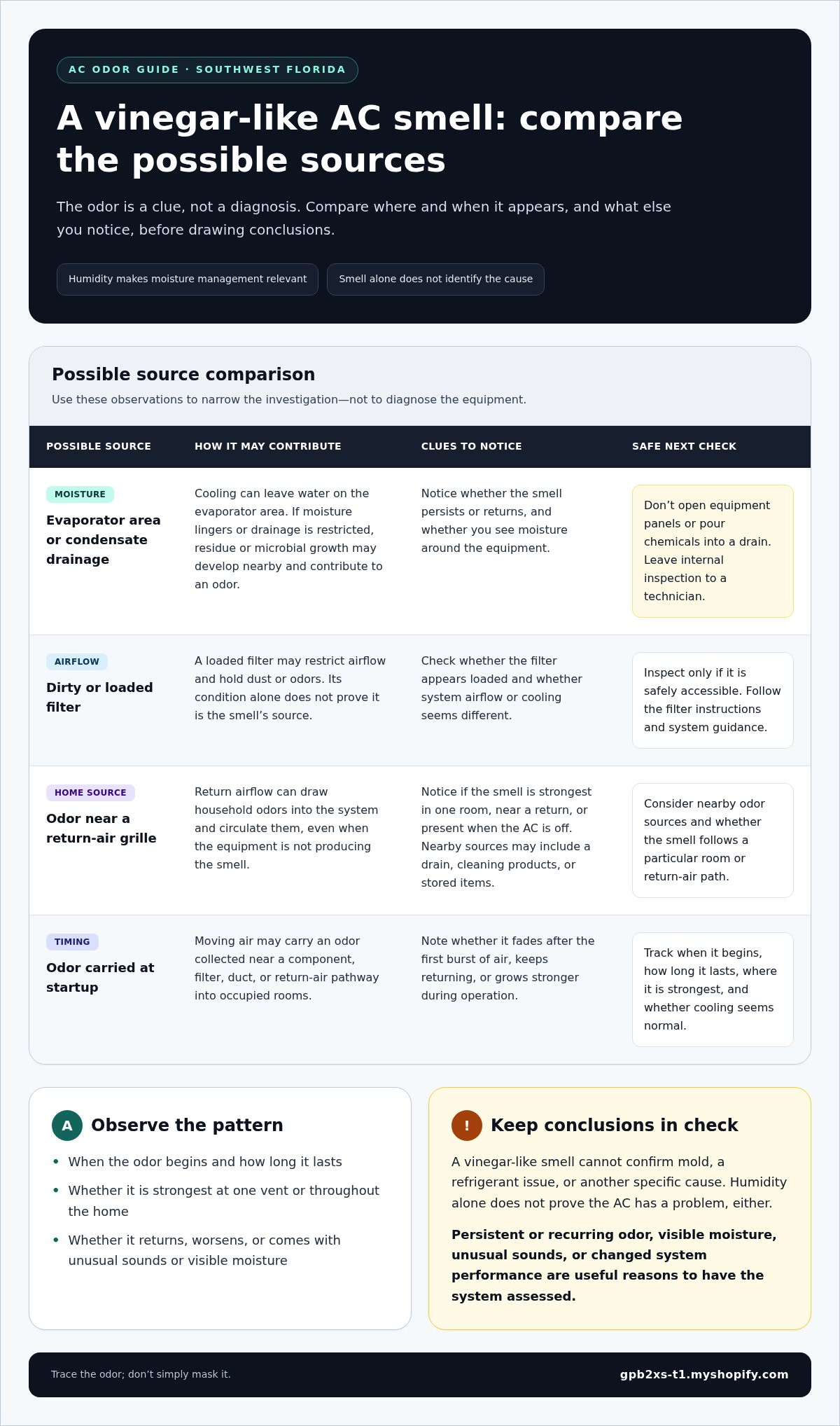
Pay attention to when the odor begins, how long it lasts, and whether it returns with each cooling cycle. Note whether it’s strongest at one vent or present throughout the home, and whether the AC is cooling normally. Unusual sounds or visible moisture around the equipment are also useful details to record.
What can make an air conditioner smell sour?
Cooling equipment produces condensation, so moisture can collect around components such as the evaporator coil or drain pan. If damp areas accumulate residue or microbial growth, airflow may carry an unpleasant odor through the home. A dirty air filter can also contribute to stale smells, but its condition alone doesn’t prove it’s the source. For broader context on how pollutants can affect comfort, see this overview of Indoor air quality (IAQ).
The source may be outside the AC, too. Household odors near a return-air grille can be drawn into the system and circulated. Check whether the smell is stronger in one room or near a particular return, and whether you notice it when the AC is off as well. These observations can help distinguish an odor carried by the airflow from one that appears to come from the equipment.
Why might the odor appear only at startup?
When the system starts, moving air can carry an odor that has collected near a component, filter, duct, or return-air pathway into occupied rooms. A smell that fades after the first burst of air may differ from one that keeps returning or grows stronger during operation. The timing helps narrow the investigation, but it doesn’t identify a specific fault.
Humidity makes moisture management especially relevant in Southwest Florida, but humid conditions alone don’t prove the AC has a problem. Likewise, a vinegar-like odor cannot confirm mold, a refrigerant issue, or any other specific cause. Look at the pattern alongside other clues: whether the smell occurs in one room or throughout the home, whether it continues after startup, and whether system performance has changed.
Several sources can create a similar smell, and the odor may enter through return airflow from elsewhere in the home. Recording when it occurs, where it’s strongest, and what else changes gives you a clearer starting point without jumping to conclusions.
Common AC odor sources in humid Southwest Florida homes
Southwest Florida’s humid conditions make moisture management an important part of AC operation, but humidity alone doesn’t mean your system has a fault. Humidity can affect indoor moisture conditions, but smell alone cannot identify its source. A vinegar-like odor may come from a damp or dirty area within the equipment, or it may be entering the system from another part of the home.
Cooling removes heat from indoor air and also produces condensate, or water that must drain away from the system. If drainage is restricted or moisture lingers, residue or microbial growth may develop around areas involved in cooling and condensation. These are possibilities, not conclusions: an inspection is needed to determine whether a system component is involved. The U.S. Environmental Protection Agency explains that HVAC systems help maintain good indoor air quality, which is one reason to trace persistent odors rather than cover them up.
Moisture, the evaporator area, and condensate drainage
The evaporator area gets cold as air passes over it, and water can condense on its surface. That water should flow through the condensate drainage system and away from the equipment. Standing moisture or buildup near these components could contribute to an odor, but you can’t confirm the cause by smell alone. Don’t open equipment panels or pour chemicals into a drain to investigate. Leave internal inspection to a technician.
Filters, return airflow, and smells from the home
A loaded filter may restrict airflow and hold dust or odors. Check it only if it’s safely accessible, and follow the filter instructions and system guidance for replacement. Also consider nearby sources such as a drain, cleaning products, stored items, or another room. Return-air grilles draw air from the home, so an odor near one may circulate through the AC even when the equipment isn’t producing it.
Notice where and when the odor is strongest. If it seems to come from one area, consider whether a nearby source or return-air path could explain the pattern. If your ac smells like vinegar when turned on and the odor persists or keeps returning, BulletProof Air’s trained technicians can evaluate the system, including possible moisture or airflow issues. Professional HVAC maintenance can also help identify developing concerns.
Is a vinegar smell from your AC dangerous? Signs that change the response
A vinegar-like odor by itself doesn’t establish an emergency or identify a specific AC problem. If your ac smells like vinegar when turned on but the smell is mild, fades quickly, and the system seems to run normally, the situation may be less urgent. That doesn’t prove everything is fine, so track whether the odor returns, lasts longer, or becomes stronger.
Smell alone can’t confirm mold, a refrigerant issue, or a chemical source. A home-improvement overview of AC smells like vinegar discusses several possible explanations, but a technician must assess your system to identify the actual source. Focus on the pattern and any changes in system operation, not just the odor’s description.
When can you monitor the smell briefly?
If the odor is faint and short-lived, and you notice no other changes, make a note of when it starts, how long it lasts, and whether it returns during later cycles. This gives you specific details to share if you need service. Arrange an inspection if the smell persists, worsens, or repeatedly returns, even if the AC still cools.
When should you stop using the AC and get help?
Respond promptly if the odor comes with smoke, a burning smell, unusual electrical sounds, or visible water near electrical equipment. Turn the system off if you can do so safely. Don’t touch exposed wiring or wet equipment. Contact a qualified HVAC professional for assessment. If there’s smoke or an immediate threat to people or property, move to safety and contact emergency services.
Also seek professional evaluation if the odor comes with other symptoms, such as a sudden change in cooling or indoor comfort deteriorating quickly. A persistent smell with additional warning signs deserves more attention than a brief startup odor alone. Don’t keep restarting equipment that shows signs of an electrical or water-related hazard.
BulletProof Air’s trained technicians diagnose AC issues in Southwest Florida, including Sarasota. A professional assessment can help trace the odor and determine whether the system needs repair, rather than masking the smell or guessing at its cause.
What to Do When Your AC Smells Like Vinegar
If your ac smells like vinegar when turned on, start with observations, not invasive troubleshooting. A few safe checks can help you describe the pattern and decide whether professional evaluation is appropriate. Keep your checks to accessible areas and follow your system’s user manual.
Simple checks you can make without opening the equipment
- Note the pattern. Record when the odor starts, how long it lasts, whether it comes from every vent, and whether it’s stronger in one room.
- Check the filter. If it’s accessible, see whether it needs replacement. Follow the filter instructions and your system’s guidance, and don’t force a filter into place.
- Consider nearby sources. Look for obvious household odors near return-air grilles, such as cleaning products, stored items, or a nearby drain. Don’t handle condensate components or electrical parts.
These observations can help distinguish a smell that may be entering through return airflow from one that appears throughout the home. They won’t confirm the source, but they give a technician useful details if the odor persists or returns. Also note whether the AC is cooling as usual and whether you see moisture around the equipment.
What not to spray, pour, or take apart
Don’t try to cover the smell with fragrances, bleach, or sprays in the vents. Avoid pouring household cleaners or drain chemicals into the AC drain, too. Masking an odor doesn’t identify or remove its underlying cause, and products used in or around equipment can create additional problems.
Leave internal coil, drain, and electrical inspections to trained technicians. Don’t remove equipment panels or dismantle the system to reach hidden components. If you notice smoke, a burning odor, unusual electrical sounds, or water near electrical equipment, stop troubleshooting and follow the safety steps described earlier.
Persistent odors call for diagnosis, not guesswork. BulletProof Air provides HVAC repair in Southwest Florida, including Sarasota, and trained technicians can assess the system to trace the source. For related guidance on AC issues, read the AC repair guide for Southwest Florida.
If the odor keeps returning, schedule professional AC repair to help identify the cause and restore comfort.
How BulletProof Air can diagnose a persistent AC vinegar smell
If an odor keeps returning, professional diagnosis can help pinpoint its source instead of just covering it up. When your ac smells like vinegar when turned on, the smell alone can’t tell you whether the cause is a filter, moisture, airflow, or something outside the equipment. BulletProof Air’s trained technicians assess the symptom alongside system operation to determine what needs attention.
What a technician may inspect during an odor diagnosis
An inspection may include the filter, accessible airflow pathways, condensate handling, and cooling components related to the odor. The technician can also consider when the smell occurs and whether cooling performance or airflow has changed. The specific checks depend on your system’s design and the symptoms you describe. Diagnosis comes first, so any repair recommendation can address an identified issue rather than guess at the cause.
Preventing recurring AC odors with maintenance
Routine HVAC maintenance gives a technician an opportunity to look for developing airflow or moisture concerns. Share when the odor starts, how long it lasts, which rooms are affected, and any changes in system performance. These details can guide the evaluation and help distinguish a recurring system symptom from an odor entering through the home’s airflow.
BulletProof Air provides HVAC repair and maintenance in Southwest Florida, including Sarasota. For local service information, explore AC repair in Sarasota. A clear diagnosis helps identify the next step without relying on fragrances or other temporary cover-ups.
If the smell persists, schedule professional AC repair with BulletProof Air.
Take the Next Step Toward Fresher, More Comfortable Air
If your ac smells like vinegar when turned on, remember that the odor is a clue, not a diagnosis. Moisture-related buildup, a dirty filter, or a smell entering through return airflow may all be possibilities. A brief odor without other symptoms may be less urgent, but one that persists, worsens, or comes with warning signs deserves attention.
Stick to simple, safe checks: note when the smell occurs, inspect an accessible filter according to your system’s instructions, and consider nearby household sources. Avoid spraying or pouring cleaners into the AC, and leave internal inspection to a trained professional. Identifying the source is more useful than masking the odor.
BulletProof Air provides HVAC repair and maintenance in Sarasota and throughout Southwest Florida. Its trained technicians diagnose system issues and can help determine the appropriate next step when an AC odor persists. Schedule AC service with BulletProof Air to have the issue professionally evaluated. A clear diagnosis can help you move forward with greater confidence and restore comfort to your home.
Frequently Asked Questions
Why does my AC smell like vinegar when I first turn it on?
A sour odor at startup can come from moisture-related buildup near cooling components, a dirty filter, or an odor elsewhere in the home entering through return airflow. If your ac smells like vinegar when turned on, the smell alone can’t identify the cause. Note whether it comes from one vent or several, how long it lasts, and whether it returns or comes with changes in system operation.
Can a dirty AC filter cause a vinegar-like smell?
Yes, a dirty filter may hold dust and odors or affect airflow, so it can be one possible contributor. It isn’t proof that the filter is the source. If it’s accessible, check it and follow its replacement instructions and your system’s user manual. If the odor continues after an appropriate filter change, consider nearby household sources and arrange an inspection if the smell persists or repeatedly returns.
Is a vinegar smell from an air conditioner dangerous?
A vinegar-like odor alone doesn’t establish an emergency or a specific fault. A mild smell that fades quickly while the AC operates normally may be less urgent, but it isn’t automatically harmless. Pay attention if the odor persists, worsens, or appears with smoke, a burning smell, unusual electrical sounds, or visible water near electrical equipment. Those accompanying signs call for prompt attention, not just continued monitoring.
Should I turn off my AC if it smells like vinegar?
Not necessarily if the odor is brief and there are no other concerning symptoms, but monitor whether it returns or grows stronger. Turn the system off if you notice smoke, a burning odor, unusual electrical sounds, or water near electrical equipment, as long as you can do so safely. Don’t touch exposed wiring or wet equipment. Seek prompt professional assessment when warning signs accompany the smell.
Can I clean an AC drain line myself if it smells sour?
Don’t assume the drain line is the source based on a sour smell. Avoid pouring bleach, household cleaners, or drain chemicals into it, and don’t open equipment panels or handle internal components. These steps can create additional problems without identifying the odor’s cause. Limit homeowner checks to accessible items and your system’s user manual. If you suspect a drainage issue or the odor persists, have a technician inspect it.
Why does my AC smell sour only when it starts?
At startup, airflow can carry an odor that has collected near a filter, cooling component, duct, or return-air pathway into the room. A brief first burst that fades differs from a smell that returns with each cycle or becomes stronger. Timing is useful information, but it doesn’t prove mold, a refrigerant problem, or another specific cause. Note when it happens and whether other symptoms appear.
When should I call an HVAC technician for an AC odor?
Arrange professional evaluation if the smell persists, worsens, repeatedly returns, or comes with changes in cooling or airflow. Seek prompt help for smoke, burning odors, unusual electrical sounds, or visible water near electrical equipment; turn the system off when safe. BulletProof Air’s trained technicians diagnose and repair AC issues in Sarasota and Southwest Florida, helping trace the odor rather than simply mask it.
If you would like maintenance or repair assistance with your Florida Air Conditioner, contact BulletProof Air Or call: 941.599.9999 for more information about how we can help.