

AC Unit Leaking Water Outside: Is It Normal or a Florida Emergency?
It's a Tuesday afternoon in Bradenton, the thermometer just hit 93 degrees, and you notice a growing puddle underneath your condenser. Is your system simply sweating through the humidity, or are you looking at a total system failure? When you see your ac unit leaking water outside, it's natural to feel a surge of panic about potential mold growth or a massive repair bill. We understand that in Southwest Florida, your air conditioner isn't just a luxury; it's the heartbeat of your home's comfort and safety.
We agree that nothing is more stressful than the thought of your cooling system dying when the heat index is climbing toward triple digits. That's why we're here to help you distinguish between normal condensation and a genuine mechanical crisis. This guide will show you exactly why your AC is puddling and provide clear signs that tell you when to call for professional help. We'll walk through common culprits like clogged drain lines and frozen coils so you can restore your home to a cool, reliable sanctuary without the guesswork.
Key Takeaways
- Learn how Southwest Florida’s intense humidity impacts your system and how to identify when a puddle is just standard condensation.
- Identify the five mechanical failures that cause an ac unit leaking water outside and understand when an indoor issue is causing an outdoor symptom.
- Discover the critical signs that differentiate a harmless water leak from a hazardous chemical leak to protect your family’s health and safety.
- Follow our step-by-step DIY audit to safely inspect your unit and potentially resolve the issue before calling for professional emergency service.
- Find out how regular maintenance and local Florida care techniques like algae tabs can stop leaks before they threaten your home’s comfort.
Normal Condensation vs. Abnormal Leaks: The Florida Humidity Factor
Florida doesn't just serve heat; it plates it up sizzling. In Sarasota, 2026 humidity levels frequently exceed 80 percent, forcing your cooling system to work overtime to maintain comfort. Your air conditioner acts as a powerful dehumidifier, pulling gallons of moisture from your indoor air every single day. To understand if your system is failing, you first need to understand How Air Conditioners Work. As the evaporator coil cools the air, moisture condenses into liquid on the metal fins. This runoff is a natural byproduct of the cooling process.
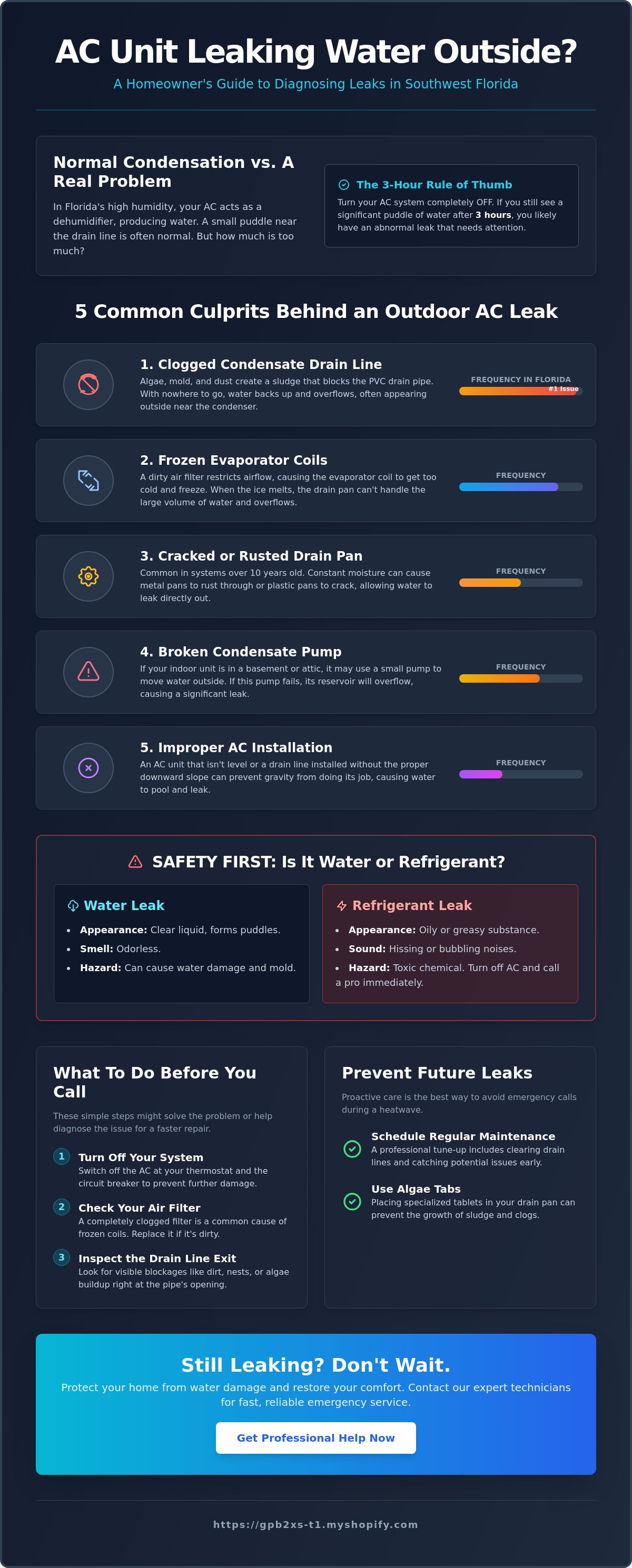
A small puddle under the drain line is usually a sign of a hard-working system. In the peak of a Southwest Florida summer, this moisture should dry up during the hottest part of the afternoon. We use the BulletProof rule of thumb to help homeowners distinguish between a routine drip and a potential disaster. If your unit has been off for three hours and you still see water pooling, you likely have a leak. While an ac unit leaking water outside is common, letting it go unchecked can turn your home from a sanctuary into a swamp.
When a Little Water is Actually a Good Sign
The condensate drain line is your system's dedicated exit ramp for moisture. In most Southwest Florida homes, this PVC pipe exits the wall near your outdoor condenser unit. Seeing a steady, slow drip here indicates your evaporator coil is successfully stripping humidity from your living space. This process is vital for maintaining the structural integrity of your home and preventing mold growth. If the line is bone dry during a humid July day, that is actually a bigger concern, as it suggests a clog is forming inside.
The Threshold: How Much Water is Too Much?
Distinguishing a normal drip from a repair emergency requires a quick visual inspection. Look for standing pools that reach toward your home's foundation or saturated soil that never dries. You can perform a time-based test by checking the drain area in the evening when the sun sets. An abnormal leak is any water that persists for more than 24 hours or spreads beyond the immediate drain area. If the water volume increases or begins to bubble, call BulletProof Air immediately. We provide fast, reliable emergency services to resolve these issues before they cause secondary water damage to your property.
5 Common Culprits Behind an AC Unit Leaking Water Outside
Florida doesn’t just serve heat. It plates it up sizzling, like the sun opened a year-round pop-up shop in your backyard. This intense humidity forces your system to work overtime, pulling gallons of moisture from the air every hour. When an ac unit leaking water outside starts creating a permanent puddle, it’s rarely a minor quirk. It’s a symptom of a system under extreme stress. Ignoring these early warning signs often leads to a total system shutdown during a 95-degree July afternoon, turning your home from a sanctuary into a sauna. At BulletProof Air, we see these five issues most frequently in our Southwest Florida service area.
Clogged Condensate Drain Lines: The #1 Florida Issue
Algae and mold thrive in the warm, wet environment of a Florida drain line. In cities like Sarasota, where humidity levels frequently hover above 90%, a "sludge" factor develops inside your pipes. This mixture of dust, organic growth, and mineral deposits creates a thick blockage. When the water has nowhere to go, it backs up. While many units have safety switches to shut the system down, others will simply overflow. If you suspect a clogged drain line, it is vital to clear it before the moisture damages your drywall or flooring.
Frozen Evaporator Coils and Dirty Air Filters
Airflow is the lifeblood of your HVAC system. When a dirty filter restricts that flow, the refrigerant inside the evaporator coil gets too cold. This causes the moisture pulled from your home to freeze into a solid block of ice. Once the unit cycles off, that ice melts rapidly. The volume of water from a melting coil is often too much for the drain pan to handle, leading to a massive overflow that manifests as an ac unit leaking water outside. If the air coming out of your vents feels weaker than it did 30 days ago, a frozen coil is the likely culprit.
Damaged or Rusted Drain Pans
In older homes throughout Lakewood Ranch, we often find secondary drain pans that have reached the end of their lifespan. After 10 to 12 years of constant moisture exposure, metal pans can rust through completely. Even a hairline crack in a plastic pan allows water to bypass the drain line entirely. You will typically see water leaking directly from the bottom of the unit casing rather than the designated white PVC pipe. Following routine AC maintenance guidelines can help identify these cracks before they cause structural damage to your home. If your system is struggling to stay dry, it might be time to call for expert AC repair to restore your peace of mind.
- Algae Growth: Common in Sarasota due to high heat and stagnant water.
- Mechanical Failure: Broken condensate pumps fail to push water out.
- Low Refrigerant: Causes coils to freeze and then thaw rapidly.
- Improper Installation: Drain lines that aren't pitched correctly won't drain by gravity.
Is it Water or Refrigerant? Safety Signs Every Homeowner Should Know
Seeing your ac unit leaking water outside is often a simple drainage issue, but it can also be a mask for something much more dangerous. You need to know the difference between a plumbing problem and a chemical emergency. Water is a natural byproduct of the cooling process; refrigerant is the chemical lifeblood of the entire system. If that lifeblood escapes, your home’s status as a cool sanctuary is at risk, and your family's health could be in jeopardy.
Refrigerant leaks are serious hazards. These chemicals can cause respiratory issues, headaches, and skin irritation if handled without professional safety gear. They are also significant environmental pollutants. Sometimes, what looks like a standard water puddle is actually condensation forming on the outside of copper lines because the refrigerant inside is dangerously low. Never attempt to "top off" your system or touch these suspected lines yourself. This is a high pressure situation that requires a licensed expert to resolve safely and effectively.
The Smell and Texture Test
If you spot a mysterious puddle under your unit, don't just walk away. Put on a pair of protective gloves and check the consistency of the liquid. Water is clear, odorless, and evaporates naturally in the intense Florida sun. Refrigerant, whether it is older Freon or modern Puron, feels greasy or oily to the touch. It often carries a faint, sweet chemical scent that is hard to miss once you're close. R-410A refrigerant evaporates faster than water but leaves an oily residue behind. If you see a stain that won't dry up, you aren't looking at water; you're looking at a repair bill that needs immediate attention.
The Hissing Sound: A Telltale Sign of Trouble
Listen closely to your outdoor condenser unit while it runs. A healthy system has a steady, mechanical hum. A failing system often produces a distinct hissing or bubbling sound. That hissing is the sound of high pressure gas escaping through a microscopic hole in your copper coils. When refrigerant levels drop below a certain point, the pressure in your system fluctuates wildly. This causes your evaporator coils to drop below freezing temperatures, leading to ice buildup.
When that ice eventually melts, it creates a massive surge of water that overwhelms your drain pan. If you hear these sounds or see ice on the lines, you need professional ac repair to diagnose the leak before the compressor suffers permanent damage. BulletProof Air technicians are available 24/7 to handle these emergencies with the urgency they deserve. We do the job right the first time to restore your comfort and ensure your system is operating at peak efficiency. If you suspect a chemical leak, turn off the system immediately and call us to protect your home and your health.
Troubleshooting Your Leaking AC: What to Do Before Calling for Help
Before you panic about that puddle, take a breath. While an ac unit leaking water outside can signal a breakdown, some fixes are surprisingly simple. Safety is your absolute priority. Always turn off the power at both the thermostat and the main breaker before you touch the equipment. In Florida, indoor temperatures can rise by 10 degrees in just 60 minutes once the cooling stops. Work quickly to diagnose the issue and prevent your home from transforming into a humid sauna.
The 3-Step Filter and Vent Check
Restricted airflow is the leading cause of frozen coils, which eventually melt and cause massive leaks. First, pull your air filter. If it looks gray or dusty, replace it immediately. Second, walk through your home and ensure all supply and return vents are wide open. Blocking vents with furniture or rugs can increase pressure and cause system failure. Finally, keep the system off for 2 to 4 hours. This allows any hidden ice to melt completely so you can see if the leak persists once the system is clear.
Inspecting the Drain Pipe and Pan
Your AC removes up to 20 gallons of moisture daily in Southwest Florida. Locate the white PVC drain line outside your home. Look for algae growth or debris blocking the exit point. If you have access to the indoor unit, check the emergency drain pan. Standing water here means the primary line is 100 percent blocked. You can attempt to use a wet/dry vac on the outside pipe to suction out minor clogs. However, if the clog is deep in the internal trap, DIY efforts often fail or risk cracking the aged PVC pipes.
When to Call BulletProof Air for Emergency Service
Not every leak is a DIY project. You need professional intervention if your home isn't cooling despite the unit running, or if the leak appears oily, which indicates a dangerous refrigerant compromise. Sarasota homeowners shouldn't wait when the outdoor humidity hits 85 percent. In Florida, seeing your ac unit leaking water outside can feel like a crisis, and a growing puddle often leads to expensive water damage in your ceiling or flooring.
We provide 24/7 emergency service because we know your home is your sanctuary. A broken AC is a threat to your family's comfort and health. Our expert technicians arrive quickly to do the job right the first time. Schedule your emergency AC repair now to restore your sanctuary and get your home back to a crisp, cool 72 degrees.
Preventing Future Leaks with BulletProof Maintenance
Florida humidity doesn't play fair. It works against your HVAC system every single hour of the day. While an ac unit leaking water outside might seem like a small annoyance, it's often the first warning sign of a system under extreme stress. Ignoring the drip now can lead to a catastrophic failure when the Sarasota heat hits its peak. At BulletProof Air, we believe the best repair is the one you never have to make. By the time you notice water pooling where it shouldn't, your system is already struggling to maintain the sanctuary of your home.
The secret to a reliable system in Bradenton is proactive care. We don't just look for problems; we stop them from forming. This includes the strategic use of industrial-strength Algae Tabs. These tabs dissolve slowly in your primary drain pan, killing the bacteria that create "Florida Sludge." This thick, jelly-like substance is responsible for roughly 85 percent of all drainage-related service calls in our region. Without professional flushing, this sludge hardens, making it nearly impossible for a homeowner to clear with a standard vacuum.
The Benefits of a Professional Maintenance Plan
Our maintenance plans are designed to be a shield for your home. We recommend flushing condensate lines at least twice a year to stay ahead of the rapid biological growth fueled by our tropical climate. During these visits, our technicians also perform a deep dive into your system's vitals:
- Line Flushing: We use high-pressure methods to clear out any debris before it causes a backup.
- Refrigerant Analysis: We check levels to ensure your coils don't freeze, which is a common reason for an ac unit leaking water outside.
- Electrical Tightening: Florida's salt air can corrode connections; we ensure everything stays secure and efficient.
If you want to dive deeper into how we keep local systems running at peak performance, check out our guide on hvac services near me for comprehensive maintenance details.
Restoring Your Home to a Cool Sanctuary
The BulletProof promise is simple: we do the job right the first time. We know that a broken AC isn't just a mechanical failure; it's a threat to your family's comfort and health. Our expert technicians treat your property with the respect it deserves, ensuring that every component is "BulletProof" against the record-breaking 2026 summer heat forecasted for Southwest Florida.
Don't wait for the puddle to reach your floorboards or for your system to shut down entirely. Taking action now saves you thousands in long-term replacement costs and ensures your home remains the cool, dry refuge you need. Explore our maintenance plans today and keep the water where it belongs, outside and away from your peace of mind.
Protect Your Florida Sanctuary Today
Florida humidity often exceeds 80 percent, making some condensation a natural part of living in the Sunshine State. However, a persistent puddle or a frozen evaporator coil means you've moved past simple physics and into a mechanical crisis. You shouldn't have to guess if your ac unit leaking water outside is a minor quirk or a total system failure. Whether the culprit is a clogged condensate line or a hazardous refrigerant leak, acting fast saves your home from water damage and soaring energy bills.
Since 2026, our expert technicians have served the Sarasota and Bradenton communities with a commitment to reliability. We provide fast response times for all emergency HVAC repairs because we understand that a broken air conditioner is a threat to your family's comfort. We do the job right the first time, ensuring your system remains BulletProof against the most intense heat waves. Our 24/7 availability means you're never alone when a cooling emergency strikes.
Don’t let a leak ruin your comfort—Call BulletProof Air for 24/7 Emergency Repair!
Take a deep breath and let the professionals handle the heat; your cool, comfortable home is just one call away.
Frequently Asked Questions
Is it normal for water to puddle around my outdoor AC unit?
A small amount of condensation is perfectly normal for an ac unit leaking water outside, especially during a typical 90 degree Florida afternoon. Your system pulls moisture from the air to keep your home comfortable; this water should drain through a dedicated line. If you see a small puddle near the drain pipe while the system is running, it's usually just a sign of the unit working hard against 80 percent humidity.
How much water should an AC unit drain in high humidity?
A standard central air conditioning system can produce between 5 and 20 gallons of water per day during a humid Southwest Florida summer. You'll notice a steady drip or a small stream of water coming from the primary condensate line. This volume is typical because the cooling process naturally dehumidifies your indoor air. If the flow stops entirely or moves to the secondary emergency line, you have a problem that needs a professional look.
Can a dirty air filter cause my AC to leak water outside?
Yes, a clogged air filter is a leading cause of water leaks because it restricts vital airflow over the evaporator coil. When air can't move, the coil temperature drops below freezing and creates a layer of ice. Once that ice begins to melt, it often overwhelms the drain pan and causes a mess. Replacing your filter every 30 days is the easiest way to prevent this common emergency and protect your home sanctuary.
What happens if I ignore a water leak from my air conditioner?
Ignoring a leak can lead to toxic mold growth within 24 to 48 hours of the initial spill. Excess water also causes structural rot to your floorboards and can damage sensitive electrical components, leading to a total system failure. What starts as a small drip can quickly turn into a multi thousand dollar repair bill. Our team at BulletProof Air recommends addressing any standing water immediately to restore your safety and peace of mind.
Why is my AC unit leaking water when it is turned off?
If you see your ac unit leaking water outside after you've shut it down, it's a sign that ice on the evaporator coil is melting. The frozen buildup acts like a block of ice that thaws once the cooling cycle stops. This usually indicates a refrigerant leak or a severe airflow restriction. It's a signal that your system is struggling, so you should call for a professional inspection before you try to restart the unit.
How do I know if my AC is leaking refrigerant instead of water?
Refrigerant leaks don't typically create large puddles; instead, they appear as oily residue or a bubbling hiss near the copper lines. Water is clear and odorless, while refrigerant often has a faint chemical smell and leaves a greasy film on the equipment. If your home isn't reaching the set temperature and you see ice on the lines, you're likely dealing with a 2 pound or greater loss of refrigerant that requires an expert fix.
Can I fix a clogged AC drain line myself?
You can often clear a minor clog by using a wet/dry vacuum to suction the exterior PVC drain line for about 30 seconds. This method is effective for removing the 1/4 inch of algae or sludge that commonly builds up in Florida systems. However, if the vacuum doesn't clear the blockage, don't force it. You'll need a professional technician to flush the line with pressurized air to ensure the job is done right the first time.
How often should I have my AC drain lines cleared in Florida?
You should have your AC drain lines professionally cleared every 6 months to keep up with the intense Southwest Florida climate. Algae and mold grow 365 days a year in our heat, which leads to frequent blockages in narrow 3/4 inch pipes. Regular maintenance visits in the spring and fall ensure your system remains reliable. This proactive schedule prevents emergency overflows and keeps your home a cool, dry sanctuary all year long.