

AC Unit Not Draining Water? Causes, Safe Checks, and When to Call for Help
Is a dry AC drain line a sign your system is fine, or the first clue that something’s wrong? If you’re searching for “ac unit not draining water,” it’s reasonable to worry about a hidden leak or a repair that could get worse if you guess. But a dry outlet alone doesn’t tell the whole story: whether the system is running and how much moisture is in the air both matter.
It’s worth paying attention, especially in Florida’s heat and humidity, where an air conditioner removes moisture from your home as it cools. A blockage can cause water to back up, trigger a safety switch, or spill near your indoor unit. Don’t take apart the system or force a clog clear.
This guide explains how AC condensate drainage works, what warning signs to look for, and which simple observations are safe. You’ll also learn when to stop troubleshooting and seek professional help. If the cause isn’t clear, BulletProof Air provides free HVAC diagnostics and straightforward recommendations, so you can get clear next steps without guessing.
Key Takeaways
- A dry drain outlet alone doesn’t prove there’s a problem. Check whether your AC is running and consider the conditions inside your home.
- Moisture moves from the evaporator coil into the condensate pan and out through the drain line.
- If your ac unit not draining water, possible causes include a blockage, a drainage-path issue, a pan concern, or a condensate-pump problem where one is fitted.
- Look for visible water and other warning signs without opening equipment or attempting hazardous repairs. Turn the system off if water is actively leaking near equipment or property.
- For persistent leaks or unresolved concerns, professional diagnosis can clarify the cause and provide clear next steps.
AC Unit Not Draining Water: What the Symptoms May Mean
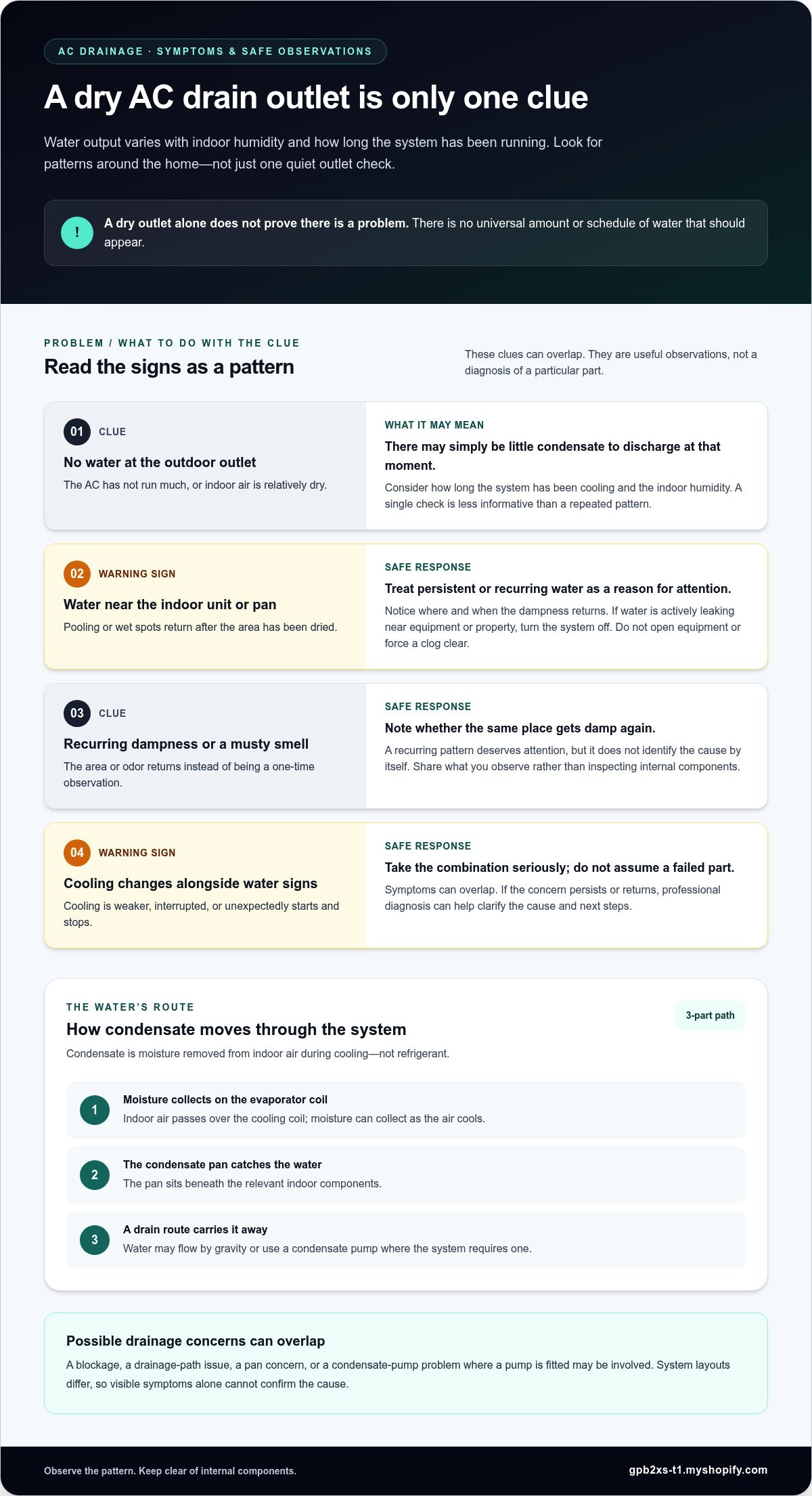
Seeing no water at the outdoor drain outlet can be unsettling, especially if you’re worried about a leak inside. But one dry observation doesn’t establish that your AC has a fault. Condensate is moisture the system removes from indoor air as it cools. How much forms, and when it drains, can vary with indoor humidity and how long the system has been running. A quiet outlet on a less humid day may simply have little water to release.
During cooling, moisture collects at the indoor unit and is directed toward a drain. That’s one part of how an AC unit works. The signs around your home matter more than a single glance at the exterior outlet. A dry outlet is different from water pooling indoors, recurring dampness, or cooling that starts and stops unexpectedly. Those patterns deserve attention, but they don’t reveal the exact cause on their own.
When is no visible AC drain water a concern?
Consider what you’re observing, not just what you aren’t seeing. If the AC hasn’t been running much, or indoor air is relatively dry, there may be little visible discharge at that moment. There’s no universal amount or schedule of water that should appear at the outlet. One isolated check is less informative than a repeated pattern, especially if the home is humid and the system has been cooling for a while.
Concern rises if a dry outlet occurs alongside water near the indoor equipment, a musty smell, or a change in cooling. An AC unit not draining water may be one possibility, but symptoms can overlap with other system concerns. Don’t assume a particular part has failed based only on the outlet or a single symptom.
Which signs suggest an AC drainage problem?
Look for signs inside the home as well as changes in comfort. Water around the indoor unit or near the condensate pan is a warning sign, particularly if it returns after you’ve dried the area. Note whether dampness appears in the same place, whether there’s an unusual musty odor, and whether the AC’s cooling seems interrupted or inconsistent. These details can help you describe the issue without inspecting internal components.
- Persistent indoor water: Pooling or recurring wet spots near the air handler or pan need attention.
- Repeated dampness or odor: A recurring musty smell or damp area is more concerning than a one-time observation.
- Cooling changes: Unexpected interruptions or weaker cooling alongside water signs warrant further investigation.
- Symptoms that return: A problem that disappears briefly and then comes back is worth reporting.
These are clues, not a diagnosis. A blockage, a drainage-path issue, a pan concern, or a pump issue where a pump is fitted can produce overlapping signs. If you notice persistent water, an unusual odor, or a change in cooling, take the pattern seriously and share what you’ve observed when seeking help.
How an AC Condensate Drain Line Moves Water
Water from an air conditioner follows a simple route: moisture forms on the indoor cooling coil, collects in a pan, then moves through a drain line away from the equipment. The route can vary by system design and installation, so not every unit has identical components. Understanding this path can help you make sense of where drainage trouble might show up, without opening the equipment or assuming a particular part has failed.
Condensate drainage is the process of collecting moisture removed from indoor air during cooling and carrying it safely away from the air-conditioning system.
Where does the water from an AC system come from?
As warm indoor air passes over the evaporator coil, the coil cools the air. Moisture in the air can then collect on the coil, much like water droplets forming on a cold glass. The amount depends partly on the moisture in the indoor air and how the system is operating. In a humid home, the AC removes moisture as part of cooling, but there’s no single output amount that applies to every system or situation.
This collected water is condensate, not refrigerant. Refrigerant circulates within the AC’s sealed cooling system; condensate is moisture from the air that needs a separate path out. Keeping those processes distinct makes it easier to understand what a drain issue concerns. For broader background on HVAC system design and guidance, ASHRAE HVAC standards offer a starting point for learning about the field.
What do the drain pan and condensate line do?
A pan positioned beneath the relevant indoor components catches water as it leaves the coil. From there, gravity may carry it through a condensate drain line to a suitable discharge point. In some installations, the equipment’s position means water can’t travel away by gravity alone, so a condensate pump may be part of the setup. It isn’t a standard component in every AC system.
The basic sequence is:
- Moisture collects on the evaporator coil as indoor air is cooled.
- The pan catches water draining from the indoor cooling equipment.
- The drain route carries it away, using gravity or a pump where the system requires one.
This path also explains why the location of visible water can be useful information. Dampness beneath indoor equipment may mean water isn’t being contained or carried away as expected, but it doesn’t identify the cause by itself. A ac unit not draining water could involve more than one part of the drainage path, and system layouts differ. Avoid removing panels or reaching into equipment to trace the route.
If you’re unsure how your system’s drainage path is arranged, BulletProof Air can assess the AC through its HVAC repair service and explain the findings. A clear diagnosis is safer than guessing at a component based on where water appears.
Common Reasons an AC Unit Stops Draining Water
If your AC has stopped draining, several parts of the water’s route could be involved. Common causes of AC drainage trouble include a drain-line blockage, an issue along the drainage path, a condensate-pan concern, or a condensate-pump problem in systems that use one. These are possibilities, not a diagnosis. Water near the indoor unit can signal a drainage concern, but it doesn’t show which part is responsible.
A dirty air filter can also affect how the system operates. A clogged filter restricts airflow, which may contribute to cooling problems and, in some conditions, ice forming on the indoor coil. If ice melts, extra water may appear around the unit. That doesn’t automatically mean the drain line is blocked, so report both the water and any cooling changes rather than assuming one explains the other.
Could a clogged drain line be responsible?
Yes. Debris or buildup inside a drain line may obstruct the route that carries collected water away. If water then backs up, you might notice dampness or pooling near the indoor equipment. But water in that area alone can’t confirm a clog; another part of the drainage setup or the system’s operation could be involved.
Don’t try to clear an uncertain blockage with chemical drain cleaners, compressed air, or improvised tools. Those methods can be unsuitable for the system or cause damage. A visible wet spot is useful information, not a reason to dismantle equipment.
What if the line looks clear but water still is not draining?
Seeing the outdoor drain outlet doesn’t tell you whether the entire route is clear. A problem could be elsewhere along the drainage path, or the pan may not be collecting or directing water as intended. Drain-line slope and a condensate pump, if the system has one, are other factors a technician may assess. The right checks depend on the equipment’s design and the symptoms you’ve noticed.
- Drainage-path issue: Water may not move properly through the full route, even if the visible outlet appears unobstructed.
- Pan concern: A pan-related issue may affect how water is collected or contained.
- Pump issue: In systems that use a condensate pump, its operation may need professional assessment.
- Operating change: Restricted airflow or cooling interruptions may accompany water concerns without proving a drain failure.
Keep your observations specific: note where water appears, whether it returns, and whether the AC’s cooling has changed. For a recurring ac unit not draining water concern, BulletProof Air’s diagnostic-first HVAC repair approach can identify what needs attention and explain clear next steps. Don’t guess at a failed component based on symptoms alone.
Safe Checks to Make When Your AC Is Not Draining
If you suspect an ac unit not draining water, stick to observations that don’t require tools or access to internal components. Start with the area around the indoor unit. If water is actively leaking near the equipment or into your home, switch the system off using its normal thermostat control, provided you can do so safely. Don’t touch wet electrical equipment. If the leak continues or you can’t safely reach the control, step away and get professional help.
What can you check without opening the AC equipment?
Use these steps to gather useful information while keeping your hands away from electrical and mechanical parts:
- Look for visible indoor water. Check the floor around the indoor unit and any area you can see near it. Note where you find dampness and whether it returns. Don’t remove a cover to inspect the pan.
- Note when the symptom occurs. Record whether water appears while the AC is running, after it stops, or at other times. Also note any cooling interruptions or unusual changes in comfort.
- Check the thermostat display. Confirm that it appears to be operating and note whether the system responds as expected. Avoid unnecessary setting changes, and don’t touch wiring or remove the thermostat.
- Inspect an accessible air filter. If you can reach it without opening HVAC equipment, look for visible dirt or blockage. Follow the equipment maker’s guidance for checking and replacing the filter. Don’t reach inside the unit.
Do not open electrical panels, handle wiring, or disassemble HVAC equipment. Avoid trying to clear a drain line with chemicals or household products. These checks can’t confirm the cause, but your notes can help a technician understand what’s happening.
How can you reduce the chance of recurring drainage trouble?
Keep routine HVAC maintenance in view. A professional can assess system conditions that may be difficult or unsafe for a homeowner to inspect, including parts of the drainage route that aren’t visible. In Florida’s humid climate, addressing recurring moisture concerns can help protect your home and support reliable comfort.
For added context about repair concerns in the region, the AC repair guide for Southwest Florida explains what homeowners may encounter. If safe observations don’t explain the water, BulletProof Air provides free HVAC diagnostics and clear next steps. Get help with an AC drainage concern.
When to Call BulletProof Air About an AC Drainage Problem
Call for professional diagnosis if water keeps returning, leakage persists, or you can’t explain a drainage concern through safe observations. A single dry outlet may not signal a fault, but repeated water around the indoor equipment is a reason to stop guessing. The drainage route can include components you can’t safely inspect, and symptoms alone can’t confirm which part needs attention.
Which AC drainage symptoms need prompt attention?
Act promptly if water is actively leaking indoors, accumulating repeatedly near the equipment, or appearing alongside worsening system operation. If water is near electrical components, don’t touch the equipment. Switch the AC off using the normal thermostat control only if you can do so safely, then seek help. For urgent HVAC issues, BulletProof Air offers 24/7 Emergency Service.
- Active indoor leakage: Water spreading near the air handler or into living areas needs prompt attention.
- Repeated accumulation: Dampness that returns after cleanup can signal an unresolved issue.
- Changing operation: Cooling interruptions or worsening performance alongside water concerns warrant evaluation.
Share what you’ve observed, including where water appears and whether the problem recurs. These details help frame the concern, but they aren’t a substitute for diagnosis.
What to expect from a diagnostic-first HVAC visit
BulletProof Air begins by evaluating the system and the drainage concern before recommending work. The technician explains the findings in clear language, outlines practical next steps, and doesn’t recommend services you don’t need. HVAC diagnostics are free, so you can get an informed assessment instead of choosing a repair based on symptoms alone.
The evaluation is guided by the equipment and what it’s doing. A visible outlet, a damp spot, or a cooling change may be useful clues, but the full drainage path and system operation may need professional assessment. For related local repair information, see air conditioning repair in Sarasota.
Persistent water concerns can be stressful, especially when Florida heat and humidity make reliable cooling important at home. If the issue is recurring, leaking, or still unexplained after safe checks, arrange an evaluation with BulletProof Air. Schedule AC service with BulletProof Air for clear findings and next steps.
Take the Next Step Toward a Dry, Comfortable Home
Uncertainty can make a small water concern feel bigger, but you don’t have to solve it by taking apart your AC or guessing at the cause. If your ac unit not draining water concern keeps returning, treat that pattern as useful information and choose a safe next step rather than waiting for the problem to become harder to assess.
BulletProof Air takes a diagnostic-first approach, with honest evaluations and clear recommendations based on what the system needs. HVAC diagnostics are free, so you can get a professional assessment and understand the next steps before deciding how to proceed. For urgent HVAC issues, BulletProof Air also provides 24/7 Emergency Service for residential and commercial customers.
Let an HVAC team help you move forward with clear information. Schedule AC service with BulletProof Air to get an evaluation and practical next steps.
Frequently Asked Questions
Is it normal for an AC unit not to drain water?
Yes, a dry outdoor drain outlet can be normal because visible drainage varies with indoor humidity and how the AC is operating. No water at one check doesn’t prove a fault. Pay closer attention if you find water near the indoor unit, recurring dampness, an unusual odor, or a change in cooling. If those signs persist, arrange professional diagnosis rather than relying on the outlet alone.
Can I run my AC if it is not draining water?
It depends on what else you notice. If water is leaking indoors, turn the system off using the normal thermostat control, if you can do so safely, to limit further water exposure, then arrange professional help. If there’s no leak, a dry outlet alone doesn’t establish a malfunction. Keep track of any repeated water, odor, or cooling changes, and have recurring symptoms assessed.
What causes an AC unit to stop draining water?
Possible causes include an obstruction in the drain path, a pan issue, a condensate-pump problem in systems that use one, or another concern affecting system operation. A wet spot below the unit doesn’t identify which component is responsible. Equipment configurations differ, so a technician needs to assess the system and drainage route before determining the cause. Avoid treating a symptom as a confirmed diagnosis.
How do I know if my AC drain line is clogged?
Water near the indoor unit, repeated dampness, or cooling interruptions can justify an investigation, but none proves the line is clogged. An outdoor outlet you can see only shows the end of the route, not the condition of the full line. Don’t pour chemical cleaners into it or try invasive clearing methods. If symptoms return, have a technician assess the complete drainage setup.
Should I turn off my AC if water is leaking?
Yes. If water is actively leaking near the indoor equipment or into your home, switch the AC off using its normal thermostat control, but only if you can do so safely. This is a cautious way to limit continued water exposure, not a repair. Don’t touch wiring or open equipment. If the leak continues, returns after the system is off, or comes with a cooling problem, seek professional HVAC help.
Can a dirty air filter cause AC drainage problems?
A dirty filter can contribute to airflow or system-performance concerns, but it doesn’t explain every drainage symptom. If the filter is easy to access without opening the equipment, check its visible condition and follow the manufacturer’s replacement instructions. Don’t reach inside the unit. If you still see water or the concern continues after routine filter attention, arrange a diagnosis instead of assuming the filter was the cause.
When should I call an HVAC technician for an AC that is not draining?
Call for professional help if water is leaking indoors, dampness keeps returning, or the drainage concern remains unexplained. A technician can assess the drain route and related components rather than infer a failure from one clue. BulletProof Air provides free HVAC diagnostics and explains practical next steps. For urgent HVAC issues, BulletProof Air offers 24/7 Emergency Service. Share when the symptoms occur and what you’ve observed.