

Cost of Ductless Mini Split vs Central Air: 2026 Price & ROI Guide
The most expensive cooling system isn't always the one with the highest price tag; it's the one that bleeds money every time the Florida sun hits 95 degrees. You've likely felt that spike of anxiety when the vents blow lukewarm air or your monthly FPL bill arrives higher than the last. It's frustrating to pay for a system that leaves your home feeling humid and unevenly cooled. When evaluating the cost of ductless mini split vs central air, the real answer lies in how much of your hard-earned money is being lost to leaky ducts and inefficient cycles.
We understand that your home should be a reliable sanctuary from the Gulf Coast heat. This guide provides a clear look at the total cost of ownership in 2026, including how the 30% federal tax credit and FPL's current residential rates of 16.41 cents per kWh impact your bottom line. You'll discover how to eliminate the "Florida Humidity Tax" and which system offers the "BulletProof" reliability needed for hurricane season. We are breaking down SEER2 efficiency standards and long-term ROI to help you make a professional, informed decision for your family's comfort.
Key Takeaways
- Learn how 2026 SEER2 requirements and federal tax credits can offset your initial investment and maximize your long-term ROI.
- Compare the total cost of ductless mini split vs central air by evaluating the hidden expenses of ductwork repairs against the precision of multi-zone installation.
- Discover how inverter technology eliminates the expensive "startup surge" and provides a "BulletProof" solution to Florida's 90% humidity.
- Identify the "Salt Air Factor" to understand how coastal environments impact the lifespan and maintenance schedule of your outdoor condenser.
- Get a definitive verdict on which system wins for your specific home layout, whether you are cooling a new addition or upgrading an entire residence.
Upfront Investment: Hardware and Equipment Costs
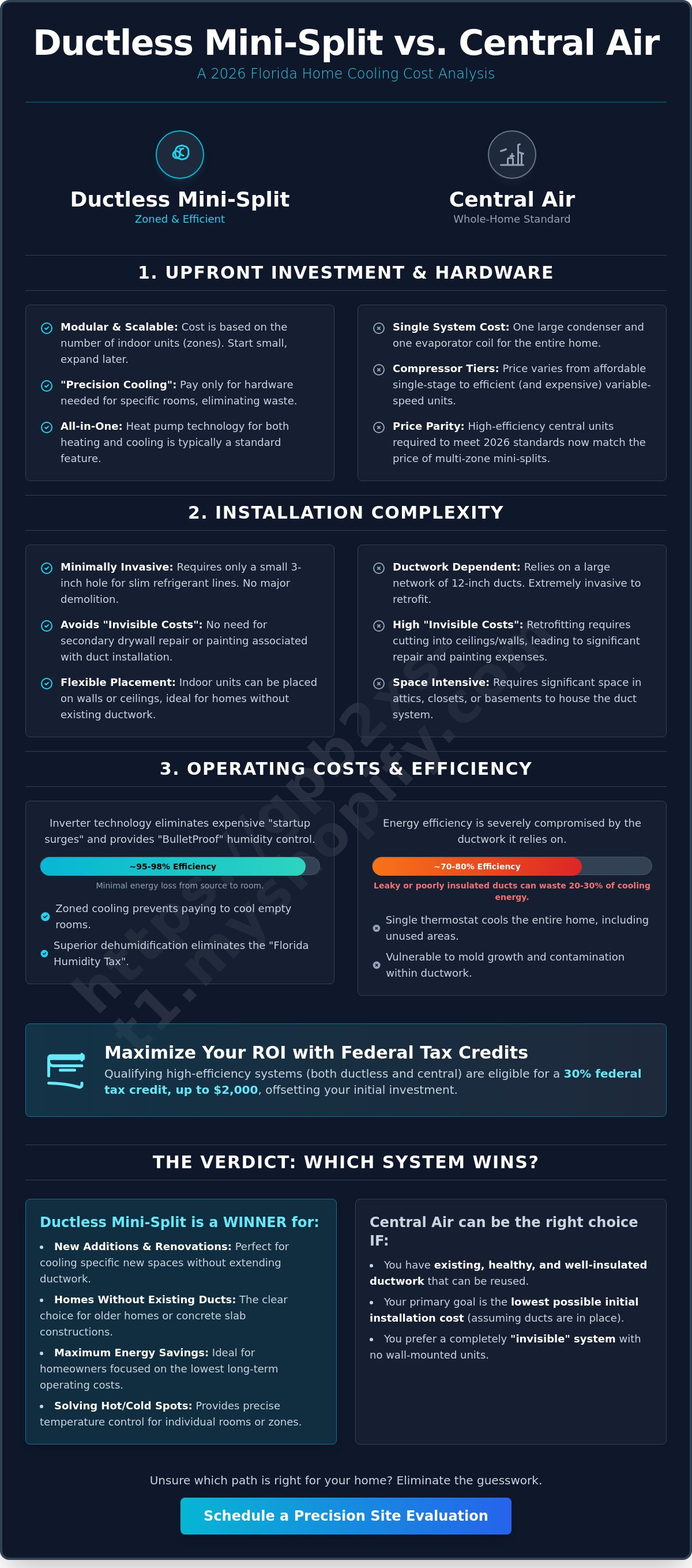
Selecting the right hardware is the first step toward restoring your home's comfort and security. In 2026, the landscape of HVAC equipment has shifted significantly due to stricter energy mandates. Every new system installed in Florida must now meet a minimum of 14.3 SEER2. This regulatory change has narrowed the price gap when evaluating the cost of ductless mini split vs central air equipment. While central air units were once the undisputed budget leader, the hardware for high-efficiency central condensers now often matches the price of multi-zone mini-split heat pumps. Understanding the history and technology of air conditioning helps clarify why these modern systems carry different price tags based on their mechanical complexity and cooling delivery methods.
The total hardware bill depends heavily on the "Zone Factor." A central air system typically requires one large condenser and a single evaporator coil. In contrast, a whole-home mini-split requires an outdoor unit capable of supporting several indoor air handlers. Each additional air handler adds to your equipment total; however, it also provides the precision needed to eliminate hot spots in your home. It's a trade-off between the simplicity of a single-point system and the sophisticated control of a zoned solution that handles 90% humidity with ease.
Central Air Equipment Tiers
Central air hardware is generally categorized by compressor type. Single-stage compressors are the most affordable but offer the least efficiency. Variable-speed compressors are the professional choice for Florida's climate; they ramp up or down to maintain a steady temperature. While variable-speed units have a higher initial hardware cost, they are often the only central systems that qualify for the 2026 federal tax credit of 30%, up to $2,000. Choosing a reputable brand is vital for long-term reliability in our high-humidity environment. High-SEER2 central units are now engineered to rival the performance of mini-splits, making the equipment cost comparison closer than ever before.
Mini-Split Configuration Costs
Mini-split hardware costs are modular and adaptable to your specific floor plan. You can start with a single-zone condenser for a guest suite or invest in a multi-zone outdoor unit for the entire residence. The style of indoor unit also impacts the hardware budget. Wall-mounted units are standard and dependable, while ceiling cassettes or floor-mounted units offer a more discreet look at a higher equipment price. This "Precision Cooling" mindset focuses on placing cooling exactly where you need it. When you look at the cost of ductless mini split vs central air, remember that mini-splits often include heat pump technology as a standard feature, providing both cooling and efficient heating in one durable package. This dual-purpose efficiency is a global trend in home comfort; for example, specialists like Trust Boilers & Renewables focus on similar high-efficiency standards when installing and servicing residential heating systems in northern climates.
Installation Complexity: Ductwork vs. Line Sets
Your home's structure determines the labor intensity of your HVAC project. In Sarasota and Bradenton, many residences are built with stucco exteriors and concrete slabs, making structural changes difficult and expensive. When you compare the cost of ductless mini split vs central air, you must account for the physical footprint of the installation. Central air requires significant space for 12-inch ducts, whereas ductless systems rely on slim refrigerant lines. While specialized labor for Ductless Mini-Split Air Conditioners often carries a higher hourly rate, it avoids the invasive demolition required to route new ductwork through tight attics or between floors.
There's an "Invisible Cost" to central air retrofits that many homeowners overlook. Cutting into ceilings and walls to install or replace ducts creates a mess and necessitates professional drywall repair and painting. These secondary expenses aren't usually included in an HVAC quote. Additionally, local building codes in Sarasota County require specific mechanical permits for both systems. Ductless units often simplify this process since they only require a small three-inch penetration through the exterior wall, which is easier to seal and protect against Florida's driving rains. If you're unsure if your home's structure supports a traditional retrofit, our team can help you schedule a precision site evaluation to identify the best path forward.
The Ductwork Dilemma
Evaluating the health of your existing ducts is critical. In older Florida homes, leaky or poorly insulated ductwork can waste 20% to 30% of your cooling energy before it ever reaches your living room. If your ducts are collapsed or contaminated with mold, a full replacement is necessary. This can add $4,500 to $9,500 to the project. While new construction HVAC design often favors integrated central systems for aesthetic reasons, retrofitting an existing home with new ducts is frequently the most expensive and disruptive option available.
Ductless Installation Nuances
Ductless systems require a different type of technical precision. We must ensure your electrical panel has the "BulletProof" capacity to handle the new circuits for the outdoor condenser and indoor air handlers. Some older homes may need a panel upgrade to meet modern safety standards. Placement is also non-negotiable; an expert technician must calculate the exact pitch for drainage lines to prevent water damage in a climate where 90% humidity is the norm. This specialized labor ensures your system remains reliable during the most intense summer months.
Operating Costs: The "Florida Humidity Tax" and Efficiency
Efficiency in Florida isn't just a number on a yellow sticker; it's a measure of how well your system survives the local environment. When you evaluate the cost of ductless mini split vs central air, you must account for the current 2026 FPL residential rate of 16.41 cents per kWh. Traditional central air systems typically operate on an all-or-nothing basis. They blast cold air until the thermostat is satisfied and then shut down completely. This creates a "startup surge," a massive spike in energy consumption every time the compressor kicks back on. These surges happen dozens of times a day in our heat, quietly inflating your monthly bill.
Modern mini-splits use inverter technology to solve this problem. Instead of stopping and starting, the compressor adjusts its speed to match the exact cooling load of the room. It sips electricity rather than gulping it. This constant state of operation is significantly more efficient than the erratic cycles of a central unit. By avoiding the frequent power spikes required to move air through hundreds of feet of ductwork, you protect your budget from the "Florida Humidity Tax." This tax is the hidden cost of running an inefficient system longer just to combat the 90% humidity that plagues the Gulf Coast.
Zoning for Dollars
Stop paying to cool empty space. Central air systems often try to mimic zoning using mechanical dampers, but these are secondary additions that can be expensive and prone to mechanical failure. True zoning with mini-splits allows you to create a "Sanctuary" in your primary bedroom, keeping it at a crisp 68 degrees for sleep while the rest of the house remains at 78. This precision cooling means you are only spending money where you are physically standing. The financial logic is simple: cooling 500 square feet is always cheaper than cooling 2,500 square feet.
Dehumidification and Latent Heat
Florida's humidity is "latent heat," moisture that holds onto warmth and makes your skin feel sticky. Central air units often "short-cycle," meaning they reach the target temperature so quickly that they don't have enough time to remove the moisture from the air. This often forces homeowners to set their thermostats to 70 degrees just to feel comfortable. Ductless Minisplit Heat Pumps are engineered to run for longer, lower-intensity cycles. This allows the evaporator coil to extract significantly more water from your indoor environment. When your home is properly dehumidified, 75 degrees feels perfect, allowing you to raise your thermostat and lower your FPL bill without sacrificing comfort.
Maintenance and Lifespan: Protecting Your Sanctuary
A high-performance cooling system is a significant investment in your home's safety. To keep it running, you must look beyond the purchase price and consider the ongoing costs of preservation. When comparing the cost of ductless mini split vs central air, maintenance requirements differ based on the number of moving parts. Central air systems rely on a single, large air handler and outdoor condenser. Multi-head mini-splits require individual attention for each indoor unit. In the harsh climate of Sarasota and Bradenton, the "Salt Air Factor" is the single greatest threat to your equipment's longevity. Salt-laden breezes from the Gulf can corrode aluminum fins and copper coils in record time, making a professional maintenance plan an absolute necessity for any homeowner.
Repair costs also follow different patterns. Central air failures often involve mechanical components like capacitors, fan motors, or the compressor itself. These are common parts that most technicians carry on their trucks. Mini-split systems are more electronic-heavy. Replacing a sophisticated inverter board can be more specialized and costly for parts than a standard central air repair. However, because mini-splits don't struggle against the static pressure of dirty ducts, they often experience less mechanical strain over time. We recommend a proactive approach to prevent these high-stress failures before they leave you stranded in 95-degree heat.
Long-term Reliability and Repairs
Expectations for equipment lifespan vary by system type and location. In the intense Florida sun, a well-maintained central air unit typically lasts about 10 to 12 years. Ductless mini-splits can often reach the 15-year mark because they operate at variable speeds rather than constant, high-wear cycles. While central air repairs like coil replacements are labor-intensive, the modular nature of mini-splits allows for targeted fixes. Precision maintenance is the only way to ensure a "BulletProof" system that survives a decade of tropical humidity and salt exposure.
The Cost of Neglect
Ignoring your system is an expensive mistake. Industry data shows that dirty filters and neglected coils can spike your monthly operating costs by 15% as the system works harder to move air. For central air users, there is also the financial risk of mold growth within the ductwork, which can require professional remediation costing thousands. Ductless units are easier to inspect and clean, reducing the risk of hidden biological growth. Don't wait for a total system failure to realize the value of upkeep. You can secure your home's comfort today by scheduling a comprehensive system tune-up with our expert team.
The Verdict: Which System Wins in Sarasota?
The winner of the cost of ductless mini split vs central air debate isn't a single system; it's the one that aligns with your home's unique structure and your family's long-term comfort goals. Every residence in Sarasota and Bradenton has different requirements. If your home already features high-quality, clean ductwork and you need a dependable replacement with a lower initial entry price, central air remains the logical choice. It's a straightforward solution that restores your sanctuary quickly without a total overhaul of your interior walls. We recommend this path for homeowners who want a professional, familiar system that fits a traditional budget.
Choose a mini-split system if you are building a new addition, converting a garage, or dealing with persistent "hot spots" that your current system can't reach. Mini-splits are the definitive choice for those who prioritize the lowest possible monthly electric bills and precision control over every room. If your existing ducts are compromised by mold or age, the cost of ductless mini split vs central air often tips in favor of the ductless option because it bypasses the need for expensive structural demolition. Many local families now adopt a hybrid approach; they maintain a central unit for the main living areas while using a mini-split to ensure the master suite remains a crisp, dehumidified refuge.
To move forward with confidence, you need a professional assessment of your home's thermal envelope. Our team provides an urgent estimate based on your specific layout and cooling needs. We don't guess; we calculate. This ensures you don't overpay for capacity you don't need or end up with a system that fails to handle the 90% humidity of a Florida August.
Decision Matrix for SW Florida Homeowners
When looking at the Total Cost of Ownership (TCO) over a 10-year period, mini-splits frequently emerge as the financial winner due to their superior efficiency and lower maintenance strain. In the competitive Sarasota real estate market, a high-efficiency zoned system is a significant asset that can boost home resale value. Buyers today are hyper-aware of energy costs and look for systems that promise reliability during peak summer months. Investing in a modern, SEER2-compliant system provides the "Peace of Mind" factor that your home will remain a cool, safe environment regardless of the temperature outside.
Next Steps with BulletProof Air
Your journey to a more efficient home starts with a professional load calculation. This technical step is essential to ensure your new hardware is perfectly sized for your space, preventing the short-cycling that kills equipment. At BulletProof Air, we are committed to precision installation and 24/7 responsiveness. We understand that a cooling failure in Florida is an emergency, not an inconvenience. Our technicians work with speed and accuracy to restore your home’s sanctuary status. Don't let another high electric bill or a lukewarm vent stress your family. Take action now to secure a cooling solution that is as durable as it is efficient.
Secure Your Home’s Comfort and Future Savings
Choosing between these two systems is about more than just the immediate hardware price. It's a decision that impacts your family's safety and your monthly budget for the next decade. By understanding the 2026 cost of ductless mini split vs central air, you can leverage federal tax credits and high-efficiency SEER2 standards to protect your home from rising energy rates. Whether you prioritize the lower upfront cost of a central unit or the precision zoning of a ductless system, the goal remains the same: a reliable sanctuary that defeats Florida's 90% humidity.
Our expert technicians serve Sarasota and Bradenton with fast response times for all cooling emergencies. We provide customized solutions designed specifically for the unique challenges of the Gulf Coast climate. Don't wait for your current system to fail in the peak of summer. Get Your Precision HVAC Estimate from BulletProof Air Today and restore your peace of mind. Your home deserves a cooling solution that is as dependable as it is efficient. Let's build a more comfortable and "BulletProof" future for your family together.
Frequently Asked Questions
Is it cheaper to run a mini-split than central air in Florida?
Yes, it is typically 30% to 40% more efficient to run a mini-split because you only cool the rooms you are actively using. Inverter technology also avoids the expensive power surges common with central units. Given the FPL residential rate of 16.41 cents per kWh in 2026, these monthly savings add up quickly during the long Florida summer.
Does a ductless mini-split increase home value more than central AC?
Modern buyers in the Sarasota real estate market prioritize energy efficiency and personalized comfort. A ductless system can increase home value by providing a high-tech solution for "hot spots" or additions without bulky ductwork. It signals to potential buyers that the home is equipped with a premium, efficient cooling solution that lowers their future utility bills.
How much does it cost to replace central air with a ductless system?
The total cost of ductless mini split vs central air replacement depends on the number of indoor zones required and the capacity of your electrical panel. If your existing ducts are failing or contaminated with mold, switching to a ductless system is often the more cost-effective path. It eliminates the need for expensive structural demolition and secondary drywall repairs.
Can a mini-split cool a whole house in Sarasota?
Absolutely. Multi-zone condensers can support several indoor air handlers to provide comprehensive cooling for an entire residence. This is an ideal solution for Sarasota's concrete block homes where routing new ducts is often physically impossible or prohibitively expensive. You gain total control over the climate in every room of the house.
What is the average lifespan of an HVAC system in Florida salt air?
Central air systems in Florida typically last 10 to 12 years, while ductless mini-splits can reach 15 years with professional care. The salt air along the Gulf Coast accelerates corrosion on aluminum fins and copper coils. Regular maintenance is the only way to protect your equipment from this environmental "tax" and ensure long-term reliability.
Are there tax credits or rebates for mini-split installations in 2026?
Yes, the 2026 federal tax credit covers 30% of the project cost for qualifying ENERGY STAR heat pumps, up to $2,000 per year. Additionally, FPL offers rebates ranging from $200 to $400 for high-efficiency systems with a SEER2 rating of 16 or higher. These incentives significantly lower the initial investment barrier for local homeowners.
How long does a typical mini-split installation take compared to central air?
A standard multi-zone mini-split installation is often completed in a single day because it only requires small three-inch wall penetrations. Central air replacements also take about one day if the ductwork is in good condition. However, if you require a full duct replacement, a central air project can extend to several days and involve significant disruption.
Do mini-splits require more maintenance than central air systems?
Mini-splits don't require more frequent maintenance, but the process is more localized. You must clean the individual filters in each air handler to maintain airflow. Professional inspections are vital for both systems to ensure the drainage lines stay clear in our 90% humidity and to prevent biological growth within the unit.
If you would like maintenance or repair assistance with your Florida Air Conditioner, contact BulletProof Air Or call: 941.599.9999 for more information about how we can help.