

How to Optimize Your AC for Summer Savings in 2026
What if the thermostat isn’t the only place to find summer AC savings? In Florida, humidity can make a comfortable setting feel tricky, and your cooling system’s airflow and upkeep matter too. Learning how to optimize ac for summer savings means looking beyond the temperature dial without sacrificing comfort.
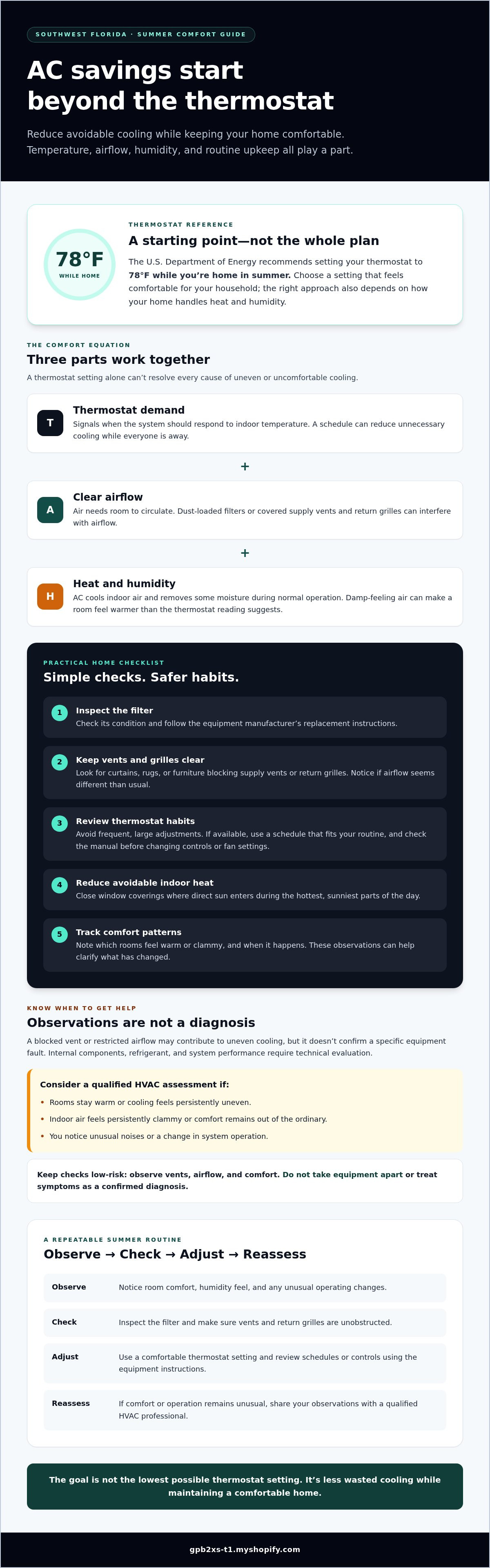
It’s understandable to worry that using less energy means living in a warm, sticky home. The goal is to reduce avoidable AC use while keeping your indoor space comfortable. The U.S. Department of Energy recommends setting your thermostat to 78°F while you’re home in summer, but the right approach also depends on how your home handles heat and humidity.
This guide shares practical steps for Southwest Florida homeowners, from thermostat habits and filter checks to signs that call for professional help. You’ll learn which basic maintenance tasks you can handle safely, what to watch for when humidity or airflow feels off, and when a qualified HVAC technician may be able to help restore reliable performance.
Key Takeaways
- Learn how to optimize ac for summer savings by considering airflow, humidity, and routine upkeep, not just the thermostat.
- Start with simple, low-risk checks, including inspecting the filter and following the equipment manufacturer’s replacement instructions.
- Understand why thermostat settings alone may not resolve uneven cooling or persistent comfort issues.
- Recognize signs such as unusual noises or rooms that stay warm, and know when professional assessment may help.
- Build a repeatable summer routine to monitor comfort, keep airflow clear, and review thermostat schedules.
Why summer AC optimization matters in Southwest Florida
In Southwest Florida, air conditioning is more than a way to take the edge off a hot afternoon. Long stretches of warm weather keep cooling systems working regularly, while humidity can make indoor comfort harder to manage. AC optimization means reducing unnecessary cooling demand while maintaining safe, comfortable conditions at home. It’s not about turning the system off and hoping you can tolerate the heat.
Lower energy use should come from reducing wasted cooling, not from accepting an uncomfortable indoor temperature. The energy your AC uses depends on several factors: outdoor weather, your home’s insulation and sun exposure, the condition of the equipment, and how the system is used. A thermostat adjustment may help in one home, but it won’t address every cause of high energy use or uneven comfort.
How Southwest Florida heat and humidity affect comfort
Your AC cools indoor air and, during normal operation, also removes some moisture. On humid days, damp-feeling air can make a room feel warmer than the thermostat reading alone suggests. You may be tempted to lower the setting, but that doesn’t necessarily address the source of discomfort. Understanding how air conditioning works helps explain why cooling and moisture removal are related parts of system operation.
That local combination of heat and humidity makes comfort a better guide than chasing the lowest possible thermostat setting. If the home feels persistently clammy or certain rooms remain uncomfortable, note when and where it happens. Those details can help a technician assess whether the concern is linked to a particular room, time of day, or change in system operation.
What an AC system needs to operate efficiently
The thermostat signals when the system should respond to indoor temperature. The equipment then needs adequate airflow to move air through the home and transfer heat as designed. A filter heavily loaded with dust or supply and return vents blocked by furniture can interfere with airflow. Even a sensible thermostat setting may not deliver even cooling if air can’t circulate freely.
Start with what you can safely observe: check whether vents are obstructed, notice whether airflow seems different than usual, and keep track of rooms that feel warmer. These clues don’t confirm a specific fault. Internal components, refrigerant, and system performance require technical evaluation, so avoid taking equipment apart or treating symptoms as a diagnosis. If comfort or operation remains out of the ordinary, a qualified HVAC professional can assess the system.
How thermostat settings, airflow, and humidity shape AC efficiency
A thermostat tells your AC when to respond to indoor temperature. It doesn’t control your home’s insulation, block heat coming through sunny windows, or manage humidity by itself. In Southwest Florida, that distinction matters: if damp air makes a room feel uncomfortable, lowering the thermostat may prompt more cooling without addressing every factor affecting comfort.
Cooling performance depends on the thermostat’s demand, clear airflow, and equipment in good condition working together. A sensible setting can’t compensate for a blocked return grille or supply vent. Restricted airflow may contribute to uneven cooling, but it isn’t enough to identify a specific equipment problem.
Choose thermostat habits that balance comfort and energy use
Choose a setting that feels comfortable for your household, then avoid frequent, large adjustments in response to every change in the weather. If your home has a programmable or smart thermostat, use its schedule to reduce unnecessary cooling while everyone is away and return to a comfortable setting when you’re home. The best schedule depends on your routine and system. Check the manufacturer’s instructions before changing control features or fan settings.
Fan controls can work differently across systems. For example, a setting that runs the fan continuously may not behave like one that runs it only during cooling. If you’re unsure what a control does, consult your equipment manual rather than experimenting with settings that affect system operation.
Keep air moving and reduce avoidable heat indoors
Walk through the rooms you use most and check that supply vents and return grilles aren’t covered by curtains, rugs, or furniture. Keep interior doors arranged in a way that doesn’t unintentionally disrupt circulation, especially if one room regularly feels different from the rest of the home. These checks are observations, not a substitute for professional assessment if comfort remains uneven.
Sunlight and indoor activity add heat your AC has to manage. During the hottest, sunniest parts of the day, close window coverings where direct sun enters. You can also be mindful of heat from cooking or appliances and, when practical, limit their use during peak cooling periods.
A ceiling fan can make occupied rooms feel more comfortable by moving air across your skin. Turn it off when you leave: it cools people through airflow, not the empty room. Small choices like these support a sensible thermostat schedule without asking you to tolerate discomfort.
If comfort remains inconsistent despite clear vents and thoughtful settings, professional residential AC maintenance may help assess the system’s condition and airflow.
How to optimize your AC for summer savings: a practical checklist
For how to optimize ac for summer savings, work from simple household checks toward professional help. You don’t need to open the equipment or attempt repairs. If you rent, check your lease or ask your property manager before changing settings, accessing equipment, or handling maintenance that may be restricted.
Start with filters, vents, and thermostat schedules
Begin with the parts you can safely observe and access. Follow the system’s instructions, and stop if a task requires removing equipment panels or feels unclear.
- Inspect the filter. If it’s accessible, check whether it appears loaded with dust. Use the equipment guidance to identify the correct replacement and follow the manufacturer’s instructions for inspection and replacement. If you can’t locate the filter or aren’t sure how to handle it, ask your property manager or an HVAC professional.
- Review the thermostat schedule. Check whether the schedule cools the home as if someone were there during regular periods when it’s unoccupied. Adjust it to match your household routine while keeping comfort in mind.
- Clear vents and grilles. Move furniture, rugs, and curtains away from supply vents and return grilles. Don’t close or block vents to push more air into another room. That can interfere with system airflow rather than solve uneven comfort.
Reduce heat gain and use fans thoughtfully
Next, limit avoidable heat entering rooms and use simple comfort measures where people are present. These steps don’t replace AC, but they can help you avoid asking the system to overcome extra heat unnecessarily.
- Manage direct sunlight. Close blinds or curtains in rooms where strong sun warms the space during the day. Open them again when direct sunlight is no longer a concern if you want natural light.
- Use ceiling or portable fans in occupied rooms. Moving air can make people feel more comfortable, but fans don’t lower the room’s temperature. Turn them off when everyone leaves the room.
- Check the outdoor unit visually. Look for obvious obstructions, such as items placed directly around the equipment, that could interfere with airflow. Keep the area clear, but don’t open, clean, or service the unit yourself. If access is restricted or the equipment is shared, contact the property manager.
After these checks, note whether comfort improves and whether the system seems to operate as expected. If it doesn’t, avoid repeated thermostat changes or DIY repairs. A qualified HVAC professional can assess issues that household checks can’t confirm.
When simple AC savings steps are not enough
A lower thermostat setting can make the system run longer, but it won’t necessarily correct weak airflow, a room that stays warm, or equipment that isn’t performing as usual. If basic checks haven’t helped, don’t keep lowering the setting or assume you need a replacement. The cause can’t be confirmed from the thermostat reading alone.
Recognize when an efficiency issue may need service
Pay attention to changes from your system’s normal operation. Unusual noises, recurring warm rooms, or cooling that feels noticeably different may warrant an HVAC professional’s assessment, especially if the issue continues after you’ve checked accessible filters and cleared obstructions around vents.
One symptom doesn’t prove a specific fault. Before contacting a technician, jot down when the issue occurs, which rooms are affected, and whether anything has changed in the home or system. This record can help explain the problem without trying to diagnose it yourself. Not every comfort concern calls for emergency service or equipment replacement, but recurring changes deserve attention.
Stop troubleshooting and seek qualified help if you notice an electrical concern, water leaking from the equipment, or signs of suspected damage. Don’t touch exposed wiring or wet equipment, and don’t open the unit to investigate. Follow the manufacturer’s safety guidance and contact a qualified HVAC professional if you’re unsure what to do.
Know what homeowners should not attempt
Keep your checks limited to tasks described as homeowner-safe in your system’s instructions. Don’t open electrical panels, handle refrigerant, or dismantle AC equipment. These tasks involve technical risks and require professional evaluation. If you rent, notify your property manager about problems or restricted equipment before attempting maintenance beyond routine actions you’re permitted to perform.
For a clearer sense of which observations are useful and when to get help, consult a reliable AC repair guide if one is available from your HVAC provider. In general, record what you’ve noticed, share the steps you’ve already tried, and leave equipment diagnosis to a qualified technician. That’s a safer next step than repeatedly changing settings in an effort to make the system compensate.
Learning how to optimize ac for summer savings includes knowing when household adjustments have reached their limit. If you’d like a professional to assess your system’s condition, explore HVAC maintenance options.
Build a reliable summer AC savings routine with professional support
Steady habits make it easier to spot changes before they become bigger comfort concerns. In Southwest Florida, where cooling demand can persist through much of the year, a simple routine can help you keep track of how your home and system are doing. These checks support efficiency, but they don’t guarantee a particular energy-bill result.
Create a simple routine for the cooling season
Use your equipment’s manufacturer guidance for filter inspection and replacement, and follow its instructions for any other homeowner maintenance. As your household schedule changes, review thermostat settings and make sure vents remain clear. Check window coverings in rooms where direct sunlight adds heat. Keep the routine practical, and don’t take apart equipment or perform tasks you’re not sure are safe.
Notice patterns as you go. If a room repeatedly feels warmer, the system sounds different, or comfort changes after a particular time of day, write down what you observe. Brief notes about when it happens and which areas are affected can give an HVAC professional a clearer starting point than a general report that the AC “isn’t working right.”
Choose the right time to ask an HVAC professional
Consider professional evaluation if comfort problems keep returning, system operation seems unusual, or a concern goes beyond basic upkeep. A qualified HVAC professional can assess system condition. A thermostat adjustment or filter check can’t confirm what’s happening inside the equipment. You don’t need to conclude that the system must be replaced simply because one room is uncomfortable or operation has changed.
BulletProof Air provides residential HVAC maintenance and repair in Southwest Florida, including Sarasota. Professional support may be useful when recurring concerns persist despite routine household checks. For service information, review BulletProof Air’s HVAC service options.
A consistent routine is a practical way to approach how to optimize ac for summer savings: monitor comfort, follow your equipment’s care instructions, keep airflow clear, and revisit thermostat schedules as your needs change. If you’d like to discuss a maintenance or repair concern, contact BulletProof Air about your AC needs.
Keep Your Home Comfortable Through Summer
In Southwest Florida, summer comfort depends on more than choosing a thermostat setting. Clear airflow, sensible schedules, and filter care guided by your equipment’s instructions all support a thoughtful approach to cooling. If rooms stay uncomfortable or your system’s operation changes, don’t keep adjusting settings or attempt a repair. Note what you’re noticing and ask a qualified HVAC professional for help.
Learning how to optimize ac for summer savings means reducing avoidable cooling demand without sacrificing a comfortable home. Small, consistent checks can help you stay aware of how your system is performing, while professional maintenance can assess its condition without promising a particular savings result.
BulletProof Air serves residential customers in Southwest Florida and offers HVAC maintenance and repair services. If you have questions about your home cooling system, contact BulletProof Air for help with your home cooling system. Take it one practical step at a time, and make comfort your guide.
Frequently Asked Questions
How can I optimize my AC for summer savings?
Reduce unnecessary cooling demand while keeping your home comfortable. Review your thermostat schedule, inspect and replace the filter according to the equipment manufacturer’s instructions, and keep supply vents and return grilles clear. Close window coverings where direct sunlight heats rooms, and turn fans off when rooms are empty. If comfort problems persist or system operation changes, contact a qualified HVAC professional instead of attempting internal repairs.
What thermostat setting saves energy in summer without sacrificing comfort?
The U.S. Department of Energy recommends setting your thermostat to 78°F while you’re home in summer, but comfort depends on your household and home. Use a setting that feels safe and comfortable, and avoid frequent, large adjustments. A programmable schedule can reduce unnecessary cooling while the home is regularly unoccupied. If humidity or uneven temperatures remain uncomfortable, a lower setting alone may not address the underlying issue.
Does setting the thermostat higher really reduce AC energy use?
Generally, raising the thermostat setting reduces the amount of cooling the system is asked to provide, which can lower AC energy use. The effect in your home depends on weather, insulation, equipment condition, and household habits. Choose a setting that remains comfortable rather than raising it beyond what feels safe. If a higher setting leaves rooms persistently warm or clammy, investigate airflow and system performance instead of continuing to adjust the thermostat.
How often should I change my AC filter in Florida?
Follow the filter inspection and replacement instructions provided by your AC manufacturer or equipment manual, since the appropriate timing varies by system and filter. Florida’s dusty conditions, household activity, and pets may affect how quickly a filter collects debris, so check it as directed rather than relying on a universal calendar interval. If you can’t access the filter safely or don’t know the correct replacement, ask your property manager or an HVAC professional.
Should I run ceiling fans when the air conditioner is on?
Yes, run a ceiling fan in an occupied room if its airflow helps you feel more comfortable. Fans move air across people, but they don’t lower the room’s temperature or replace air conditioning. Turn the fan off when everyone leaves the room to avoid using electricity without a comfort benefit. If a room still feels unusually warm while the AC runs, check for blocked vents and consider seeking professional advice if the issue persists.
Why is my AC running constantly during a Southwest Florida summer?
High outdoor heat and humidity can keep cooling demand elevated, but constant operation may also relate to your thermostat schedule, airflow, home conditions, or equipment performance. A long run time by itself doesn’t identify a specific fault. Check accessible filters as directed, make sure vents aren’t blocked, and note whether the home reaches its setting. If cooling differs from normal, or rooms stay warm, contact a qualified HVAC professional for an assessment.
Can AC maintenance help improve energy efficiency?
Professional AC maintenance can assess equipment condition and identify concerns that routine household checks may not reveal. It may support reliable system operation, but no specific energy savings or result can be promised. Keep following the manufacturer’s guidance for filter care and contact a qualified professional if comfort problems recur or the system operates unusually. BulletProof Air offers residential HVAC maintenance and repair services in Southwest Florida, including Sarasota.