

Preparing Your AC for Hurricane Season: The Ultimate SW Florida Protection Guide (2026)
Would your home still feel like a sanctuary if the power came back on after a storm, but your air conditioner stayed silent? With the 2026 Atlantic hurricane season projected to bring up to 14 named storms, the threat to your comfort is real. We understand the stress of facing a Florida summer without a cooling system. It's a safety issue, not just an inconvenience. Many homeowners feel a sense of dread when they think about flying debris damaging their condenser or the potential for thousands in repair costs. You deserve to feel secure when the clouds gather. Preparing your ac for hurricane season is the most effective way to ensure your home remains a cool refuge even after the toughest weather passes.
This article provides the definitive strategy for hardening your HVAC system against the elements. We'll walk you through a clear pre-storm checklist, answer the common debate over covering your unit, and explain the hardware upgrades required by the Florida Building Code. By the end of this guide, you'll have the confidence to face the season knowing your AC is ready for anything. You'll gain the peace of mind that comes from professional-grade preparation, ensuring you won't be left searching for an emergency replacement in the August heat.
Key Takeaways
- Secure your home’s sanctuary with permanent hardware like surge protectors and hurricane straps that meet the latest Florida Building Codes.
- Master the pre-storm protocol for preparing your ac for hurricane season, including the critical timing for pre-cooling your home and cutting the power.
- Avoid a total system failure by following the 24-hour rule for safe restoration once the storm passes and the power grid stabilizes.
- Learn how to identify hidden post-storm hazards like salt spray and debris clogs that can quietly destroy your outdoor condenser.
- Discover why a professional maintenance plan is your best defense against an emergency AC replacement during the peak of Florida’s summer heat.
Why Hurricane Prep for Your AC is Non-Negotiable in Southwest Florida
In Southwest Florida, your air conditioner is the heartbeat of your home's comfort. When August temperatures in Sarasota routinely climb into the 90s with stifling humidity, a functional AC system becomes a matter of health and safety. If a storm knocks out your cooling capacity, the indoor heat index can reach dangerous levels within hours. This is why preparing your ac for hurricane season is a critical responsibility for every homeowner. It isn't just about avoiding a repair bill; it's about ensuring your family has a safe, breathable environment to return to after the clouds clear. Vulnerable residents, including children and the elderly, rely on that climate control to stay healthy during long power restoration periods.
Comprehensive preparation requires a three-pronged approach: physical hardening of the unit, electrical defense against surges, and strict operational protocols. The 2026 Atlantic hurricane season outlook from NOAA predicts between 8 and 14 named storms. While this is labeled as a below-normal season, residents must remain vigilant. It only takes one direct hit to cause catastrophic failure. By investing in proactive measures now, you avoid the high cost and long wait times associated with a full AC installation Sarasota FL during the post-storm rush when every contractor is booked for weeks.
Understanding Potential Storm Damage
Hurricanes present a multi-front assault on your HVAC equipment. Lightning strikes and grid instability often cause massive electrical surges that fry sensitive circuit boards instantly. In Lakewood Ranch neighborhoods, high winds can turn lawn ornaments or loose shingles into projectiles that crush condenser fins and disable the system. For those in coastal Bradenton, storm surges and salt-air corrosion pose a constant threat to metal components and electrical connections. Effective Tropical cyclone preparedness involves identifying these specific local risks before the first warning is issued. You cannot wait for the wind to start howling to think about protection.
The 'BulletProof' Philosophy of Resilience
We believe in a philosophy of resilience that goes far beyond the "tarp and hope" method. A flimsy plastic cover won't stop a flying branch or a massive power surge when the lines go down. Professional intervention is the only way to ensure total system durability against the extreme forces of nature. We view your HVAC system as the lungs of your home's sanctuary. If the lungs fail, the sanctuary becomes uninhabitable and stressful. Hardening your system creates a definitive barrier between the chaotic Florida climate and your personal peace of mind. Just as specialized risk mitigation from Palisade International LLC helps protect high-value assets, precision preparation ensures your equipment stands strong when the grid is most stressed and repairs are hardest to find.
Hardening Your HVAC System: Permanent Hardware Upgrades
Hardening your system isn't a weekend DIY project. It's a technical upgrade that transforms your equipment into a fortress. When you're preparing your ac for hurricane season, the most critical step is moving beyond temporary fixes like tarps or sandbags. Permanent hardware upgrades ensure your system survives the storm's initial impact and the electrical chaos that follows. This proactive approach saves you from the heartbreak of a dead compressor when you need it most. We've seen too many homeowners lose their entire system to a single lightning strike that could have been prevented with the right hardware.
Surge Protection: The First Line of Defense
Standard power strips are designed for lamps and laptops, not 220V HVAC systems. During a Florida storm, lightning strikes and grid fluctuations send massive voltage spikes through your home's wiring. A dedicated surge protector, often called a Compressor Defender, is essential. It's designed to take the hit so your unit doesn't. Without this protection, even small surges act as a silent killer, slowly degrading your system's sensitive circuit boards until they fail unexpectedly. Integrating these devices into your HVAC Emergency Prep Checklist is the only way to safeguard your home's sanctuary from invisible electrical threats.
Securing the Physical Unit
High winds can turn a 200-pound condenser into a dangerous projectile. Florida Building Code requires that all outdoor equipment be anchored to resist specific wind pressures. As we move toward the 9th Edition of the code at the end of 2026, standards are becoming even stricter to integrate ASCE 7-22 wind load requirements. You must ensure your unit is ready for the pressure.
- Hurricane Straps: These heavy-duty tie-downs must be rated for your specific wind zone and tightened to modern safety standards.
- Concrete Pads: Inspect your pad for cracks. A shifting base can cause refrigerant lines to snap during high vibrations.
- Elevated Platforms: In flood-prone areas of Bradenton and Sarasota, elevating your unit prevents water from submerging the compressor motor.
Ensuring your refrigerant levels are topped off before a storm hits also reduces mechanical strain when the system has to work harder in humid conditions. If you're unsure if your hardware meets current codes, a professional residential HVAC inspection can provide the definitive answers you need. Precision in these upgrades today prevents a total system collapse tomorrow. Taking these steps now guarantees that your home remains a cool refuge while the rest of the neighborhood struggles with repairs.
Your Step-by-Step AC Preparation Checklist Before the Winds Hit
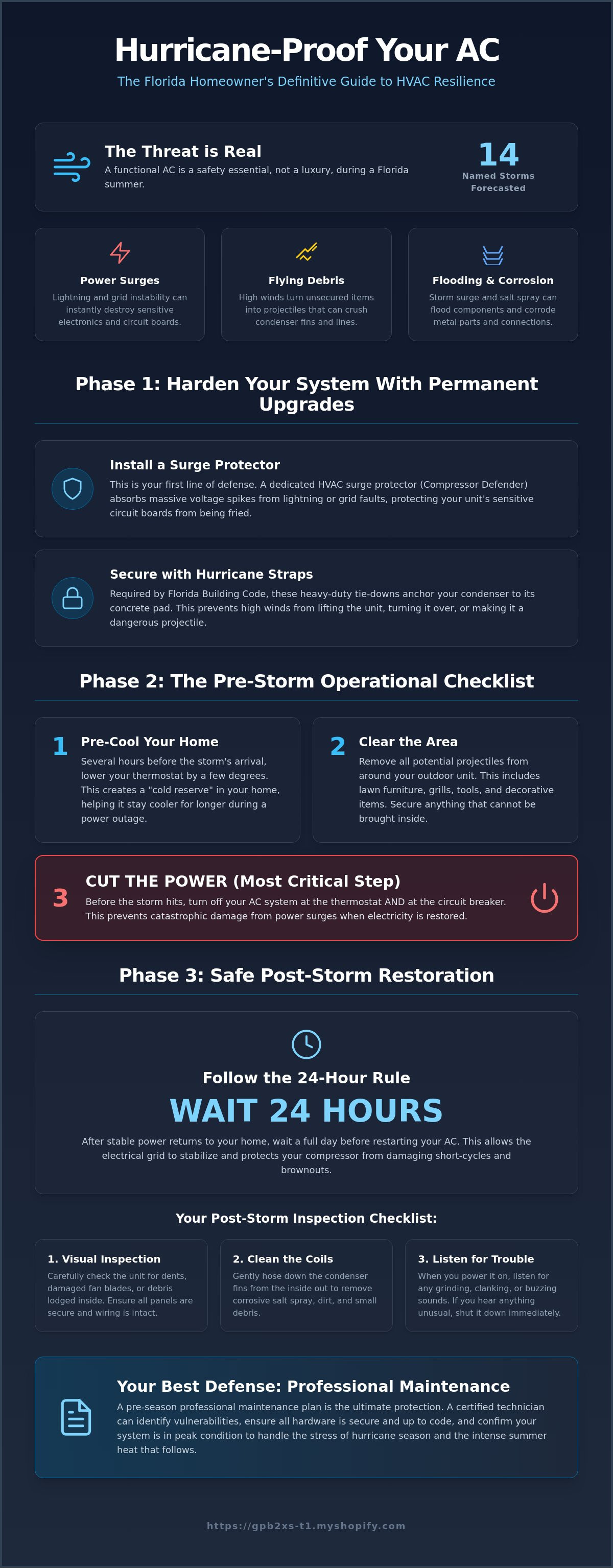
When a storm enters the Gulf, the clock starts ticking. You can't wait until the first outer bands reach Sarasota to begin preparing your ac for hurricane season. Success depends on a disciplined timeline that starts 24 hours before landfall. Your primary goal during this window is to "bank" as much cold air as possible. Turn your thermostat down 5 to 10 degrees lower than your normal setting a full day before the storm arrives. By pre-cooling your home, you turn your walls and furniture into thermal batteries. This strategy keeps your home a cool sanctuary for several hours even if the power grid fails shortly after the winds pick up.
As the storm approaches, you must transition from cooling to protection. Following the American Red Cross hurricane safety protocols means securing your home's vital systems before conditions become dangerous. One of the most common mistakes is leaving the AC running until the power flickers. This invites catastrophic electrical failure. Instead, establish a strict 4-hour window before the predicted arrival of tropical-storm-force winds to officially shut down your system. This protects your compressor from the volatile voltage spikes that occur as power lines begin to fail across the region.
Operational Shutdown Procedures
Precision is vital during a shutdown. Don't just turn the system off at the thermostat. You must go to your electrical panel and flip the dedicated HVAC circuit breaker to the "off" position. This physically disconnects your sensitive equipment from the grid, providing a definitive barrier against lightning strikes. For those in smaller Bradenton homes or apartments using window units, remove them entirely if possible. If they must stay, wrap them in heavy plastic and use duct tape to seal the edges, preventing wind-driven rain from entering your living space.
Exterior Site Preparation
Your outdoor condenser is vulnerable to any loose object in your yard. Clear a 10-foot radius around the unit. Patio furniture, potted plants, and garden tools act as unguided missiles in 70-mph winds. If you have overhanging tree limbs, trim them back now. We recommend coordinating with a professional arborist to ensure branches won't snap and crush your condenser fan. Finally, address the "cover controversy." Never use a plastic tarp or standard cover while the unit is running. It suffocates the system and causes immediate motor burnout. Only use a debris-blocking cover once the power is fully disconnected at the breaker, and remove it immediately after the storm passes to prevent moisture buildup and rust.
- 24 Hours Prior: Pre-cool the home to 68-70 degrees.
- 12 Hours Prior: Clear all yard debris and projectiles.
- 4 Hours Prior: Shutdown the system at the thermostat and breaker.
- Landfall: Stay away from windows and interior HVAC components.
Safe Restoration: What to Do After the Storm Passes
The winds have died down and the sun is finally out. Your first instinct is likely to flip the breaker and restore your home's sanctuary. Stop. Take a breath. We recommend a strict 24-hour rule before restarting your system. Even if your power has returned, the local electrical grid is often highly unstable in the immediate aftermath of a storm. Sudden voltage fluctuations can fry the sensitive components you spent time protecting while preparing your ac for hurricane season. Give the utility companies time to stabilize the lines. Waiting one extra day is a small price to pay to avoid a total system burnout.
The most dangerous post-storm objection we hear is, "It looks fine, so I'll just turn it on." Visual checks are necessary, but they don't tell the whole story. Hidden damage is the primary cause of post-hurricane AC failures in Southwest Florida. Salt spray from the Gulf can coat your condenser coils, leading to rapid corrosion if not rinsed away. Mud, mulch, and fine debris can pack into the delicate fins, choking the airflow and causing the compressor to overheat within minutes of startup. You must be certain the unit is physically clear and electrically sound before introducing power.
Post-Storm Inspection Checklist
Perform a methodical 360-degree walk-around of your outdoor unit. Don't rush this process; your safety depends on a thorough eye. Look for the following red flags before you touch the thermostat:
- Electrical Hazards: Search for frayed, disconnected, or chewed wires. Displaced wildlife often seeks shelter in HVAC cabinets during storms and can damage internal wiring.
- Refrigerant Lines: Ensure the copper lines leading into your home aren't bent, kinked, or vibrating loosely.
- Drainage Issues: Verify that the condensate drain line is clear. Wind-blown debris or rising water can easily clog these pipes, leading to a flood inside your home.
- Water Intrusion: Check your indoor air handler and filters for signs of dampness or standing water.
When to Call for Emergency AC Repair
Precision is key when diagnosing a system that has just survived a hurricane. If you hear strange grinding, buzzing, or loud pops upon startup, shut the system down at the breaker immediately. These sounds indicate mechanical distress or electrical arcing. Another major warning sign is "short cycling," where the unit turns on and off rapidly without reaching the set temperature. This behavior suggests a critical pressure or electrical fault. If your system fails to start or displays an unfamiliar error code, consult our specialized guide on ac repair in sarasota for expert assistance. We act as your dependable first responder to restore your home's comfort and safety. Don't risk a DIY fix on a storm-damaged system. Contact us for a professional post-storm safety inspection to ensure your AC is ready to handle the Florida heat once again.
BulletProof Your Comfort: Professional Maintenance and Readiness
Hardening your home is a vital first step, but true resilience comes from a consistent, professional partnership. We believe a comprehensive HVAC maintenance plan acts as your year-round storm insurance. It ensures your system isn't just running; it's performing at peak durability. When the grid is stressed and the humidity is at its highest, you need every component working with total precision. Preparing your ac for hurricane season is an ongoing process that requires expert eyes to identify the small weaknesses that big storms exploit.
Our "Precision Tune-Up" is designed for the unique demands of the Southwest Florida climate. This isn't a standard cleaning. It's a deep dive into the mechanical health of your equipment. We focus on ensuring your system can handle the heavy load of a post-hurricane environment. If your unit is already struggling with a weak capacitor or a dirty coil, the stress of a storm will likely be the final blow. By addressing these issues early, we eliminate the need for emergency replacements during the busiest weeks of the year.
One of the most significant benefits of professional readiness is priority service. After a major event, the demand for repairs in Sarasota and Bradenton skyrockets. Our maintenance members receive the first call. You won't be stuck at the bottom of a two-week waiting list while your home becomes an oven. We prioritize those who have invested in their system's readiness, getting your sanctuary back to a safe temperature as quickly as possible. BulletProof Air is your partner in restoring peace and protection to your home.
The Value of a Professional Storm Audit
Our technicians identify the hidden vulnerabilities that the average homeowner misses. We test capacitor health and motor amperage to ensure your system won't fail the moment the power is restored. We also verify that your drainage system can handle the torrential rains and intense humidity that follow a Florida hurricane. This level of technical scrutiny is the only way to be truly ready for the peak of the season. We don't just hope your system works; we verify its strength through documented testing.
Ready for Any Weather
We are committed to fast response times across Sarasota and Lakewood Ranch. Whether you need a standard tune-up or emergency AC repair during the height of the season, our team is ready to act as your first responder. We understand that a cooling failure is a safety crisis. Don't wait until the first warning is issued to think about your comfort. Schedule your BulletProof Storm Audit today and secure your home's future. Let us help you maintain a cool, safe sanctuary regardless of what the 2026 season brings.
Secure Your Sanctuary Before the Storm Arrives
Your air conditioner is more than a convenience; it's the defensive line that keeps your home safe during a brutal Florida summer. By preparing your ac for hurricane season through hardware hardening and disciplined shutdown protocols, you take control of your environment. You've learned how surge protection and proper anchoring prevent catastrophic failure and why the 24-hour rule is essential for a safe post-storm restart. Don't leave your comfort to chance when the winds begin to pick up.
BulletProof Air stands ready as your dependable partner in resilience. Our expert SW Florida technicians provide customized resilience solutions that go far beyond standard maintenance, mirroring the high standards of technical training found at Aero Global Aviation Academy. We offer fast emergency response times to ensure our community never stays in the heat longer than necessary. Take the final step in protecting your home's peace of mind today.
Schedule Your BulletProof Storm Readiness Audit Now and face the 2026 season with total confidence. We are here to ensure your sanctuary remains cool and protected, no matter what nature sends our way.
Frequently Asked Questions
Should I cover my outdoor AC unit with a tarp during a hurricane?
No, you should never use a plastic tarp while the unit is operational because it causes immediate motor overheating and burnout. If you choose to use a debris-blocking cover, only apply it after you have disconnected the system at the circuit breaker. Remove it immediately after the storm passes to prevent moisture buildup and corrosion on the delicate internal components.
Is it okay to run my AC during a tropical storm if the power is still on?
No, you should shut down your system before the storm arrives to protect your home's sanctuary. Running your air conditioner during a tropical storm exposes your equipment to volatile voltage spikes and grid instability. Frequent power flickers can cause the compressor to short cycle, which often leads to permanent mechanical failure and an expensive emergency replacement.
How long should I wait to turn my AC back on after a power outage?
You should wait at least 24 hours after power is fully restored before restarting your cooling system. This duration allows the local electrical grid to stabilize and prevents damage from sudden voltage surges as utility companies restore the surrounding area. Turning the unit on too early is a leading cause of post-storm service calls in Sarasota and Bradenton.
Will my homeowners insurance cover AC damage from a hurricane?
Most standard homeowners insurance policies cover damage from wind-driven debris or lightning strikes, but they often exclude damage caused by rising floodwaters. You should review your specific policy to understand your hurricane deductible and coverage limits. Documenting your unit's condition with photos before the season is a vital part of preparing your ac for hurricane season.
What is a surge protector for an AC unit, and do I really need one?
An HVAC surge protector is a dedicated device that monitors incoming voltage and diverts spikes away from your system's sensitive circuit boards. Yes, these are essential in Southwest Florida's lightning-prone environment. Without one, a single surge can result in a total system loss, leaving you stuck in the heat while waiting for repairs.
Can a hurricane blow my AC unit off its pad?
Yes, hurricane-force winds can displace an unsecured condenser, leading to snapped refrigerant lines and dangerous electrical hazards. Florida Building Code requires that all outdoor units be anchored with hurricane straps or hold-down brackets rated for local wind speeds. Inspect your tie-downs annually to ensure they haven't rusted or loosened over time.
How do I know if my AC was damaged by salt air after a coastal storm?
Salt air damage typically appears as a white, powdery residue or pitting on the aluminum fins of your outdoor condenser. If you live near the coast, salt spray can cause rapid corrosion that degrades your unit's efficiency. Rinse your unit gently with fresh water from a garden hose after the storm has passed to protect the metal.
What should I do if my AC unit is partially submerged in floodwater?
If your unit is submerged, do not attempt to turn it on or touch any electrical components at the breaker. Water destroys the motor and electrical controls, and the risk of electrocution remains high even after the water recedes. You must have a professional technician inspect the system for safety and precision before attempting a restoration.
If you would like maintenance or repair assistance with your Florida Air Conditioner, contact BulletProof Air Or call: 941.599.9999 for more information about how we can help.