

Upgrading from R-22 to R-410A Cost in 2026: What Homeowners Should Know
An R-22 system isn’t a candidate for a simple R-410A refill. If you’re searching for the upgrading from R22 to R410A cost, the key point is that this “upgrade” usually means replacing major equipment, not swapping refrigerants. The two refrigerants work with different system components, so a conversion can approach the scope of installing a new system.
It makes sense to look for a practical way to keep your current air conditioner running, especially when Florida heat makes a breakdown more than an inconvenience. You shouldn’t have to choose based on a vague average or feel pressured to replace equipment before you understand your options.
This guide explains why direct R-22-to-R-410A conversions are rarely straightforward, what can shape a replacement estimate, and how newer refrigerant options fit into the decision. You’ll also find questions to ask when comparing repair and replacement. A professional assessment from BulletProof Air for homeowners in its Southwest Florida service area can help clarify your system’s condition and possible next steps.
Key Takeaways
- The upgrading from R22 to R410A cost depends on the work required. Compare written estimates by equipment, labor, removal, and home-specific modifications.
- Get a professional diagnosis to confirm your system’s refrigerant, condition, and repair needs before deciding what to do next.
- Compare repairing your current system with full replacement options, including newer equipment designed for current refrigerants.
- Weigh repair history, comfort, operating concerns, household needs, and how long you expect to stay in the home.
- Ask contractors for an itemized proposal that explains the equipment match, included work, exclusions, and project assumptions.
Upgrading from R-22 to R-410A: Why It Usually Means Replacing the System
An older air conditioner can become harder to keep running reliably, especially when a repair involves refrigerant. If you’re weighing the upgrading from R22 to R410A cost, start here: R-22 and R-410A aren’t interchangeable. Each is designed for equipment built to operate with that specific refrigerant.
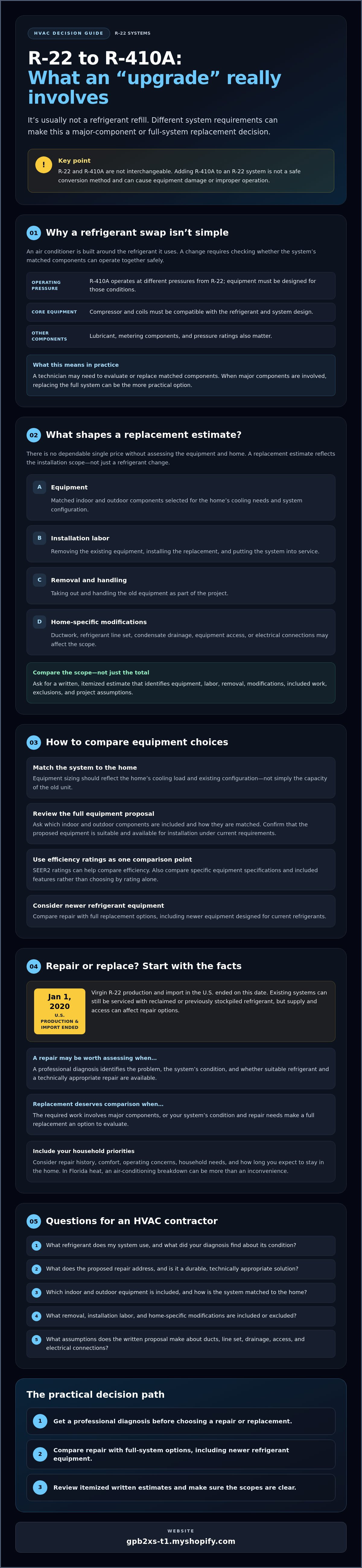
R-22, also known as chlorodifluoromethane, was used in older cooling systems. You can read more about its properties and history in this overview of Chlorodifluoromethane (R-22). R-410A became common in newer equipment designed for its operating requirements. A system’s compressor, coils, metering components, pressure ratings, and lubricant all need to be compatible with its refrigerant. A change can therefore require evaluating or replacing matched components, rather than simply draining one refrigerant and adding another.
Refrigerant compatibility depends on equipment design, including pressure limits, the compressor, lubricant, and other matched components. That’s why an R-22-to-R-410A change is usually a system-replacement decision, not a refill. A technician can assess whether a conversion is technically feasible, but replacing major components can make a full system replacement the more practical option.
Why R-22 and R-410A systems are not interchangeable
R-410A operates at different pressures from R-22, and equipment must be designed to handle those conditions. Compressor and oil compatibility matter, as do the coils and refrigerant-control components. Adding R-410A to an R-22 system isn’t a safe conversion method and can lead to equipment damage or improper operation. Have a qualified HVAC technician inspect the system before deciding on refrigerant or repairs.
What R-22 availability means for an older air conditioner
U.S. production and import of virgin R-22 ended on January 1, 2020. Existing systems can still be serviced with reclaimed or previously stockpiled refrigerant, but supply and access can affect repair options. That doesn’t mean every R-22 system is impossible to repair. The right path depends on the equipment’s condition, the cause of the problem, and whether suitable refrigerant is available.
Before approving a repair, ask what the work addresses and whether it’s likely to be a durable, technically appropriate solution for your system. A professional assessment can help you decide whether keeping the equipment running makes sense or whether replacement deserves consideration.
What Determines the Cost of Replacing an R-22 Air Conditioner?
There’s no dependable single price for replacing an R-22 air conditioner without inspecting the equipment and home. The phrase “upgrading from R22 to R410A cost” can make the work sound like a standard refrigerant swap, but a replacement estimate reflects the full installation. Home size, existing system condition, equipment choices, and site-specific work all affect the scope.
A useful estimate separates the main cost categories instead of presenting one unexplained total:
- Equipment: The matched indoor and outdoor components, selected for the home’s cooling needs and system configuration.
- Installation labor: The work required to remove existing equipment, install the replacement, and put the system into service.
- Removal: Taking out and handling the old equipment as part of the project.
- Modifications: Additional work needed to connect the replacement appropriately to the home.
Ask for a written estimate that identifies the equipment, included work, exclusions, and assumptions. This makes it easier to see what each proposal covers and where the scopes differ.
Equipment, system matching, and efficiency choices
Equipment sizing should reflect the home’s cooling load and existing configuration, not simply the capacity of the old unit. Ask contractors to identify the indoor and outdoor components in the proposal and explain how they’re matched. SEER2 ratings offer a comparison point for efficiency, but compare specific equipment specifications and included features rather than choosing by rating alone. Confirm that proposed equipment is suitable and available for installation under current requirements.
Installation conditions that can change the estimate
The home can affect the work involved. Existing ducts may need attention, and the refrigerant line set, condensate drainage, equipment access, or electrical connections may also change the installation scope. These needs should be identified during an on-site assessment, not left as vague possibilities in a headline price.
Because R-22 production and import ended, refrigerant supply can also matter when comparing replacement with continued repairs. The EPA’s R-22 phase-out explains the federal phaseout background, but it doesn’t determine the work your home requires. Ask contractors to explain which site conditions affect their estimate and why.
Don’t treat an online average as a personalized quote or guaranteed total. Compare itemized scopes, equipment details, exclusions, and assumptions, not just the largest number on the page. If you’re unsure what work your home needs, request a professional HVAC system assessment as a practical first step.
R-22 Repair vs. R-410A Replacement vs. Newer Refrigerant Equipment
There isn’t one best choice for every R-22 system. A repair may be appropriate if the equipment is in sound condition and the fault is manageable. Replacement may make more sense if repairs are recurring or the system no longer meets your household’s needs. R-410A remains in use in compatible systems, but equipment choices are changing. Compare options based on your system’s condition, project requirements, and plans for the home.
| Option | Compatibility and likely scope | Remaining life and future planning |
|---|---|---|
| Repair the R-22 system | Keep the existing R-22 equipment and address a diagnosed fault. Suitable refrigerant access and the system’s condition matter. | Remaining service life depends on the equipment’s age, condition, and repair history. Ask how the repair fits your longer-term plans. |
| Replace with an R-410A system | Requires matched equipment designed for R-410A, not a refrigerant-only change to the old unit. Check whether equipment can be installed for your project date. | R-410A is still used in compatible systems, but new-equipment choices and applicable rules are changing. Confirm availability and requirements before choosing. |
| Choose eligible newer-refrigerant equipment | A complete system replacement with matched equipment using a refrigerant approved and available for the project. R-454B and R-32 are examples of lower-GWP refrigerants. | Compare documented efficiency, warranty terms, equipment availability, and the household’s future needs. |
When repairing an R-22 system may still be considered
Consider the system’s age and overall condition, how often it has needed repairs, where any leak is located, and whether suitable refrigerant is accessible. A repair recommendation should follow a diagnosis, not a guess based only on the refrigerant label. Ask what failed, what the proposed work will address, and whether the fix is technically appropriate. No estimate can promise exactly how long an older system will continue to operate.
Retrofitting is a technical process, not a simple refill. The industry guidance on retrofitting an existing air conditioning system can help explain why equipment and refrigerant compatibility require careful review.
How to compare R-410A and newer system options
Ask each contractor which refrigerant the proposed equipment uses and why it suits your home. Compare the matched indoor and outdoor components, efficiency documentation, warranty terms, and installation scope. Verify current U.S. refrigerant rules and product availability for the intended installation date. The upgrading from R22 to R410A cost is only one part of the decision. A system assessment can help you compare repair and replacement options against your priorities. Consider a professional HVAC system assessment before choosing.
How to Decide Whether to Replace Your R-22 System Now
Don’t make the decision from the refrigerant label alone. Start with a clear diagnosis, then weigh the system’s condition against your comfort needs, repair history, and plans for the home. In Southwest Florida, reliable cooling matters through hot, humid weather, so it’s sensible to plan before another breakdown disrupts your household.
- Confirm the refrigerant. Check the outdoor unit’s nameplate or have a technician verify whether the system uses R-22.
- Request a diagnosis. Ask what failed, what evidence supports the finding, and whether a technically appropriate repair is feasible.
- Assess the system’s condition. Consider its age, repair history, comfort performance, operating concerns, and the extent of any recommended work.
- Compare written scopes. Review repair and replacement proposals side by side, including equipment, included work, exclusions, and assumptions.
Your expected time in the home also matters. A household planning to move soon may weigh the decision differently from one expecting to stay for years. For replacement planning, the AC installation guide offers another perspective on preparing for a new system.
Questions to ask before approving a replacement
Get clear answers before committing. Ask what failed, whether repair is possible, and what inspection findings support replacing the whole system. Request the proposed equipment’s model numbers, capacity, refrigerant type, and efficiency information. Then check the installation details: are duct, electrical, drainage, or refrigerant line-set changes included, excluded, or dependent on conditions found during the work?
These specifics help you evaluate the upgrading from R22 to R410A cost without treating a broad estimate as a promise of what your home requires. They also help you confirm whether two proposals cover comparable work.
Signs that justify getting a complete system assessment
Recurring breakdowns, uneven comfort, a suspected refrigerant leak, or an extensive repair recommendation are good reasons to request a full assessment. None proves on its own that replacement is necessary. The location and cause of a leak, the system’s broader condition, and your comfort concerns all affect the decision. For more repair-versus-replacement context, see this Southwest Florida AC repair guide.
A professional assessment can help clarify the next step. If replacement appears appropriate, explore HVAC installation options and compare the proposed system and scope with your household’s needs.
Choosing an HVAC Contractor for an R-22-to-R-410A Replacement
A sound replacement recommendation should begin with a diagnosis, not an equipment pitch. The contractor should explain what they inspected, why repair may or may not be appropriate, and how the proposed system fits your home. In 2026, don’t assume a new system will use R-410A. Ask which refrigerant the proposed equipment uses, and confirm its availability and applicable requirements for your installation date.
What a clear replacement proposal should explain
Review the proposal for enough detail to compare it with other estimates. It should identify:
- Equipment model numbers, refrigerant type, system capacity, and efficiency information.
- Indoor and outdoor components, with an explanation of how they’re matched.
- Included labor and any duct, electrical, drainage, or line-set work.
- Exclusions, project assumptions, expected installation timing, and warranty documentation.
- Any permits or other requirements relevant to the specific project.
Ask the contractor to explain unclear items before approving the work. For example, if electrical changes are excluded, find out what that means for your home and how any needed work would be addressed. A detailed scope also helps you compare the upgrading from R22 to R410A cost without mistaking different project assumptions for a meaningful price difference.
Planning an HVAC replacement in Sarasota and Southwest Florida
Start by confirming that the contractor serves your property’s location. Then discuss comfort needs, such as rooms that stay warm, how the home is used, and how Florida’s hot, humid conditions affect your priorities. A system should be selected for the home and household, not just as a like-for-like swap. The Sarasota HVAC installation guide offers broader planning context.
BulletProof Air provides residential HVAC installation and customized solutions in Southwest Florida, including Sarasota and surrounding regional markets. A professional assessment can help clarify whether repair or replacement is the practical next step. For homeowners in the company’s service region, request an HVAC assessment from BulletProof Air to discuss your system and installation options.
Make Your Next HVAC Decision With Confidence
The main takeaway is simple: upgrading from R22 to R410A cost isn’t just a refrigerant price question. A change usually involves evaluating the system and comparing repair with full replacement. Since equipment options and refrigerant requirements change, confirm which refrigerant a proposed system uses and whether it’s appropriate for your installation.
Start with a professional assessment, then compare itemized proposals. Look for clear equipment details, included work, exclusions, and assumptions. Weigh the system’s repair history and comfort alongside your household’s needs instead of relying on an online average or headline price.
For homeowners in Southwest Florida, BulletProof Air provides residential HVAC installation, repair, and maintenance, with customized solutions from trained technicians. Service coverage includes Sarasota and surrounding regional markets, but confirm that your property address is within the current service area.
Ready to understand your options? Schedule an HVAC assessment with BulletProof Air. A clear diagnosis and well-defined scope can help you take the next step toward dependable comfort with greater confidence.
Frequently Asked Questions
Can you replace R-22 with R-410A without replacing the air conditioner?
No, R-410A isn’t a drop-in replacement for R-22 in an existing air conditioner. The equipment’s compressor, coils, lubricant, and other components are designed for specific refrigerant requirements. A conversion may require replacing major components, potentially approaching a full system rebuild. Have a qualified HVAC technician inspect the equipment before deciding. They can explain whether a conversion is technically appropriate or whether full system replacement is the more practical option.
How much does upgrading from R-22 to R-410A cost?
There’s no reliable single price for upgrading from R22 to R410A because the work depends on your equipment and home. A conversion may require replacing major components, while a full replacement involves a different scope. Ask for a written, itemized estimate that identifies equipment, labor, removal, required modifications, exclusions, and project assumptions. An online average isn’t a personalized quote. A professional system assessment is a practical starting point for comparing repair and replacement.
Is R-410A being phased out in 2026?
Yes. Under the current transition requirements described for 2026, technicians can no longer install new cooling systems that use R-410A. This doesn’t mean homeowners must replace existing R-410A systems; existing equipment can still be serviced. Equipment manufactured before the transition may also be subject to installation timing and availability restrictions. If you’re planning a replacement, ask which refrigerant the proposed system uses and confirm applicable rules and product availability for your installation date.
Can an R-22 air conditioner still be repaired?
Yes, an existing R-22 system may still be repairable. U.S. production and import of virgin R-22 ended on January 1, 2020, but reclaimed or previously stockpiled refrigerant may be available. Repair options depend on the equipment’s condition, the failure, and access to suitable refrigerant. Ask a technician to diagnose the problem and explain whether the proposed repair is technically appropriate and likely to address the cause, rather than assuming every R-22 system is beyond repair.
Should I replace my R-22 system with an R-410A system or newer refrigerant equipment?
Compare equipment that’s available and permitted for your installation date, rather than choosing by refrigerant name alone. In 2026, newer systems may use lower-GWP refrigerants such as R-454B or R-32, while R-410A equipment choices are changing. The right option depends on your home, system condition, comfort priorities, and future plans. Ask contractors to compare matched components, efficiency information, warranty terms, and installation scope, then confirm current requirements and availability.
What affects the cost of replacing an R-22 air conditioner in Florida?
The estimate depends on the home and the work involved, not just the old unit. Factors can include the cooling capacity and efficiency selected, matched indoor and outdoor equipment, labor, removal, duct condition, access, electrical needs, refrigerant line-set condition, and drainage. Florida’s hot, humid weather makes a home-specific assessment important when addressing comfort needs. Request an itemized proposal that explains included work, exclusions, and any site conditions that could change the project scope.
Do I need to replace the indoor coil when replacing an R-22 system?
Often, the indoor coil needs to be replaced as part of a complete system replacement, but a technician should confirm this for your equipment. The coil must be compatible with the new outdoor unit and its refrigerant requirements. Keeping an existing coil without verifying the match can compromise system operation. Ask the contractor to identify the proposed indoor and outdoor components, explain compatibility, and state clearly in the written estimate whether the coil is included or excluded.
If you would like maintenance or repair assistance with your Florida Air Conditioner, contact BulletProof Air Or call: 941.599.9999 for more information about how we can help.