

How to Explain the Need for HVAC Replacement to Your Spouse
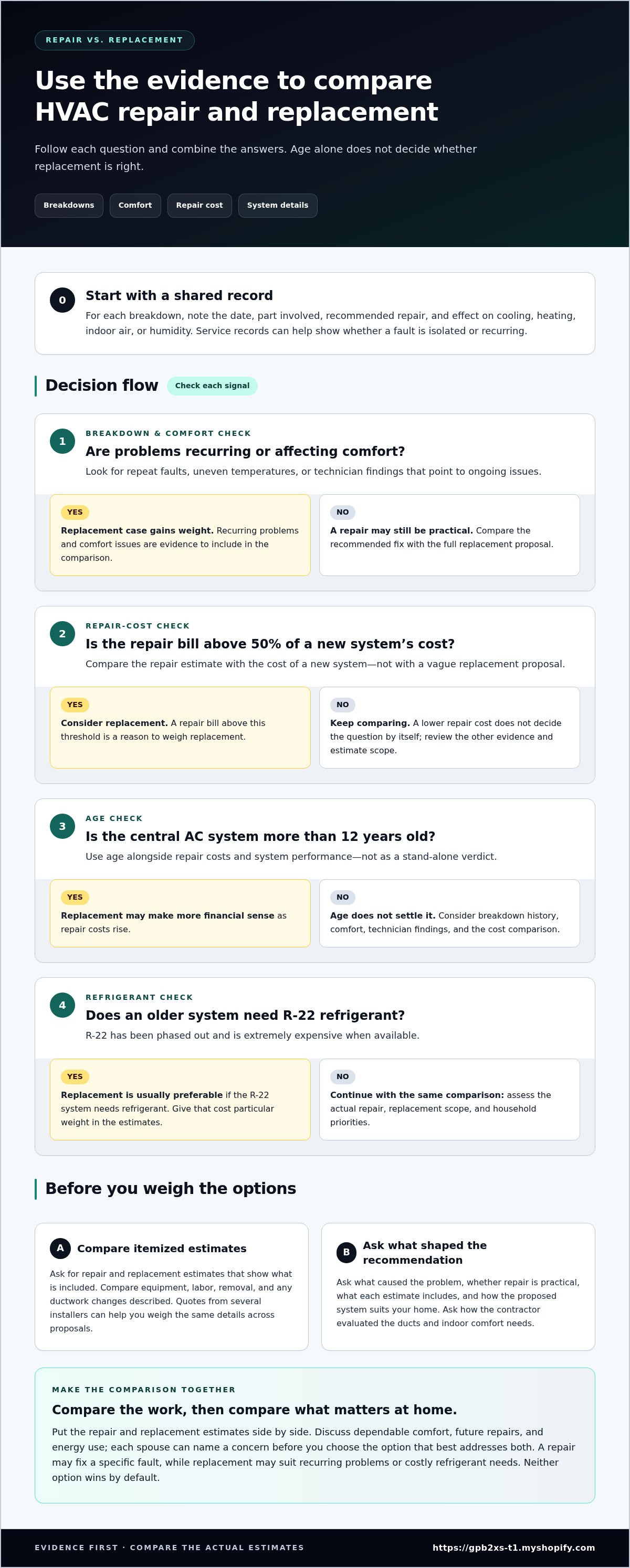
An old HVAC system alone doesn’t prove it’s time to replace it. To explain the need for HVAC replacement to your spouse, document recurring breakdowns, uneven comfort, and technician findings. A central AC system more than 12 years old may make replacement more financially sensible as repair costs rise, and a repair bill above 50% of the cost of a new system is a reason to consider replacing it.
It’s reasonable to want clear evidence before agreeing to a major home decision. A calm conversation is easier when you can point to what’s happening, compare repair and replacement options, and discuss how each could affect energy use and utility costs over time.
This article explains which system signs to record and how to use them in a fair comparison. You’ll learn what to note about repair frequency, comfort, and efficiency, and how to discuss the trade-offs together without guesswork or pressure.
Key Takeaways
- Record breakdowns, comfort problems, and technician findings so the conversation is grounded in evidence.
- Compare the repair recommendation with replacement by looking at repair frequency, system age, and the scale of the repair.
- Use efficiency ratings and your household’s energy use to discuss potential utility savings without assuming a new system guarantees lower bills.
- Consider how an aging system’s reliability and performance affect comfort and safety at home.
- Learn how equipment lifespan can inform the decision, while recognizing that age alone doesn’t determine whether replacement is the right choice.
Comparing repair and replacement options
Compare the options using the same evidence, not one repair estimate against a vague replacement proposal. Record each breakdown, the part involved, the recommended repair, and how the problem affected cooling, heating, indoor air, or humidity. Dates and service records can help show whether a fault is isolated or recurring.
Ask for an itemized estimate that separates the repair from any recommended upgrades. Then compare it with an itemized replacement estimate. BulletProof Air and other reliable HVAC professionals advise homeowners to get quotes from several installers, so you can weigh the same details across proposals rather than relying on a single total. Include equipment, labor, removal, and any ductwork changes described in each estimate.
R-22 refrigerant has been phased out and is extremely expensive when available. If an older system needs R-22, that expense can shift the comparison toward replacement. Don’t treat refrigerant as a routine top-up: according to the U.S. Environmental Protection Agency, EPA regulations (40 CFR Part 82, Subpart F) under Section 608 of the Clean Air Act require technicians who maintain, service, repair, or dispose of equipment that could release ozone-depleting refrigerants into the atmosphere to hold Section 608 Technician Certification certification.
How can spouses compare HVAC quotes and make a replacement decision together? Put the repair and replacement estimates side by side, compare their scope, and agree on priorities such as dependable comfort, future repairs, and energy use. Each spouse can name a concern before you choose the option that best addresses both.
Are HVAC rebates, tax credits, or financing available for replacement? Availability and eligibility depend on current programs, the equipment, and your household’s circumstances. Include an incentive in your comparison only after you understand its eligibility rules and terms.
What questions should we ask HVAC contractors before replacing a system? Ask what caused the current problem, whether repair is practical, what each estimate includes, and how the proposed system will suit your home. Also ask how the contractor evaluated the ducts and your indoor comfort needs.
Use the answers to separate immediate relief from the longer-term decision. A repair may address a specific fault, while replacement may suit a system with recurring problems or costly refrigerant needs. Neither option should win by default. Compare the evidence, the work included, and your household’s comfort priorities before deciding together.
Evaluating these factors is essential when making a decision. If an estimate involves an R-22 system that needs refrigerant, give that cost particular weight in the side-by-side review. R-22 refrigerant has been phased out and is extremely expensive when available, making replacement usually preferable if an R-22 system needs refrigerant. Keep the comparison focused on the actual choices in the estimates: the repair that addresses the refrigerant need and the replacement proposal. Ask each other whether the repair cost still fits the priorities you identified, given the expense of the refrigerant, or whether replacement is the more suitable choice. This preference is a guide, not a substitute for comparing the scope of the estimates; use them to confirm which option you are choosing and why.
Long-term utility savings and efficiency
Heating and cooling account for more than half of an average U.S. household’s annual energy consumption. Efficiency matters when considering replacement, but a newer system doesn’t automatically mean lower bills. Energy use also depends on equipment condition, thermostat settings, and how the home is cooled. Compare utility bills and comfort patterns before treating projected savings as decisive.
Efficiency ratings offer a useful starting point. SEER2 measures an air conditioner’s or heat pump’s average cooling efficiency across temperatures from 65 to 104 degrees Fahrenheit over an entire season. EER2 measures cooling-unit efficiency at 95 degrees Fahrenheit. These ratings describe different conditions, so compare the same rating for each proposed option rather than judging by a label alone.
For a practical household comparison, place recent utility bills beside the system’s ratings and note the thermostat settings used during summer. A technician can explain how proposed equipment’s performance data relates to your home. Keep expectations realistic: changing the temperature setting or how often rooms are cooled can affect energy use even after replacement.
For gas heating, AFUE describes how much fuel becomes heat for the home. A gas furnace with an AFUE of 80 converts 80% of its fuel into heat, while the remaining 20% leaves as flue gas. A gas furnace or boiler with a 97% AFUE rating converts 97% of its fuel directly into heating the home. Compare ratings alongside your household’s heating needs.
Equipment sizing also affects operating costs. An undersized HVAC unit may work excessively hard to maintain the desired indoor temperature. An oversized unit might short-cycle, contributing to wear, higher energy bills, and frequent breakdowns. A load calculation considers construction, insulation, window efficiency, square footage, and local weather to determine system size. Ask how those factors shaped the proposed equipment choice.
Comfort matters alongside energy use. If some rooms feel warm while others stay cool, discuss airflow, duct condition, and thermostat placement, not just the equipment rating. A system suited to the home and able to distribute air effectively can help address uneven temperatures and humidity. These observations also help you weigh indoor air quality concerns against expected energy use.
Ductless mini-split systems can serve multiple areas, with a multi-zone setup connecting up to 8 indoor units. With ductless mini-split systems, household schedules and room needs may matter when planning heating and cooling. Discuss which spaces need conditioning and when before comparing this setup with central equipment.
To discuss long-term costs together, list each option’s efficiency rating, expected comfort changes, and your household’s typical use. Treat potential savings over about 15 years as a comparison horizon, not a promise. If you’re considering how to explain the need for HVAC replacement to your spouse, connect the ratings and bills to shared priorities. Understanding how to explain the need for HVAC replacement to your spouse can start with a side-by-side view of energy use, comfort, and household routines.
Signs replacement may make more sense than repair
Look for patterns, not just one bad day: system age, repeat service calls, and persistent comfort problems. Together, these details can help distinguish an isolated fault from an HVAC system whose performance is declining.
Typical HVAC System Lifespans
A typical central air conditioning system lasts 15 to 20 years. Age matters because wear can increase repair needs, but a birthday alone doesn’t settle the decision. Record the installation year, repair history, and whether the system still maintains comfortable conditioning throughout your residential space.
Compare age with performance. A central AC system more than 12 years old may make replacement more financially sensible as repair costs rise. Systems in the 12-15+ years range are also identified as a sign replacement may be due. A technician’s findings and the system’s actual condition add context.
Frequent repairs change the picture further. Consider replacement for a system more than 15 years old that needs repeated repairs. Also consider it when an AC repair bill exceeds 50% of the cost of a new system. Track each repair date and problem so both spouses can see the pattern clearly.
Look beyond the equipment cabinet, too. A residential HVAC system may struggle because of ductwork problems or poor airflow, not just equipment age. Ask for an inspection of the ducts and an explanation of whether they’re in good condition and compatible with replacement equipment. This can help distinguish a separate duct issue from a system-wide problem.
Health, Comfort, and Safety Risks
An aging HVAC system may leave rooms uncomfortable if it no longer heats or cools the home effectively. Note where temperatures differ, when humidity feels uncomfortable, and whether the problem occurs during cooling or heating. These observations describe the household impact without assuming that age alone has caused a health problem.
Record indoor air quality changes as concerns to discuss, not as a diagnosis. A technician can assess system condition and airflow alongside your observations. If the AC won’t run after you set the thermostat to cooling and below room temperature, arrange professional help instead of attempting electrical or refrigerant repairs.
Take safety concerns seriously. Don’t open equipment or handle refrigerant to investigate a fault. Keep a dated record of shutdowns, unusual operation, and affected rooms, then share it during a professional assessment. A written account gives both spouses concrete information for discussing repair versus replacement, rather than leaving the decision to one stressful failure.
Replacement may be worth discussing when several signs line up: an older system, recurring repairs, a costly repair compared with replacement, or ongoing comfort problems. Use the installation date, service records, and affected rooms to make the case specific and balanced.
How long do furnaces, air conditioners, and heat pumps typically last?
A system’s lifespan describes how long it remains capable of dependable heating or cooling. Age helps frame a replacement discussion, but it doesn’t diagnose a fault or determine the decision by itself.
A central air conditioning system typically lasts 15 to 20 years. Compare that range with your system’s installation records, repair history, and current performance. A unit approaching the later part of its lifespan may still operate, while an earlier problem can also require attention. Age is one piece of evidence, not a guarantee of remaining service.
A furnace’s or heat pump’s lifespan depends on the specific equipment and its operating conditions. Instead of relying on an assumed lifespan, find the model and installation information, then consider how consistently each system has heated or cooled the home. A heat pump handles both heating and cooling, so its workload and performance across seasons help explain its condition.
Build a shared timeline using invoices, equipment labels, and household records. Include the installation date, major repairs, periods without heating or cooling, and rooms that have stayed uncomfortable. If paperwork is missing, a technician can identify equipment details during an assessment. This gives both spouses a clear account instead of relying on memory.
Separate the age of the whole system from the age of individual components. A central AC system has two main components: an outdoor condenser and an indoor air handler or evaporator coil. Replacing or repairing one part doesn’t automatically establish the condition of the other. Ask how the components work together and whether the duct system suits the equipment.
The home’s condition matters, too. Insulation, window efficiency, construction, square footage, and local weather affect heating and cooling demand. An HVAC load calculation uses those details to determine system size. Existing ducts should be reused only if they’re in good condition and compatible with the new system.
Use age as a reason to compare the options more closely. Consider it alongside operating problems, comfort patterns, and the condition of the equipment and ducts. A newer system with a specific repair need may call for a different response than an older system with worsening performance. This keeps the conversation focused on evidence.
For a joint decision, write down what each spouse values most: reliable comfort, fewer disruptions, or planning for a future replacement. Then compare those priorities with the system’s documented age and condition. This turns an abstract question about lifespan into a practical discussion of how your home’s equipment performs now.
What health, comfort, and safety risks can an aging HVAC system cause?
An aging system may make indoor comfort less consistent if it struggles to cool, heat, or manage humidity. Track specific effects rather than treating age as proof of danger. For example, note whether the living room stays warm while the bedroom feels cool, or whether the home feels damp despite normal thermostat settings.
Comfort problems can disrupt everyday routines. Record when rooms become uncomfortable, which areas are affected, and whether the issue occurs during cooling or heating. A dated log can help distinguish a recurring pattern from a brief change in weather. Include thermostat settings and service visits so you and your spouse can discuss observable conditions.
Describe indoor air quality concerns clearly, too. Note visible dust buildup, unusual odors, or airflow changes, and where they occur. These observations don’t establish a medical cause, but they give a technician specific details to assess alongside the equipment and ductwork. Don’t assume that replacing an older system will resolve every indoor air concern.
Safety starts with knowing what not to handle. If an air conditioner won’t run after you set the thermostat to cooling and below room temperature, arrange professional help. Don’t attempt electrical or refrigerant repairs yourself. A household log can record the shutdown, thermostat setting, and any changes in system operation without opening the equipment.
For a fuel-burning furnace, report visible damage or unusual operation for professional assessment rather than investigating internal components. Keep people away from equipment that appears damaged, and follow local emergency services’ instructions if there’s an immediate threat. Don’t attribute a specific health or safety hazard to age alone; the system’s fuel type, condition, and observed symptoms matter.
- Write down the date and room whenever comfort changes.
- Record thermostat settings, system shutdowns, and affected areas.
- Describe odors or airflow changes without guessing at their cause.
- Keep repair records together with your observations.
Use your notes to compare the household impact with the repair findings. If one room repeatedly feels uncomfortable, ask whether airflow, ductwork, or equipment performance explains the pattern. If the whole home loses cooling during summer, document how long the disruption lasts and how it affects your routine. Concrete examples make a shared decision more practical.
For persistent comfort problems, arrange an HVAC system assessment and discuss the specific rooms, symptoms, and operating changes you recorded with BulletProof Air.
For persistent comfort problems, arrange an inspection. A system turning on by itself does not establish that a Sarasota household needs HVAC replacement; consider its comfort performance and a technician’s findings. A new HVAC system does not guarantee lower energy bills because energy use depends on the equipment, its condition, thermostat settings, and how the home is cooled.
A contractor should inspect the duct system when matching a new heating and cooling system to a home.
BulletProof Air: HVAC Installation
BulletProof Air can help when repair records, system condition, and household priorities point toward replacement. Its HVAC Installation service helps homeowners move from comparing options to planning a new system for their home. Bring notes about comfort problems, equipment history, and efficiency questions to the conversation.
For homes with distinct room-by-room needs, discuss whether a ductless mini-split system suits the space. BulletProof Air also provides Residential HVAC Services, Commercial HVAC Services, and New Construction HVAC for different property and project needs.
If you and your spouse are ready to discuss a replacement plan, contact BulletProof Air.
Make the Next Decision Together
If you’re figuring out how to explain the need for HVAC replacement to your spouse, make the next conversation about a shared goal: a comfortable home and a decision you both understand. Agree on what matters most, identify any remaining concerns, and decide what information would help you move forward. You don’t have to settle every detail in one discussion.
When you’re ready to explore a practical next step, BulletProof Air offers HVAC Installation and Residential HVAC Services for homeowners, as well as Commercial HVAC Services for business properties. Discussing your needs with a professional can help turn an uncertain decision into a clearer plan.
Contact BulletProof Air to discuss your options. Bring your questions, share your priorities, and take the decision one step at a time. You and your spouse can move forward with greater confidence and a plan that supports your home.
Frequently Asked Questions
Which signs are worth documenting before you talk?
Document observable changes and keep the supporting records together. Note when the system stops maintaining comfort, whether the same problem returns after a repair, and which rooms are affected. Save service invoices with the technician’s description of the work and parts involved. A shared timeline helps both spouses distinguish a recurring issue from a one-time disruption and gives you specific examples to discuss.
What are the signs an HVAC system needs replacement rather than repair?
Replacement deserves serious consideration when a professional’s findings point to a system-wide problem rather than an isolated, repairable fault. Look for a combination of repeated failures, declining comfort, and repair recommendations that don’t address the underlying cause. Ask for the reasoning behind both options in writing. If a repair would restore operation but leave the main problem unresolved, weigh that limitation against a replacement proposal before deciding.