

Ways to Avoid Unexpected HVAC Costs From Repairs and Rebates
Predictive maintenance, routine professional inspections, and prompt attention to warning signs can help you learn how to avoid unexpected HVAC costs. Traditional HVAC tune-ups are described as occurring every 6-12 months, while predictive systems monitor equipment continuously, 24 hours a day, 7 days a week. Predictive maintenance may help homeowners save an estimated 30%-40% on maintenance costs.
It’s understandable to worry that an HVAC repair could lead to a larger bill, especially when your comfort depends on a working heating or cooling system. Unusual noises, new odors, water near an indoor unit, or ice on refrigerant lines can signal a problem that needs attention.
This guide explains how predictive maintenance can help identify issues early, which warning signs to watch for after a repair, and how to work with an HVAC professional. You’ll also learn how rebates and tax credits may offset eligible energy-efficient upgrades, helping you make informed decisions and prepare for HVAC expenses.
Key Takeaways
- Compare reactive, preventive, and predictive maintenance approaches to decide how to catch system issues before they grow.
- After a repair, note changes in system performance and keep the invoice and service records together.
- Review a contractor’s licensing, insurance, written warranty terms, and customer feedback before work begins.
- Explore utility and government incentives when considering an energy-efficient HVAC upgrade, and review eligibility requirements.
- Handle simple upkeep like checking air filters, but leave complex repairs and system work to a qualified professional.
1. From Breakdowns to Breakthroughs: What Is Predictive Maintenance?
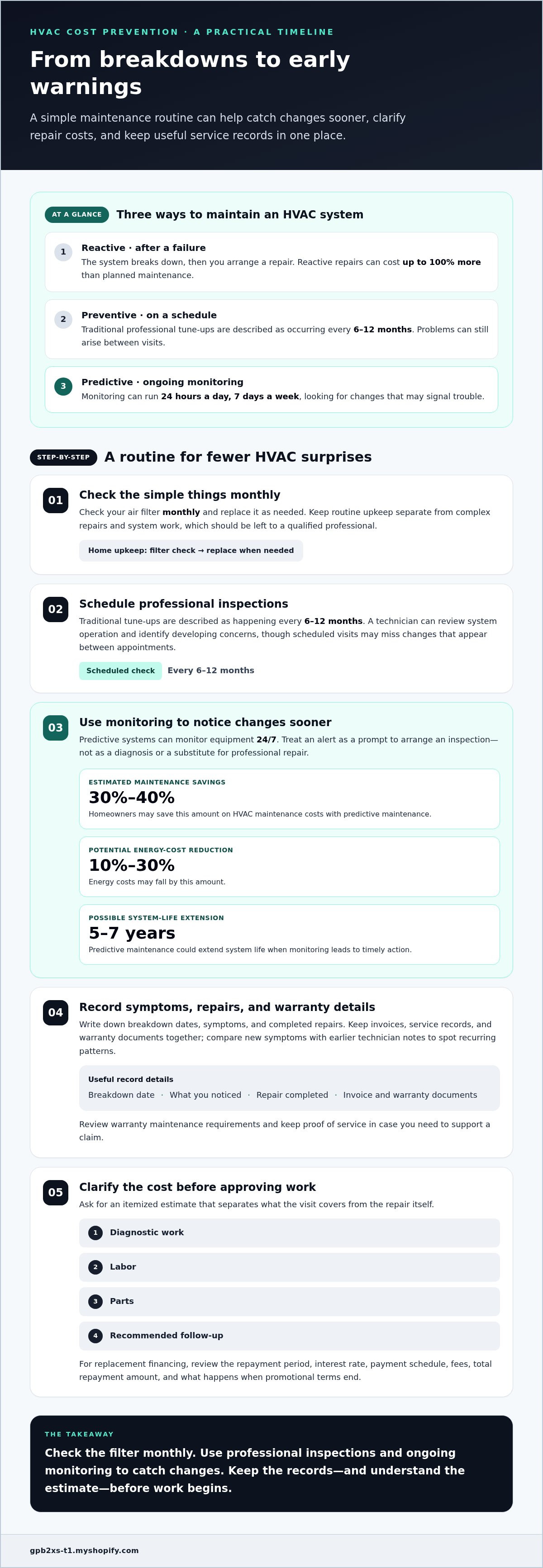
Reactive maintenance starts after a failure: the system stops cooling, and you arrange a repair. This approach can leave a household dealing with discomfort while the problem is diagnosed. Reactive HVAC repairs can cost up to 100% more than planned maintenance. To reduce surprises, record breakdown dates, symptoms, and completed repairs, then look for recurring patterns.
Preventive maintenance follows a schedule, whether or not the equipment shows a problem. Traditional HVAC tune-ups are described as happening every 6-12 months. During a professional inspection, the technician can review system operation and identify developing concerns. Still, even two service visits per year can miss problems that arise between appointments, such as a new noise or a gradual change in cooling.
Predictive maintenance uses ongoing system information to spot changes that may signal trouble. Monitoring systems can operate 24 hours a day, 7 days a week, unlike a scheduled visit. That information can help direct attention to an emerging issue before it becomes a breakdown. Homeowners may save an estimated 30%-40% on HVAC maintenance costs with predictive maintenance, while energy costs may fall by 10-30%.
Use a simple routine alongside professional inspections: check your air filter monthly and replace it as needed. Keep service records, invoices, and warranty documents together. If a repair is repeated, compare the new symptoms with the technician’s previous notes. Regular maintenance can help reveal smaller problems early, but it doesn’t replace warranty terms. Review the warranty’s maintenance requirements and keep proof of service in case you need to support a claim.
A service visit or diagnosis may come with a fee. Before approving work, ask for an itemized estimate that separates diagnostic work, labor, parts, and recommended follow-up. This makes clear what the visit covers and distinguishes the inspection from the repair itself.
HVAC replacement financing terms may include the repayment period, interest rate, payment schedule, and fees. Before accepting an offer, review the total repayment amount and promotional terms, including what happens when a promotion ends. Knowing how to avoid unexpected HVAC costs starts with comparing the written terms against your household budget, not just the monthly payment.
Regular maintenance, smart thermostat integration, and professional inspections can support efficiency and extend equipment life. Predictive maintenance could extend system life by 5-7 years, but monitoring is most useful when it leads to timely action. Treat an alert as a prompt to arrange an inspection, not as a diagnosis or a substitute for professional repair.
2. Warning noises, odors, water leaks, and ice after a repair
A completed repair should restore normal operation, not introduce new symptoms. Listen for rattling, buzzing, grinding, or squealing after the technician leaves. Burning or musty odors, water around an indoor unit, and ice on refrigerant lines can signal an unresolved issue or an incomplete repair. Note when each symptom starts and whether it occurs during cooling or when the system cycles on.
Don’t dismiss a change just because the system still runs. Write down the repair date, the affected area, and what you observe. For example, note whether water appears beneath the indoor unit only during operation, or whether a grinding sound returns each time the fan starts. Share those details during follow-up so the technician can compare the symptom with the work performed.
Ask for an explanation of the diagnosis and an itemized invoice that separates labor, replacement parts, and recommended follow-up maintenance. Before approving additional work, ask what each repair addresses and whether a replaced component may have affected other parts of the HVAC system. Keep the invoice with earlier service records to spot repeat repairs and support warranty discussions.
Emergency service can be necessary when a breakdown leaves a home without cooling during extreme heat. A homeowner may wait 3 hours for an emergency HVAC service call, so report the failure symptoms clearly when arranging service. Ask about any arrival or diagnostic fees before work begins, and request an estimate for proposed repairs. These steps won’t prevent every urgent repair, but they clarify what the visit and work involve.
For a major repair involving a compressor or evaporator coil, a second opinion can help you compare diagnoses before committing. Give the second professional the first diagnosis and invoice, then compare the identified fault, proposed repair, and explanation of how it should restore performance. If the system breaks down repeatedly, gather the dates and invoices. Repeated repairs can point to an underlying issue that replacing one component alone may not resolve.
After the work, monitor whether the system reaches the thermostat setting without running continuously or switching on and off every few minutes. If your usage habits stay the same but the utility bill rises after a repair, arrange another inspection. These observations help homeowners decide when follow-up is needed and may help prevent further damage and expense.
Energy-efficient HVAC systems can cost more upfront, while operating costs depend on efficiency, sizing, and how the home is used. Compare the installation cost with expected utility-bill savings over the time you plan to keep the system. This helps you assess whether the savings may offset the higher initial expense.
3. Hiring qualified HVAC professionals
A qualified HVAC professional should explain the cause of the problem, the proposed work, and how the repair addresses it. Before work begins, verify the contractor’s license and insurance for your state. These checks help clarify who is responsible for the work and whether the professional meets applicable state requirements.
Start with the issue you’re experiencing, then share useful details: the rooms affected, thermostat setting, indoor temperature, and whether the problem involves heating or cooling. For example, “The thermostat is set to cool, but the bedroom stays warm” gives a clearer starting point than “the system isn’t working.” Ask the technician to explain the diagnosis in plain language and connect the proposed repair to those symptoms.
Get the proposed work and warranty terms in writing. The estimate should identify the repair, replacement parts, labor, and recommended follow-up. Ask what warranty applies to the repair and request its terms in writing. Read the scope before approving it so you can distinguish the immediate repair from optional recommendations and understand what the warranty covers.
Recent customer reviews can reveal patterns that a single review may not show. Look for repeated mentions of return visits for the same repair, missed appointments, or poor communication. Note positive examples too, such as clear explanations or timely updates. Use these patterns as context, not as a substitute for checking licensing, insurance, and written terms.
Before authorizing a major repair, ask the professional to describe the diagnosis, the component involved, and whether it could be affecting other parts of the HVAC system. If the explanation is unclear, request clarification before work begins. For major work, you can compare diagnoses through a second opinion, using the written estimate and service history to make the comparison specific.
After the visit, keep the estimate, invoice, warranty, and technician’s notes together. Record the service date and work completed. If the same issue returns, these documents help you explain what was already repaired and identify a possible repeat visit. A practical way to avoid unexpected HVAC costs is to make decisions based on a clear written scope, not a rushed verbal summary.
Once work is complete, observe whether the system reaches the thermostat setting and maintains the desired temperature. Note any new change in heating or cooling performance, then contact the professional who performed the repair with those details. Clear follow-up starts with specific observations, such as which rooms feel different and when the system behavior changed.
4. Rebates and tax credits
Utility companies and government programs may offer incentives for upgrading to energy-efficient HVAC equipment. A rebate can reduce the amount paid for an eligible upgrade, while a tax credit affects a tax return under its own eligibility rules. Don’t treat these incentives as automatic discounts. Check the program requirements before choosing equipment or scheduling installation.
Start by identifying the upgrade you’re considering, such as a more efficient heating and cooling system. Then compare the program’s qualifying-equipment criteria with the system documentation. Efficiency ratings, equipment type, installation date, and application deadlines can affect eligibility. Keep product details, contractor paperwork, and proof of purchase together so you can complete an application accurately.
Keep the incentive separate from your project budget. First, calculate the full project cost using the written estimate. Then record any rebate or tax credit separately, along with its eligibility conditions and claim steps. This prevents an anticipated incentive from being mistaken for guaranteed savings before approval. If a program requires an application before purchase, missing that step could affect your claim.
Local permits, building codes, and utility programs can affect HVAC costs through project requirements and incentive eligibility. Applicable rules depend on the property’s jurisdiction and the work involved, while utility programs set their own criteria for qualifying equipment and applications. For example, replacing a system and modifying related components may involve different local requirements from a like-for-like equipment change.
Before committing, organize the decision around these details:
- Equipment: Record the model and efficiency information shown in the proposal.
- Program: Note the incentive’s eligibility conditions, application steps, and deadlines.
- Project: Keep the written scope and any permit or inspection paperwork with your records.
- Claim: Save invoices, proof of installation, and application confirmations.
Tax credits require particular care because an eligible purchase and an eligible taxpayer are not necessarily the same thing. Read the current tax-credit rules for the specific equipment and tax year, and retain documents describing the installed system. Don’t assume a utility rebate and a tax credit have identical eligibility criteria or application processes.
Treat incentives as one part of an efficiency decision, not the only reason to replace equipment. Compare expected energy use, the home’s heating and cooling needs, and the project scope. A high-efficiency option may reduce utility bills, but a sound comparison accounts for the full installation cost and the incentive conditions that apply.
Local permit and building-code requirements depend on your property’s jurisdiction and the work involved. Replacing a system while modifying related components may have different requirements from a like-for-like equipment change. Utility programs can also affect costs through qualifying-equipment criteria, application steps, deadlines, and eligibility rules.
5. Which HVAC repairs can homeowners safely handle, and when should they hire a licensed contractor?
Keep homeowner maintenance to simple tasks that don’t require opening equipment or handling internal components. Check your thermostat settings, replace its batteries if needed, and make sure the system is set to the intended mode. A filter check is another practical step: inspect it monthly and replace it as necessary. Homeowners should change HVAC air filters every 1-3 months.
A clogged filter can restrict airflow, so check that the replacement fits the system and faces the correct direction. Follow the markings on the filter slot, then make sure the access panel closes securely. If a filter is difficult to reach, damaged, or inaccessible without removing equipment panels, stop and arrange professional help.
Leave repairs involving internal electrical components, refrigerant lines, motors, or control wiring to a licensed HVAC contractor. These jobs require system-specific knowledge and can cause further damage if handled incorrectly. Don’t bypass a safety switch or keep restarting equipment that repeatedly trips a breaker. Note what happened and share those details with the technician.
Hire a professional if the system makes grinding sounds, leaks water indoors, develops ice on refrigerant lines, or can’t maintain the thermostat setting. These symptoms can have several causes, and replacing a part without diagnosing the underlying issue can lead to repeat trouble. For example, ice on a line calls for investigation, not scraping or chipping at the ice.
Before approving a repair, verify that the contractor is properly licensed and insured in your state. Ask for a clear explanation of the diagnosis and an itemized invoice describing labor, replacement parts, and recommended follow-up. For major work, such as a compressor or evaporator coil repair, compare the diagnosis and proposed scope with a second opinion.
Keep your service invoice and warranty documents with your maintenance records. If a symptom returns, those records help explain what was repaired and when. Afterward, watch how the system performs: it should reach the thermostat setting without running continuously or cycling on and off every few minutes. Note the rooms affected and when the change occurs.
- Safe upkeep: Check the thermostat and inspect or replace the filter.
- Professional work: Leave internal component, electrical, refrigerant, and recurring fault repairs to a licensed contractor.
- Useful records: Save the diagnosis, invoice, and warranty terms for future follow-up.
If your system needs diagnosis or component work, request professional HVAC repair rather than attempting an internal repair yourself.
BulletProof Air: HVAC Installation
BulletProof Air can help when recurring breakdowns, poor performance, or an aging system make replacement worth considering. Its HVAC Installation service supports residential and commercial projects, including new construction. A replacement plan should reflect the building’s heating and cooling needs, existing setup, and efficiency goals, rather than treating equipment choice as one-size-fits-all.
For homeowners, professional installation can provide a path from repeated repairs to a system selected for the home. Businesses and construction projects can plan HVAC needs around their building and intended use. Share the comfort problems you’re experiencing and the project details to start a practical conversation.
Contact BulletProof Air to discuss HVAC Installation, or visit BulletProof Air online.
Make Your Next HVAC Decision With Confidence
Your next step is simple: write down what you need your HVAC system to do, what concerns you most, and whether you’re planning a repair or considering replacement. This brief gives you a clearer starting point for a conversation and helps keep the decision focused on your home or building.
If you’re weighing how to avoid unexpected HVAC costs, focus on understanding the project scope before work begins. BulletProof Air provides HVAC Installation, Residential HVAC Services, and Commercial HVAC Services to help property owners address their heating and cooling needs.
Bring your questions and project details to the conversation. Contact BulletProof Air for HVAC help and take a clear next step toward dependable comfort.
Frequently Asked Questions
2. What are typical HVAC repair and replacement costs in the United States?
Repair costs depend on the diagnosed fault, required parts, labor, and equipment access. Replacement estimates also depend on system type, capacity, efficiency, and installation scope. A failed component may call for a different repair from a system replacement. Ask for an itemized estimate that separates the work and materials. This breakdown helps you understand the proposed project rather than relying on a total without context.
3. What factors make HVAC installation or repair estimates increase unexpectedly?
An estimate may change if an inspection reveals additional work, such as a related failing component, difficult equipment access, or changes needed to complete the installation. An initial symptom may not reveal the full cause. Ask the professional to explain any new finding, show how it changes the scope, and provide a revised written estimate before proceeding. This gives you a clear record of what changed and why.
4. How can homeowners get and compare HVAC quotes and avoid hidden fees?
Request a written scope describing the diagnosis or installation, included labor and parts, exclusions, and any separate service or diagnostic charges. Compare estimates by matching the proposed work, not just the final total. For example, one estimate may include follow-up maintenance while another lists it separately. Ask for unclear line items to be explained in writing before approving the work.
5. What should a detailed HVAC estimate include, such as equipment, labor, permits, and disposal?
A detailed estimate should identify the proposed equipment or repair, labor, parts, and any additional project work. It should also say whether permit-related tasks, inspections, or disposal of replaced equipment are included or separate. These items depend on the project scope and local requirements. Review the document for assumptions, exclusions, and payment terms, then keep the approved version with invoices and warranty records.
6. How much do HVAC maintenance plans and annual tune-ups cost, and can they prevent expensive repairs?
Plan and tune-up costs depend on the number of visits and the work included, such as cleaning or priority scheduling. Review the service description to understand what each visit covers and which repairs remain separate. Maintenance can help identify smaller issues before they worsen, but it can’t prevent every failure. Compare the plan’s included tasks with your system’s needs and keep records of completed visits.
7. What HVAC warranties, service agreements, and manufacturer coverage exclude or require?
Warranty terms vary, so review the documents for covered parts, labor provisions, exclusions, claim steps, and required maintenance records. A service agreement describes the visits or other benefits it includes, while a manufacturer warranty sets its own coverage conditions. Keep invoices and service reports together. If a problem arises, match the affected part and repair date to the relevant document before submitting a claim.
8. Are HVAC rebates, tax credits, or utility incentives available, and what are the eligibility rules?
Utility companies and government programs may offer incentives for energy-efficient HVAC upgrades, but each program sets its own eligibility rules. Qualifying equipment, project timing, documentation, and application steps can affect a claim. Before choosing a system, review the applicable program terms and save the equipment specifications, installation paperwork, and proof of purchase. Treat rebates and tax credits as separate incentives because their requirements and claim processes may differ.